not used title
not used title
A new study from the Health Care Cost Institute found that, for commercially insured patients, almost 50 percent of medicines administered by physicians, including treatments for diseases like cancer, occurred in the hospital outpatient setting in 2017. In 2009, these same treatments occurred in outpatient settings just 23 percent of the time.
Hospitals shift patients to these costlier outpatient settings, which are generally paid at higher rates, to increase their profits. During the same time period, the average price for these drug administration visits in hospital outpatient settings increased almost 60 percent, from $423 to $664. In physician office settings, the cost for these same services increased by only 15 percent, from $220 to $254.
And shifting site of care isn’t the only issue patients face in this area. A new chart pack from The National Institute for Health Care Management (NIHCM) Foundation shows that there were 619 hospital consolidations from 2013 to 2018 – an average of 103 annually. NIHCM also finds that these consolidations appear to be “strategic alliances between strong partners” as opposed to the acquisition of finally struggling hospitals. In 2018, only 20 percent of the announced mergers involved a financially distressed partner. In fact, the average revenue of the smaller hospital involved in the merger or acquisition was $409 million, the highest amount over the past decade.
Hospital consolidation raises the amount hospitals receive from payers when the consolidation did not increase market power. The chart pack also sites studies that found:
- Hospital consolidation within the same market leads to price increases of 20 to 40 percent.
- Prices increase by 17 percent when the hospital is acquired by an out-of-market system.
These findings are amplified when you look at the 340B drug pricing program – created to provide discounts on outpatient medicines to safety-net facilities that provide care to low-income or vulnerable patients – which typically provides a significant discount (50 percent) on medicines. In practice, this program contributes to higher costs for patients instead. 340B hospitals take advantage of the program to increase profits by buying medicines at the 340B discount, charging payers and patients based on the undiscounted price and then pocketing the difference between the two. This incentivizes 340B hospitals to buy up independent physician practices who are not eligible for 340B discounts and turn them into hospital outpatient facilities. The result of this acquisition is that the new hospital outpatient facility can buy more medicines at the 340B discount rate, increasing profits for the overall hospital system. The Berkeley Research Group found that more than 30 percent of reimbursements for patients’ physician-administered medicines covered by Medicare Part B were at 340B hospitals in 2017 compared to less than 10 percent in 2008.
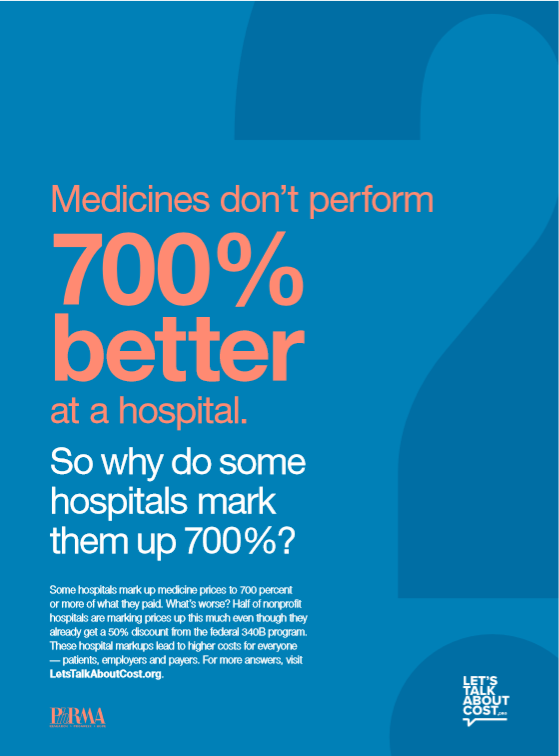
As a consequence of shifting sites of care and consolidation, research shows that some hospitals mark up medicine prices to 700 percent or more of what they paid. This leads to higher costs for everyone, including patients, employers and payers.
To learn more, visit www.letstalkaboutcost.org.
Holly Campbell
Holly Campbell is former deputy vice president of public affairs at PhRMA focusing on the cost and value of medicines.
Holly Campbell
Author Twitter
Author LinkedIn
Why 340B needs an itemized bill
October 20, 2026
Employers faced $12.8 billion in higher costs due to 340B in 2025
October 5, 2026
New Report: Hospitals, clinics and for-profit partners pocketed $142B in 2025 from 340B
October 1, 2026
Hospitals are hiding information that could lower costs for patients
September 24, 2026
As football season kicks off, hospitals keep scoring on 340B
September 9, 2026
ICYMI: Hospital consolidation is driving up health care costs
August 27, 2026
It's time to modernize 340B: The case for a rebate model
August 19, 2026
ICYMI: Fox business hosts call 340B a ‘Rotten System’ and ‘Cash Cow’ for hospitals
July 23, 2026
340B’s reality: A booming business for hospitals, pharmacies and corporate giants
June 25, 2026
340B’s lack of guardrails lets big hospital systems turn it into an oversight-free revenue stream
June 22, 2026
Private equity's new play? Become a nonprofit to profit off 340B.
June 5, 2026
340B is growing, but it is unclear if Illinois patients benefit
May 27, 2026
Fox Business spotlights hospitals abuse of the 340B program
May 15, 2026
The Wall Street Journal raises new alarms about 340B
May 11, 2026
Hospitals in the hot seat: Congress sharpens focus on 340B, consolidation and rising costs
May 7, 2026
New "Goldmine” ad reveals hospitals hide how they profit from 340B markups
May 6, 2026
A program off track: How 340B drives both hospital consolidation and system gaming
April 27, 2026
Washington Post Editorial Board says 340B has become “corporate welfare”
April 27, 2026
Modernizing 340B using rapid verification: The case for a rebate model
April 20, 2026
Hospitals drive nearly 80% of the U.S. health spending gap
March 25, 2026
Congress should look under the hood of 340B, hospitals don't want them to
March 19, 2026
340B hospitals buy low and sell high, a new analysis shows
March 12, 2026
New report from Minnesota: 340B is generating billions for big hospitals
March 9, 2026
340B hospital markup scheme is costing states, taxpayers billions
February 25, 2026
Questions mount over 340B program and increased cost to everyone
February 23, 2026
PhRMA Forum 2026 highlights the importance of fostering the next era of American leadership
February 18, 2026
50-state poll says Americans are concerned that hospital markups hurt patients
January 27, 2026
New analysis finds 340B hospitals push patients toward costly care to boost profits
January 21, 2026
Data shows tax-exempt hospital profit-seeking behavior, not drug prices, is driving explosive 340B expansion
January 8, 2026
Big, tax-exempt hospitals are charging cancer patients, employers massive medicine markups
January 5, 2026
340B’s billion-dollar boom: Oversight lags as spending soars
December 19, 2025
New study: 340B rebate model pilot won’t hurt cash flow for providers
December 18, 2025
One thing the Senate can agree on: It’s time to fix 340B
November 25, 2025
Middlemen mark up drug prices and keep discounts meant for you
November 10, 2025
The Administration approves manufacturers’ 340B rebate pilot plans
November 6, 2025
340B abuses are fueling higher Medicare costs, new BRG report shows
October 15, 2025
ICYMI: The Wall Street Journal calls 340B reform a “good idea to cut drug costs”
September 23, 2025
340B hospitals use scare tactics to evade accountability
September 16, 2025
Why states struggle to deliver savings: Middlemen and 340B siphon dollars from patients and states
September 15, 2025
CBO: 340B program costs taxpayers, no evidence patients benefit
September 10, 2025
PhRMA stresses importance of 340B Rebate Model Pilot
September 9, 2025
New “Meet Mark” ad exposes how the 340B hospital markup program drives up costs for everyone
September 3, 2025
New study unmasks how big-city hospitals exploit 340B by posing as rural providers
August 21, 2025
Study: 340B hospitals drive up patient drug costs
August 15, 2025
Curbing 340B abuse and rising costs with the rebate model
August 12, 2025
The hidden cost of 340B: A multi-billion-dollar burden on taxpayers and Medicaid
July 14, 2025
Latest analysis from Ohio exposes growing abuses of the 340B markup program
July 7, 2025
New report finds rampant abuse of the 340B program
June 20, 2025
How the 340B hospital markup program could hurt Michigan patients
June 12, 2025
New “Balance the Scales” campaign highlights why Americans pay more for prescription medicines
May 21, 2025
How the 340B hospital markup program and PBMs drive up costs for U.S. patients
May 16, 2025
Foreign first pricing schemes don’t address why Americans pay more
May 15, 2025
When hospitals have free rein to mark up drug prices, who pays the price?
May 1, 2025
New report finds more abuse of 340B program by hospitals and drug middlemen
March 24, 2025
A closer look at how health care consolidation drives up patient costs, creates barriers to care
March 17, 2025
340B markup program is a hidden tax, increasing costs for employers, straining state and federal budgets
March 5, 2025
New report sheds light on payment flows in the pharmaceutical supply chain, including the role of 340B and vertical integration
February 13, 2025
Wrapping up the J.P. Morgan Healthcare Conference
January 16, 2025
NYT exposes hospitals, middlemen make millions off a hospital markup program
January 15, 2025
PhRMA CEOs Tee Up Next Week's Health Care Conference
January 11, 2025
New study: Entities that don’t make medicines get half of what is spent on those medicines
January 7, 2025
A new administration poses new opportunities for patient access
December 17, 2024
New 340B report from Minnesota exposes steep hospital markups on medicines, patient benefits remain unclear
November 27, 2024
Michigan hospitals using federal program to markup cost of medicines, gouging patients
November 27, 2024
340B spending is exploding, forcing prices up for patients, employers and government programs
November 13, 2024
Three things to know about 340B contract pharmacies
November 12, 2024
PhRMA urges HRSA not to impede new 340B pricing approaches to improve transparency and integrity
October 18, 2024
Illegal abuse of 340B hurts us all
October 3, 2024
340B sales go up, free or reduced-cost care offered at hospitals goes down
July 1, 2024
ICYMI: Health care policy should be driven by patients, not politics
June 10, 2024
The hidden bill patients don’t know they are paying
June 3, 2024
340B grows and grows, but patients do not see the savings
May 13, 2024
340B grows and grows, but patients do not see the savings
May 13, 2024
Critics repeat same, misleading narrative on potential “costs” of new medicines
May 7, 2024
Insurance data: PBM reform has no material impact on premiums
April 24, 2024
What recent rhetoric on the cost of diabetes and anti-obesity medicines gets wrong
April 9, 2024
3 Takeaways from POLITICO’s Health Care Summit
April 3, 2024
PBMs using 340B program to drive profits at patients’ expense
March 28, 2024
Setting the Record Straight: Comparing U.S. drug prices to those in foreign countries hurts patients
February 7, 2024
What’s the 340B program like in your state?
February 7, 2024
New year, same exploitation of the 340B program
January 25, 2024
When it comes to the future of innovation, the ball is in policymakers’ court
January 22, 2024
How the 340B program became a PBM giveaway
December 11, 2023
New report adds to questions about nonprofit status of 340B hospitals
November 7, 2023
By the Numbers: 340B continues to climb in profits, dwindle with patient support
September 13, 2023
AARP’s latest misleading report
August 11, 2023
New 340B Mega Guidance
August 3, 2023
New report: Hospitals mark up medicine prices 500%
August 2, 2023
read more
August 2, 2023
PhRMA responds to Senate: Today’s 340B program leaves patients behind | PhRMA
July 28, 2023
Key considerations as Congress works towards PAHPA reauthorization
July 12, 2023
New studies add to body of evidence questioning 340B efficacy
July 11, 2023
340B program reaches $100 billion in sales, while patients are left behind
June 14, 2023
Insulin: Key Facts on Access & Affordability
May 10, 2023
4 key facts on medicine prices and spending
May 9, 2023
Three facts about health care spending
April 25, 2023
Nonprofit hospitals fall short on community benefit, studies show
April 24, 2023
Why Congress should prioritize fixing the 340B program
March 2, 2023
What they are saying: Nonprofit hospitals are gaming the system at the expense of patients
February 21, 2023
ICYMI: Cancer death rate continues to decline due to treatment advances
January 25, 2023
Novel medicines approved in 2022 offer increased treatment options for patients
January 23, 2023
ICYMI: PhRMA kicks off the year at the 2023 J.P. Morgan Health Care Conference
January 19, 2023
Study finds hepatitis C cure saved Medicaid $15 billion
January 5, 2023
340B program continues to drive shift in care to more expensive hospital settings
December 15, 2022
The 340B program is interfering with the U.S. biosimilars market and impacting patient costs
November 21, 2022
New data show how insurers and middlemen shift Rx costs onto patients
November 16, 2022
Three ways 340B is failing vulnerable patients
October 20, 2022
If patients aren’t benefiting from the 340B program, who is?
October 6, 2022
Busting 3 Myths About Copay Coupons
October 5, 2022
New data: The 340B program is driving up costs for patients and our health care system
September 15, 2022
Word of the Month: 340B covered entity
August 29, 2022
Making coupons count for patients at the pharmacy counter
August 25, 2022
By the Numbers: Patients lose when the government sets prices
July 8, 2022
Prescription drug prices are not fueling inflation
July 6, 2022
340B program remains second largest federal drug program, yet little solid evidence of benefits to patient
June 30, 2022
Study after study after study: Contract pharmacy expansion not aligned in communities 340B is meant to serve
June 24, 2022
New research finds gaps in charity care provided by 340B hospitals
June 2, 2022
PhRMA warns of the growing influence of middlemen over patient access and out-of-pocket costs for patients
May 31, 2022
Report finds PBMs are increasingly restricting patient access to medicines
May 25, 2022
ICYMI: PhRMA CEO Stephen J. Ubl spotlights lessons learned during COVID-19
May 13, 2022
Annual projections from NHE compared to actual health care spending
May 5, 2022
What’s really happening when it comes to prescription drug costs
April 27, 2022
Analysis: States can help patients save nearly $1,000 annually on their medicines
April 21, 2022
New analysis confirms hospitals markup prices for oncology therapies
April 21, 2022
How standardized plans can improve patients’ access to medicines
April 18, 2022
By the numbers: Contract pharmacy participation in the 340B program
March 31, 2022
Correcting the record: Putting medicine costs and spending in context
March 24, 2022
Sharing rebates can save Americans with diabetes 500 each year and improve adherence
March 16, 2022
Guest Post: If we truly want to cure complex diseases, politicians should reject price setting
March 14, 2022
Veterans Affairs 101: Three charts show how the VA system differs from Medicare
March 11, 2022
If drug prices are growing below the rate of inflation, why are patients still feeling the sting at the pharmacy?
March 8, 2022
Government price setting leaves behind families counting on new medicines
February 23, 2022
340B 101: Three charts show the program maximizes hospitals’ bottom line with little consideration for patients
February 8, 2022
Research and development continues long after a medicine is initially approved
February 1, 2022
New poll of all 50 states and 435 Congressional Districts shows perils of so-called Medicare “negotiation”
January 25, 2022
CBO reaffirms our innovation ecosystem leads to improved lives, long-term savings
January 21, 2022
New study finds more than half of brand medicine spending goes to the supply chain and others
January 7, 2022
New NHE data show the true picture of health care spending
December 22, 2021
Making medicines more affordable: Preserving safety-net programs like 340B
December 17, 2021
3 things to know about the importance of post-approval research and development
December 6, 2021
Guest post: Congress should not put future innovation at risk
November 29, 2021
What is missing in the current drug pricing plan
November 23, 2021
ICYMI: PhRMA CEO speaks at STAT Summit about government price setting
November 19, 2021
In the current health care debate, Congress has lost sight of what matters to U.S. voters
November 15, 2021
Fact Check: Do contract pharmacies help patients access 340B medicines? No.
November 2, 2021
New video: Why changes to the 340B program are essential for patients
October 28, 2021
CMS finds medication adherence saved Medicare up to 46.6B in avoided health care costs between 2013 and 2018
October 19, 2021
ICYMI: New study confirms policies like H.R. 3 could significantly reduce drug development
October 18, 2021
New poll shows Americans reject Medicare negotiation once they learn more about the policy
October 15, 2021
To drive up profits, hospitals continue unnecessary medicine mark-ups, burdening patients, employers and health care system
October 14, 2021
New analysis adds to research questioning whether 340B is working as Congress intended
October 13, 2021
What is Kaiser Family Foundation up to?
October 12, 2021
Recognizing Hepatitis R&D on World Hepatitis Day
July 28, 2021
340B hospitals among those that provide lowest levels of community benefit across the country
July 27, 2021
New reports shed light on key facts about medicines and affordability
June 8, 2021
How strengthening the biosimilar marketplace benefits patients
May 18, 2021
New report demonstrates development of new medicines relies on private sector expertise and investment
May 10, 2021
New data from insurers show detriments of copay accumulator adjustment programs
April 28, 2021
West Virginia becomes the first state to lower patient costs by sharing the savings
April 20, 2021
Getting the 340B program back on track in 2021
March 10, 2021
Nearly 40% of commercially insured patients face half their annual out-of-pocket expenses from just one health care encounter
March 2, 2021
Top five issues voters want addressed in the administration’s first 100 days
February 18, 2021
Insurers shift medicine costs to patients with severe chronic illnesses
February 1, 2021
The new Administration should reconsider a recent HHS rule that could negatively impact patient access and affordability
January 27, 2021
New insulin report highlights how incentives benefit middlemen, harm patients
January 22, 2021
New data show retail medicine prices fell in 2019
January 13, 2021
Correcting the record: Biopharmaceutical companies remain committed to the 340B program and helping patients
December 17, 2020
Fact Check: How hospitals continue to drive health care spending
December 3, 2020
Accumulator adjustment programs lead to surprise out-of-pocket costs and nonadherence, analysis finds
November 19, 2020
PhRMA submits comments on ways to refocus the 340B program on America’s vulnerable patients
November 2, 2020
340B hospitals and for-profit pharmacies generating significant revenue from program meant to help needy patients
October 23, 2020
Study finds biopharmaceutical innovation is responsible for 35% of the increase in life expectancy from 1990 to 2015
October 21, 2020
Survey found insurance premiums grew faster than inflation in 2020
October 20, 2020
Growth in 340B program has not translated to improvements for patients
October 5, 2020
Study finds middlemen excluded nearly 850 medicines from formularies this year
September 17, 2020
Manufacturer cost-sharing assistance programs can save chronically ill patients hundreds to thousands of dollars annually
August 19, 2020
Commercial health plans have increased patients’ out-of-pocket costs by over 50% in some therapeutic areas
August 12, 2020
Commercial health plans transition from copays to coinsurance and deductibles has increased patient out-of-pocket costs
August 6, 2020
Four things to know about the IQVIA “Medicine Spending and Affordability in the U.S.” report
August 5, 2020
New data show commercially insured patients face increasingly high cost sharing for brand medicines
July 30, 2020
Payers subject 80% of new RA and MS patients to utilization management restrictions
July 22, 2020
Study finds the pharmaceutical industry retains a smaller share of revenue than research-intensive industries
July 14, 2020
ICYMI: Pharmacy benefit managers increasingly exclude medicines from formularies, restricting patient access
June 1, 2020
New rule makes it harder for patients to lower their out-of-pocket costs
May 20, 2020
ICYMI: Patients saved nearly $800,000 out of pocket through innovative contracting arrangements
April 20, 2020
Retail medicine spending to remain stable share of overall health care spending through next decade
April 16, 2020
PhRMA comments on HHS proposed rule on manufacturer cost-sharing assistance and accumulator adjustment programs
March 3, 2020
Addressing barriers that inhibit value-based contracts
February 21, 2020
Fact Check: HCCI analysis overstates medicine spending and prices
February 19, 2020
Cancer medicines cost twice as much at hospitals, study finds
January 21, 2020
New GAO report: Some hospitals participating in 340B may not be eligible for the program
January 14, 2020
Nearly 50% of brand medicine spending goes to the supply chain and others
January 9, 2020
New NHE data: Medicine prices declined, and hospitals were biggest driver of health care spending in 2018
December 6, 2019
More evidence that medicine prices are growing at slowest rate in decades
October 4, 2019
The truth about the marketing and promotion of medicines
October 3, 2019
Survey shows out-of-pocket costs top health care concern for voters
October 2, 2019