Health Insurance
Coverage doesn't mean access
Health insurers wield massive power in the supply chain. Having insurance no longer guarantees access to prescribed medicines.
Insurers and the PBMs they own increasingly control:
- What's covered
- Where patients can go
- What they pay
- How long they must wait
The result: delayed care, cost shifting onto patients, and patients going without treatment.
"It took me eight denials myself to get a medicine that I need to exist a year and a half. I'm a physician and a member of Congress. It took me eight times through CVS to get that medication. I didn't pull any strings. I did what I was supposed to do. Imagine the average person in the country, there's been a weaponization of prior authorization. You are killing people to deliver health care." - Rep. Greg Murphy (R. NC-3)
Insurance denials are now the norm
IQVIA finds that 70% of commercially insured patients were initially denied at least one brand medicine in 2024. Nearly 1 in 4 prescriptions were still denied a year later — making patients experience extensive delays, forced switches of prescribed medications, or choose to abandon treatment altogether.
Insurers call this "care management."
The reality is this is inappropriate prior authorization, unnecessary step therapy, formulary exclusions of lower cost medicines, and extra paperwork can override doctors and lead to patient abandonment of medications.
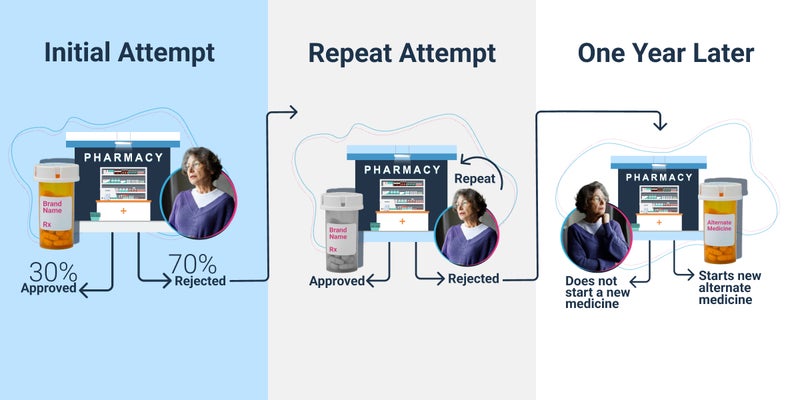
Three-in-10 (30%) patients report skipping or avoiding needed care because they fear it won't be covered by insurance, or they will face difficulty paying out-of-pocket.
In one study, some seniors faced 11+ claim rejections before getting prescribed medicines
Denials are the norm, not the exception.
Insurance barriers create administrative headaches for seniors.
Consolidation has shifted control away from patients.
The three largest PBMs, which together process 80% of U.S. prescriptions, are each owned by one of the three largest health insurers, effectively pairing every major insurer with its own PBM and creating mega health care conglomerates. This consolidation gives these companies immense market power and significant ability to increase patient costs. PBMs and insurers can steer patients to the pharmacies they own at the expense of patients and the government, drawing extensive investigation by the FTC and Congress.
Patients are paying more and getting less
- Patient out-of-pocket prices for covered medicines outpaced commercial insurer costs from 2016 - 2020
- And costs of new medicines are often far below insurer estimates.
- The sickest patients are especially at risk. Even when lower-cost options exist, those medications are often excluded, delayed or placed on tiers that shift costs onto patients who need medicines most.
So, where are your premium/prescription dollars really going? Entities that don’t make medicines get half of what is spent on them.
PBMs, insurers and wholesalers earn a 41% return on capital, which is 4x the profitability rate of biopharmaceutical companies.
When you're sick, you should be battling your illness, not battling your insurance company.
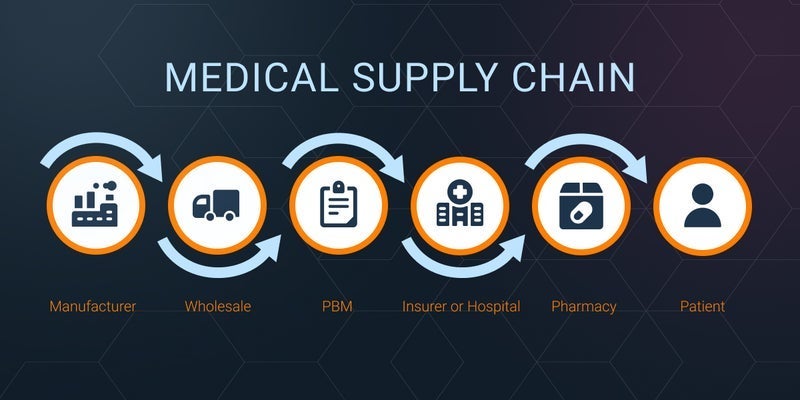
Patient support programs offered by biopharmaceutical companies can provide a valuable source of support for many commercially insured patients to help them afford out-of-pocket costs associated with insurance coverage for their medicines. But health insurers and pharmacy benefit managers are using harmful tactics, like accumulator and maximizer programs, to deny patients the benefit of this assistance at the pharmacy.
While manufacturer patient support programs can help patients, it won’t be enough. We need policymakers to step up for patients with:
01
Enhanced transparency on insurance denials
02
A streamlined prior approval process
03
New incentives for insurers to hold them accountable for providing patient care
Related Resources
When middlemen own it all, patients pay the price
These days, the same big health care conglomerate could own your PBM, insurer, pharmacy and even your doctor’s office. Middlemen now control what medicines you can get, what you pay at the pharmacy counter, what pharmacy you can you use and what hoops you must jump through to get the medicine your doctor prescribed.
Today, PhRMA launched a new advertisement highlighting how middlemen, like pharmacy benefit managers (PBMs) and the giant health care companies that own them, are further consolidating their control over the health care system. When a few big health care conglomerates abuse their power to boost their profits, patients pay the price.
Higher costs for patients
There’s mounting evidence that vertical integration drives up costs for patients and the government. A recent WSJ investigation showed PBMs are marking up the price of some specialty generic drugs dispensed at their specialty pharmacies by thousands of dollars. According to the FTC, pharmacies affiliated with the three largest PBMs made $1.6 billion on only two cancer drugs over the course of three years. Further, despite insurers and PBMs receiving significant rebates and discounts, often 50% or more, patients rarely benefit directly from these savings, according to the Congressional Budget Office’s Director of Health Analysis.
Less access to medicines
PBMs make money off fees and rebates tied to the price of medicines, which means they have a perverse incentive to prefer higher-priced medicines over lower-cost alternatives. Experts say this can lead them to deny or limit coverage of lower-cost medicines, like biosimilar and generics, driving up costs for everyone while their profits soar. In fact, the three largest PBMs excluded roughly 1,200 medicines from their commercial formularies in one year alone. At the same time, insurers routinely delay or deny care and put medicines out of reach with onerous utilization management tactics like prior authorization or step therapy.
More profits for big health care companies
Spending on medicines is padding the profits of middlemen and subsidizing many parts of the health care system, often at the expense of patients. Half of every dollar spent on medicines goes to middlemen and others that don’t make the medicine - like health insurance companies, PBMs, big chain pharmacies, and others.
Our new ad is part of a growing chorus of voices calling on policymakers to enact reform on this bipartisan issue. Congress can protect patients and rein in the middlemen by passing reforms that increase transparency, ensure medicine savings go directly to patients, not middlemen, and break the link between PBM compensation and medicine prices.
Caroline Dunne
When middlemen own it all
Insurers routinely block seniors’ access to medicines in Medicare Part D
Seniors in Medicare face growing barriers to their medicines. A new IQVIA analysis found nearly half of Medicare Part D beneficiaries were initially denied coverage for a branded drug. This builds on previous research showing how Part D plans are increasingly denying access to patients with newly diagnosed chronic conditions.
By the numbers:
- 48% of all Medicare patients experienced at least one denial for a new branded medicine in 2024.
- The initial rejection rate increased by 10 percentage points since 2021.
- After an initial rejection, 30% of patients never received the medicine their doctor prescribed within one year.
Why it matters:
Medicare Part D is intended to provide beneficiaries coverage and ensure access to the treatments their doctors prescribe. But, year after year, America’s seniors are increasingly encountering insurance barriers at the very moment they try to start treatment, often facing unnecessary clerical delays, appeals or outright denials. Even though the Inflation Reduction Act (IRA) guarantees selected medicines are included on Part D formularies, this does not ensure timely patient access.
Utilization management tools — prior authorization, step therapy and other administrative requirements — have become standard operating procedure in Medicare and the commercial market.
The bottom line:
Medicare Part D was designed to provide access, not obstacles. Protecting patients means ensuring seniors can start prescribed treatments without delays, denials or needless administrative barriers.
Matthew Norawong
Three things you should know from the insurer CEO congressional hearings
Last week, the House Energy & Commerce Subcommittee on Health and the House Ways & Means Committee called the CEOs of the largest insurance companies to testify. During these hearings, Members of Congress grilled the executives on their predatory practices that deny care for patients and raise health care costs for all.
Here are top three things that were exposed during the hearings you should know:
- Insurers wield massive power in the supply chain, allowing them to deny and delay patients’ access to medicines regardless of what their doctor prescribed and dictate the cost of treatments.
As Rep. Kim Schreier (D-WA-8) explained, “not only do you delay care with prior authorization demands, sometimes you flat out deny claims after the services are already rendered. And here's an example: one of my constituents had a stroke, required hospitalization … United Health refused to pay for that hospitalization because United decided that it was medically unnecessary, overriding the doctor's own medical decision.”
Rep. Greg Murphy (R-NC-3) detailed his own experience trying to access care, “It took me eight denials myself to get a medicine that I need to exist a year and a half. I'm a physician and a member of Congress. It took me eight times through CVS to get that medication. I didn't pull any strings. I did what I was supposed to do. Imagine the average person in the country, there's been a weaponization of prior authorization. You are killing people to deliver health care.”
Unfortunately, this is all too common. Insurers decide what medicines you can access, what pharmacy you can use, what you pay at the pharmacy counter, and what hoops you have to jump through to access a medicine. - Insurance companies’ vertical integration with PBMs, pharmacies, and even doctors’ offices is limiting competition and increasing costs.
Energy & Commerce Vice Chair and pharmacist Rep. Diana Harshbarger (R-TN-1) put it plainly, “both in my practice and from health care providers across the country that contact me, there's a real concern when a single corporation controls coverage, pricing, dispensing and care decisions. When that level of vertical integration exists, competition erodes, and patients end up paying more.”
This builds on the numerous reports from the FTC and others that indicate insurers are abusing their consolidated networks to strongarm competitors, increasing their control over the medicine distribution chain. - Insurers continue to find new ways to both evade oversight and increase profits.
Congress has recently turned its attention toward a lesser-known middleman in the insurer business model: PBM group purchasing organizations, or PBM GPOs, that act as yet another supposed contracting entity for negotiating with manufacturers. These entities were created by PBMs and are often owned by giant health care conglomerates that insurance companies and PBMs belong to but appear to try to avoid the regulations that PBMs and insurers are subject to. They can generate millions in additional revenue by simply retaining rebates and charging additional fees in the commercial market.
Thankfully, Rep. Jake Auchincloss (D-MA-4) called out this practice for what it really is, saying, “these GPOs are an attempt to circumvent Congressional authority over PBM reform, and they are ultimately going to be a source of profit to the detriment of patients’ co-pays.”
For too long, these massive conglomerates have been getting away with practices that can prevent or delay patient care and charge millions in medical bills. We commend Congress for taking steps to shed light on the extent to which these companies are harming American patients.
Lawmakers should build on this momentum by passing meaningful change, including PBM reform. They also need to continue investigating how giant vertically integrated health care conglomerates raise costs. These conglomerates, which include plans, PBMs, pharmacies and even doctors' offices, and can block or delay necessary patient treatment. Patients deserve insurance that works for them.
Learn more at: PhRMA.org/PBMs.
Elise Shutzer
Can’t get your medicine? Don’t count on your insurer.
For years, insurers have pointed fingers at everyone but themselves to explain why patients struggle to access and afford the medicines their doctors prescribe. Here are three things you should know about why your insurer should be held accountable by policymakers.
- Insurance companies’ vertical integration with PBMs can increase costs for patients.
The top three PBMs, which process nearly 80% of prescriptions in the United States, are now part of the same company as the three largest health insurers creating mega health care conglomerates. This consolidation gives these companies immense market power and significant ability to increase patient costs. PBMs and insurers can steer patients to the pharmacies they own at the expense of patients and the government, drawing extensive investigation by the FTC and Congress. - Mega health care companies have unpreceded power to dictate patient access.
Vertical integration has created giant health care conglomerates that could own your PBM, insurer, pharmacy and even your doctor’s office. Consolidation of the supply chain reduces competition, as evidenced by two PBM operators ranking among the top 10 Fortune 500 companies. In fact, United Health Group is now the largest employer of doctors in the country. That means middlemen exercise significant control over:
• What medicines you can get
• What you pay at the pharmacy counter
• What pharmacy you can use, and
• What hoops you jump through to get the medicine your doctor prescribed.
Patients now face giant corporations in every facet of their health care experience from the exam room to the pharmacy and into their medicine cabinets. - America is the only country in the world where half of every dollar spent on brand medicines goes to middlemen and others that don’t make them.
The reality is spending on medicines is padding the profits of middlemen, often at the expense of patients. PBMs and insurers get billions in rebates on medicines that can reduce the cost of brand medicines by 50% or more. Yet, they often fail to pass those savings directly to patients. As a result, patients can pay more for medicines than middlemen.
The bottom line: Washington has an opportunity to put Americans first and stop PBMs and insurers from driving up drug costs and blocking access to life-saving medicines.
Learn more at PhRMA.org/PBMs.
Elise Shutzer
No hassle, hidden markups or fees: AmericasMedicines.com
No American should have to fight to access medicines prescribed by their doctor. We’re taking an important step to help make that a reality with the launch of AmericasMedicines.com, a new search tool that can help millions of Americans more easily access their medications, and often at a lower cost.
Why it matters
These programs can assist the 80+ million Americans who are forced to pay high out-of-pocket costs for medicines until their deductible kicks in, the 27+ million Americans who pay out of pocket, and patients relying on one of the medicines excluded from coverage by their PBMs.
Breaking down barriers
Too often, middlemen and insurers drive up costs and restrict access to medicines. To alleviate the pain of rising out-of-pocket costs and the growing burden of complex insurance requirements, direct purchase programs create clear, affordable pathways to care, helping patients overcome these barriers.
Delivering on our commitment to patients
This site connects to biopharma manufacturer direct purchase programs (DPPs), offering patients and employers a simple and transparent way to buy medicines without hidden mark ups or fees. These programs simplify the process of navigating the health care system and can deliver significant savings.
Real support for real people
Beyond DPPs, this site connects eligible Americans to manufacturer patient support resources that help 10 million Americans each year access medicines for free or at a reduced cost. These programs, established by our member companies, reflect our industry’s commitment to affordability and accessibility.
Lower costs can start here
Navigating the health care system can be confusing, frustrating, and costly. AmericasMedicines.com helps patients navigate these challenges and make it easier and more affordable to purchase the medicines prescribed by the doctors they know and trust.
Explore more about how PhRMA is investing in patients across the country at AmericasMedicines.com.
Elise Shutzer