phrma logo

PhRMA

PhRMA Sites

Login

Explore Member-Only Resources

Access exclusive advocacy, policy, and research materials through the member site.

Login now

About

About

Our Agenda

Our Agenda

Policy Issues

We believe that patients should have access to innovative medicines.

Learn More

Innovation Ecosystem

Intellectual Property

Research & Development

Future of Medicine

Government Price Setting

International

Innovation Ecosystem

Patient Access & Affordability

PBMs & Middlemen

Hospitals and 340B

Insurance Coverage

Cost of Medicines

Medicare & Medicaid

Patient Access & Affordability

Resources

Our mission is to conduct effective advocacy for public policies that encourage the discovery of important, new medicines for patients by biopharmaceutical research companies.

Learn More

Resources

Resources

Newsroom

Newsroom

Blog

Blog

America's Medicines

PhRMA Foundation

PhRMA Foundation Logo

Voters for Cures

VotersForCures.org Logo

Working for Cures

workersforcures.org logo

This is Innovation

Innovation.org logo

View More

Search in PhRMA

Find resources, news, and articles related to policy issues and scientific innovation.

What are you looking for?

Most Recent

Policy Paper

Press

Blog

Report

Fact Sheet

Event

Resource

Pages

Leader

Author

Comment

Middlemen and Pharmacy Benefit Managers

What is a pharmacy benefit manager?

A pharmacy benefit manager (PBM) is a company hired by health insurers to manage prescription drug benefits, including deciding which medicines are covered, negotiating discounts, managing pharmacy networks and determining the rules the patients must follow to access their medicines.

https://www.youtube.com/embed/XoR8uZqeEG0

These middlemen wield enormous power over patients.

Today, insurer-PBM health care conglomerates have unprecedented control over the prescription drug supply chain, controlling approximately 80% of the prescription drug market. They decide what medicines are covered, where prescriptions can be filled, and how much patients pay at the pharmacy.

And these companies don’t just manage prescription drug benefits, they increasingly own pharmacies, specialty pharmacies, and physician practices and other parts of the health care system, increasing their influence over nearly every step of a patient’s health care journey. When a handful of companies control insurance coverage, prescription benefits and care deliver, patients have fewer choices and less control over their care.

Learn More

man staring

Your doctor prescribes your medicine. Your insurer and PBM decide if you can get it.

When three large insurer-PBM conglomerates control 80% of the prescription drug market, they control whether a patient’s treatment is approved or denied. The result: Higher costs, more delays and barriers between patients and the medicines they need – if they can get those medicines at all.

Learn More

man with lollipop

70% denied: Patients are paying more and waiting longer for needed medicines.

PBMs and insurers don't just delay care, they deny it. Commercial insurers rejected 70% of branded prescriptions on the first try, nearly a 13-percentage point increase since 2021. Nearly one in four new brand prescription claims were still not approved after a full year.

Learn More

man pointing 2 fingers in the sky

Patients deserve lower costs and fewer barriers to care.

The role that PBMs and insurers play means they are the gatekeepers that control whether the lower prices they negotiate from manufacturers are then passed on to patients.

Our companies are stepping up for patients, it’s time for insurers and their PBMs to do the same.

Related Resources

Medicare Part D Plans and PBMs Initially Denied More than 70% of Patients Their Prescribed Medicines for Four Chronic Conditions

June 16, 2025

Medicare Part D patients face severe access barriers to their prescription medicines, with some patients not receiving treatment even one year after trying to fill their prescription for the first time. To address the access challenges for these patients, CMS needs to improve data reporting and enforce stricter oversight on formularies.

Medicare Part D Plans and PBMs preview

Download

PBMs/Insurance,Part D,Access,Medicare

Fact Sheet

Inappropriate PBM and Insurance Utilization Management Practices Can Impede Patient Access to Quality Care

March 13, 2025

Health care practitioners sound the alarm on middlemen-imposed barriers to patient care, need for policy change according to recent polling.

Preview of report

Download

PBMs/Insurance,Access

Fact Sheet

New study: Entities that don’t make medicines get half of what is spent on those medicines

Half of every dollar spent on brand medicines goes to entities that play no role in the research, development, or manufacturing of those medicines, according to a new analysis by Berkeley Research Group (BRG).

The report’s findings highlight a growing problem: spending on medicines is padding the profits of middlemen and subsidizing many parts of the health care system, often at the expense of patients.

So, where exactly is the money going? It’s going to middlemen like PBMs and insurers who are aggressively consolidating their control over health care; mandatory government fees and rebates; hospitals, clinics and for-profit pharmacies in the 340B markup program; and patient assistance programs designed to help patients in a commercial insurance market that increasingly covers less while charging patients more.

WHERE'S THE DRUG DOLLAR GOING?
 

selected teaser image

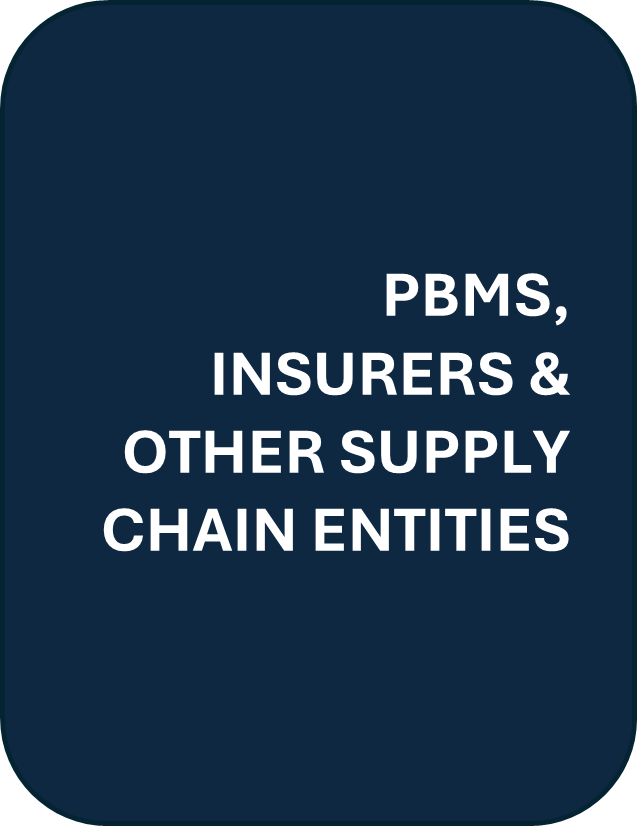
PBMs, insurers, Group Purchasing Organizations (GPOs) and others in the supply chain retained the largest share of spending among non-manufacturers. In 2023, $170 billion in rebates, discounts, fees and other payments from biopharmaceutical companies went to these middlemen. While this represents 25% of all brand spending, middlemen can take up to 80% or more on some medicines. These payments lower the cost of medicines for insurers and PBMs, yet patients are often forced to pay their out-of-pocket costs based on the full undiscounted price, leading patients to pay more than they should for their medicines.
 

selected teaser image

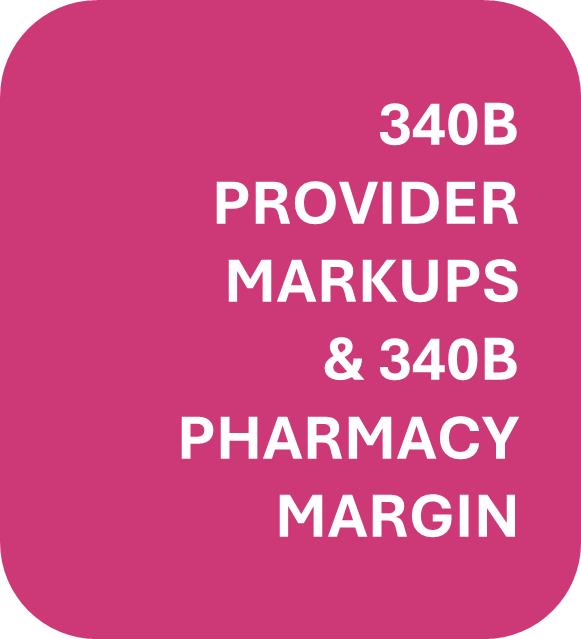
340B providers and for-profit companies now get 18 times more of the drug dollar than they did a decade ago while patients, taxpayers and employers are saddled with a hidden tax that inflates their costs. The largest share of 340B costs is driven by hospital markups—where big tax-exempt hospitals markup drugs up to 7x or more.
 

selected teaser image

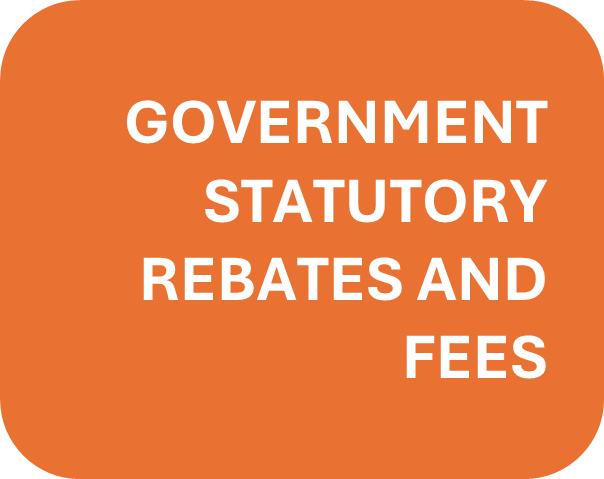
Biopharmaceutical companies paid $79 billion in rebates, discounts, and fees to government programs, including Medicaid and Medicare Part D. The Inflation Reduction Act (IRA) will further increase the amount of spending going to the government, eroding the investment in future research and development.
 

selected teaser image

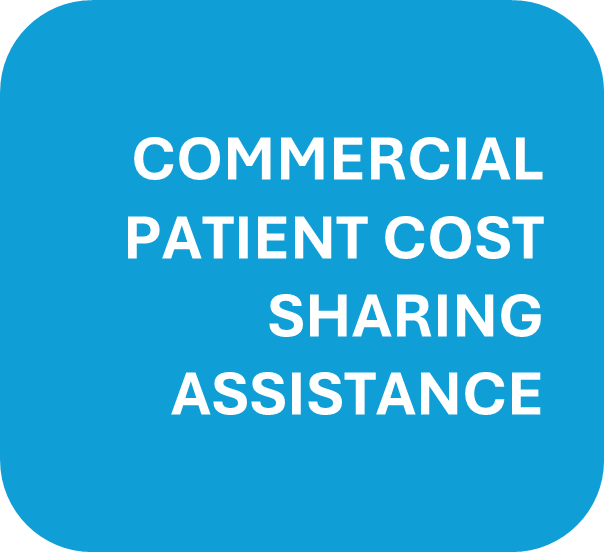
As insurers force commercially covered patients to pay higher out-of-pocket costs, biopharmaceutical manufacturers provide billions in assistance to help them afford their medicines. This assistance represented nearly $23 billion in spending. Unfortunately, it’s not all getting to patients. In fact, insurers and PBMs kept nearly $5 billion of cost-sharing assistance for themselves through abusive copay accumulator and maximizer programs.


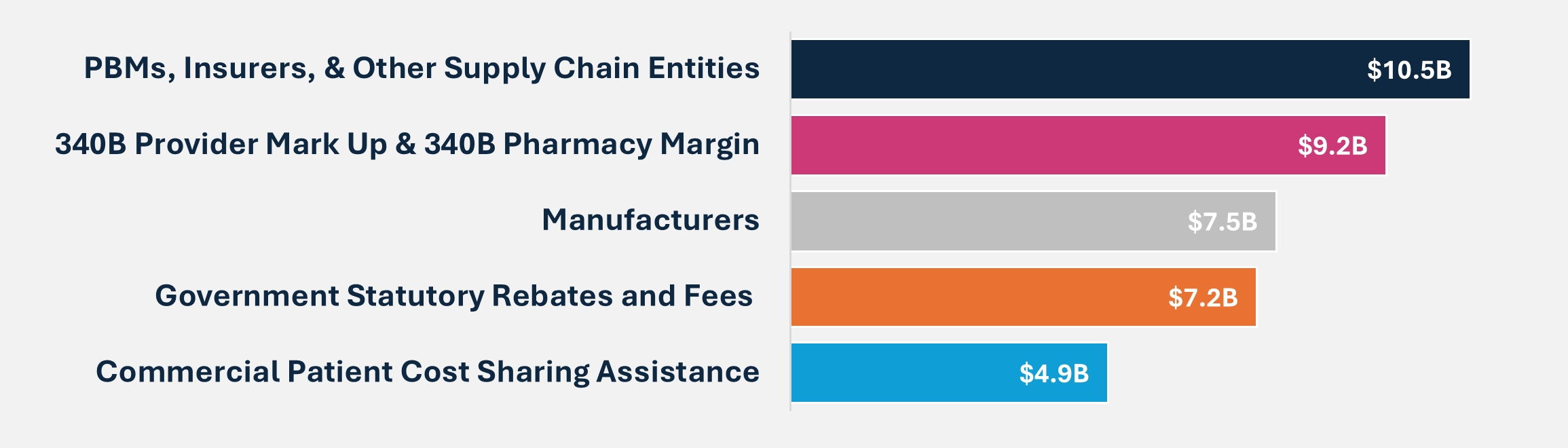
WHAT’S DRIVING DRUG SPENDING GROWTH?


Growth in Spending on Brand Medicines (2022-2023)
selected teaser image


From 2022 to 2023, spending on medicines increased $39 billion. The rebates, fees and other payments middlemen siphon out of the system was the single largest driver of this growth in spending. The second largest contributor was the growth 340B hospital markups and 340B provider and pharmacy profit on prescription drugs. These costs continue to increase because there’s no oversight or transparency. Worse, the money isn’t going to help low-income and uninsured patients.

As policymakers continue to look for ways to address rising health care costs and spending on medicines, the report’s findings are essential to help diagnose the right problems and pinpoint meaningful solutions. That starts with common sense reforms that put an end to insurer and PBM abuses, fix the IRA, reform the 340B markup program and ensure patient assistance goes to patients, not middlemen.

Elizabeth Carpenter

January 7, 2025

New study: Entities that don’t make medicines get half of what is spent on those medicines

Hold PBMs Accountable Rein in Middlemen Tactics that Harm Patients

Hold PBMs Accountable: Rein in Middlemen Tactics that Harm Patients

February 10, 2023

Insurance companies use middlemen known as pharmacy benefit managers (PBMs) to decide what medicines people can get and what people pay out of pocket.

Hold PBMs Accountable: Rein in Middlemen Tactics that Harm Patients image

DOWNLOAD FACT SHEET

Cost and Value

Fact Sheet

Protect Copay Assistance End Insurer and Middlemen Games That Drive Up Costs for Patients

Protect Copay Assistance: End Insurer and Middlemen Games That Drive Up Costs for Patients

February 10, 2023

Patients continue to show up at the pharmacy counter and realize their commercial health insurance coverage doesn’t provide the level of access and affordability they need. A big reason is because insurers and pharmacy benefit managers are shifting more costs onto patients through higher use of deductibles and coinsurance.

Protect Copay Assistance: End Insurer and Middlemen Games That Drive Up Costs for Patients image

DOWNLOAD FACT SHEET

Insurance Coverage

Fact Sheet

Health Insurance

0001-01-01T00:00:00

Health Insurance

New business model, optional. Same profit-driven middlemen, guaranteed.

August 3, 2026

After decades of profiting from a system built on opacity, the largest PBMs have been promising “sweeping reforms.” But those promises have only come after years of mounting bipartisan pressure for accountability by state and federal lawmakers and regulators. Policymakers should take notice of what’s in these new models – and ask harder questions about what employers and patients need in these contracts.

Download

PBMs/Insurance

Resource

Stay current on policy making

Sign up for email updates and follow us on social. 

About

Our Agenda

Policy Issues

Resources

Blog

Contact Us

Privacy Policy

Terms of Service

Facebook

Facebook

X

Twitter X

LinkedIn

LinkedIn

Instagram

instagram logo

America's Medicines

PhRMA Foundation

Voters for Cures

Working for Cures

Innovation.org

Please type your email

Success!

You've been added to the list