not used title
not used title
The U.S. Department of Health and Human Services recently announced changes to the childhood vaccine schedule, referencing international vaccination practices as part of the rationale for the updates. These recent changes put American children’s health at risk and were made without scientific justification. The move adds further confusion for Americans who navigate an already complex health care system and face barriers to care.
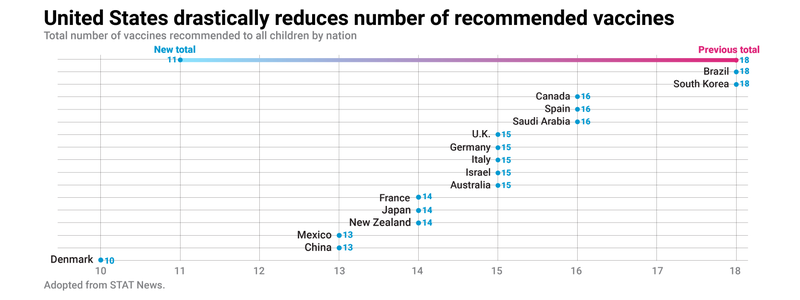
Let’s dive deeper:
The recent updates to the U.S. childhood vaccination schedule undermine evidence-based protections for American children, putting lives at risk.
Efforts to align the U.S. schedule to those used in other countries have resulted in reduced or weakened recommendations for vaccines that protect children against serious illnesses, including rotavirus, influenza and respiratory syncytial virus (RSV), among others.
- Rotavirus was the leading cause of severe diarrhea in infants and children under five. Before routine vaccination began in 2006, the disease caused up to 70,000 hospitalizations and up to 60 deaths in children under five annually in the U.S. Pediatric hospitalizations have fallen by 80% since routine vaccination began.
- Pediatric influenza leads to thousands of hospitalizations and dozens to hundreds of child deaths in the U.S. each year. In the 2024-2025 season, the U.S. had 288 pediatric flu deaths, the highest number of deaths since 2009, and already this year, 9 children have died from the flu.
- RSV is the leading cause of hospitalization among infants in the U.S., causing up to 80,000 hospitalizations and 100-300 deaths in children under 5 each year.
Limiting or restricting recommendations for vaccines that protect against these serious diseases risks reversing decades of progress and increasing rates of preventable illness, hospitalizations and child mortality in the U.S.
The claim that the U.S recommends far more vaccines for children than peer countries is misleading.
Cross-country comparisons of vaccine schedules can often seem drastically different due to variations in factors such as dose timing and inclusion of boosters. In reality, while every country’s schedule should be scientifically driven and tailored to its populations’ health needs, industrialized countries generally agree on the diseases we should protect children against.
Across high-income countries, routine vaccination recommendations for the first five years of life typically cover 12-15 serious pathogens. The U.S. schedule was at the higher end of that range but remained within international norms – undercutting claims that U.S. children are vaccinated against an excessive or unnecessary number of diseases.
The U.S. childhood vaccine schedule was developed to reflect our own nation’s epidemiology and health care system – not blindly follow other countries.
Historically, America’s childhood vaccine schedule has reflected decades of research and evidence-based review by public health experts, accounting for disease burden, transmission patterns, health care infrastructure and access to preventive services.
The same goes for other high-income countries. For instance, Denmark, which sits at the low end of the range of recommended childhood vaccines, has a schedule that reflects the country’s small, homogenous population, centralized health care system that promotes broad access to preventive care and low baseline disease prevalence.
Using other countries vaccine schedules with different health care coverage realities, population profiles and outbreak histories to guide our own will not adequately protect American children who live in a large, heterogeneous country with a more complex financing and fragmented coverage system and where patients often face barriers to accessing care.
For decades, the U.S. built its childhood vaccine schedule on rigorous, evidence-based research to protect children and families from dangerous diseases. And it worked: routine childhood vaccination has prevented millions of illnesses, hospitalizations and deaths while saving $2.7 trillion over the last 30 years.
Making changes that depart from robust scientific data and review will stall progress and expose more Americans to illness and even death that could otherwise be prevented. Ensuring continued access to vaccines is essential to keeping all Americans – especially children – protected.
Learn more at PhRMA.org/Vaccines.
Larry Kerr
Larry Kerr, PhD is PhRMA’s deputy vice president for global health and multilateral affairs. Previously, he served in the United States Government for over twenty years in pandemic preparedness and response in the White House Homeland and National Security Councils’ staff, the Office of Science and Technology Policy, and the Department of Health and Human Services’ National Institutes of Health and Office of Global Affairs. He received his doctoral degree from Vanderbilt University and served on the faculty of Vanderbilt University and Georgetown University Schools of Medicine.
Larry Kerr
Why smart vaccine policy matters
August 3, 2026
New study: HPV vaccination helps prevent cervical cancer deaths
July 21, 2026
New research reinforces the importance of hepatitis B vaccination at birth
May 21, 2026
World Immunization Week: Putting preventable diseases in the past
April 24, 2026
ICYMI: Measles resurgence could cost U.S. nearly $8 billion over five years
April 15, 2026
Why shifting childhood vaccines to “shared clinical decision-making” puts kids at risk
February 23, 2026
New study: Measles setbacks harm health and America’s economy
October 28, 2025
Why the hepatitis B vaccine matters
October 21, 2025
Vaccines and autism: Decades of scientific evidence find no link
September 22, 2025
Why the vaccine injury program matters
August 18, 2025
Recognizing the importance of vaccination for American health and security
August 4, 2025
Answering common questions on mRNA technology
July 17, 2025
What to know about vaccine ingredients: Aluminum and thimerosal
June 24, 2025
World Immunization Week: Highlighting the importance of vaccines for public health
April 28, 2025
What you need to know: Measles and the MMR vaccine
March 10, 2025
Improved treatments continue to lead to declining cancer mortality rates in the U.S.
February 25, 2025
Preventing and fighting disease: A look at the biopharmaceutical progress made for patients in 2024
February 3, 2025
Recognizing the value of disease prevention with Dr. Len Friedland from GSK
December 12, 2024
Leveraging the power of vaccines to prevent antimicrobial resistance
October 31, 2024
From the emergency department to the CDC Advisory Committee: Key takeaways from ACIP’s recent meeting
October 30, 2024
The Patient Perspective: Vaccines
October 23, 2024
How to protect your children’s health this school year
August 22, 2024
New Report: Vaccines continue to drive improved health outcomes
July 16, 2024
Showcasing the promise of biopharma at ASCO 2024
June 28, 2024
World Vaccine Congress: Building on vaccine success
April 1, 2024
WHO Pandemic Agreement offers opportunities and risks for American innovators
November 20, 2023
New Report: 1,600 cancer treatments and vaccines in clinical development
November 9, 2023
What you should know about protecting your health this fall
October 16, 2023
A conversation with Dr. Mike Ybarra on the current state of COVID-19
June 27, 2023
What they are saying: Experts reinforce that TRIPS waiver expansion is harmful and unnecessary
April 13, 2023
PhRMA provides comments and testimony to USITC investigation on COVID-19 medicines and the TRIPS Agreement
March 30, 2023
Celebrating the success of the COVID-19 vaccines, and looking to the future
March 27, 2023
What we’ve learned from three years of fighting COVID-19
March 20, 2023
Word of the Month: What is TRIPS?
November 29, 2022
What you should know about RSV
November 15, 2022
Word of the Month: Long COVID
October 19, 2022
Protecting against influenza: A conversation with David Ross, Vice President, Commercial Operations, North America, CSL Seqirus
October 13, 2022
Partnerships are driving global COVID-19 treatment access
September 22, 2022
ICYMI: PhRMA’s Ubl pens op-ed on IP waiver for COVID-19 technologies
July 15, 2022
New Data: COVID-19 vaccine global production capacity projected to exceed 20 billion doses this year
February 24, 2022
What you need to know about newly authorized COVID-19 antiviral treatments
February 22, 2022
Guest Blog: COVID-19 vaccines are the key to keeping kids healthy
February 16, 2022
Global COVID-19 vaccination matters now and for the future
November 29, 2021
Understanding breakthrough COVID-19 infections
November 11, 2021
The important role of antivirals in the fight against COVID-19
October 6, 2021
A year and a half later: The biopharmaceutical industry remains committed to beating COVID-19
September 8, 2021
Recognizing National Immunization Awareness Month
August 31, 2021
Driving further innovation is critical to global vaccine equity
August 24, 2021
Supporting country readiness to boost global vaccine access
August 12, 2021
Ensuring global vaccine equity requires eliminating trade and regulatory barriers
August 5, 2021
Setting the record straight: Addressing common misconceptions about the COVID-19 vaccine
August 4, 2021
Increasing global access to vaccines by optimizing production
July 29, 2021
Guest post: Retired medics return to the field to take on vaccine delivery and disaster relief
July 23, 2021
Guest Post: A patient’s story of the long-term health impacts of COVID-19
July 21, 2021
Dose sharing as a part of the COVID-19 global vaccine equity strategy
July 20, 2021
Promoting global vaccine equity while protecting innovation
July 15, 2021
Data shows COVID-19 vaccines are creating a pathway to a strong U.S. recovery
July 2, 2021
Americans 12 years of age and older are eligible for COVID-19 vaccines
June 17, 2021
ICYMI: PhRMA president and CEO Stephen J. Ubl joins other industry leaders for a conversation on COVID-19 vaccines with Axios
May 21, 2021
Supporting India during the devastating coronavirus surge
May 20, 2021
PhRMA CAREs Grant request for proposals: Addressing inequities in access to COVID-19 testing, therapeutics and vaccines
May 6, 2021
Ron Busby, Sr., President and CEO of the U.S. Black Chambers, Inc. on improving vaccine confidence in community
May 5, 2021
Patient safety is at the heart of COVID-19 vaccine R&D
April 26, 2021
Data shows that Americans are relying on vaccines to get us through the pandemic
April 22, 2021
Diversifying clinical trials and fighting disease requires equity and trust
April 12, 2021
Building confidence in the COVID-19 vaccine through education
March 22, 2021
ICYMI: WSJ showcases breakthrough science of COVID-19 vaccines and implications for future medicines
March 8, 2021
Intellectual property is the key to vaccine development, manufacturing and technology sharing
March 5, 2021
Coming together to fight COVID-19: A conversation with Paul Perreault, CEO and Managing Director of CSL
February 24, 2021
Fighting variants of COVID-19
February 22, 2021
Growing trend: Increased vaccine confidence
January 28, 2021
Guest post: How COVID-19 underscores the importance of public confidence in vaccines
December 7, 2020
Understanding the emergency use authorization process for COVID-19 vaccines
November 12, 2020
Flu Season 2020: Why it’s time to talk to your doctor today about getting a flu shot
October 8, 2020
Coming together to fight COVID-19: A conversation with Albert Bourla, Chairman & CEO of Pfizer, Inc.
September 17, 2020
Coming together to fight COVID-19: A conversation with Paul Hudson, CEO of Sanofi
September 2, 2020
Supporting access to vaccines for Part D beneficiaries
August 12, 2020
New report shows more than 400 medicines and vaccines in development to tackle infectious diseases, including COVID-19
July 21, 2020
PhRMA’s Lori Reilly joined CSG to discuss the industry’s response to COVID-19 and what it means for states
July 13, 2020
How biopharmaceutical researchers are ensuring COVID-19 vaccines will be safe and effective
June 29, 2020
Guest Post: From lab to jab: Vaccine development to prevent COVID-19
June 11, 2020
What scientific experts are saying about vaccine safety
June 4, 2020
New report shows nearly 260 vaccines in development, including dozens for COVID-19
April 23, 2020
ICYMI: Continued biopharmaceutical action on COVID-19
March 6, 2020
Why vaccines work in the fight against measles and other infectious diseases
February 13, 2019
Medicare Monday: Helping beneficiaries access vaccines
December 18, 2017
New report and event examine the new era of vaccines
November 9, 2017
Medicare Monday: Strengthening access to vaccines for seniors
August 14, 2017
Vaccines
Changes to America’s childhood vaccine schedule fail to protect our nation's kids
January 13, 2026