Vaccines
Vaccines matter for every American.
Vaccines are one of the best ways to prevent disease before it starts. We’ve been using vaccines for decades and we know they work. Before vaccines, being a young child was one of the most dangerous times in a person’s life. Now, we are protected against diseases like measles, polio and whooping cough, among others.
See vaccine innovation at work
https://www.youtube.com/embed/eq0ZYnY_vwI
https://www.youtube.com/embed/Y2vlJjpkja4
https://www.youtube.com/embed/s0vI3KB5QsY
Built with decades of knowledge: Every vaccine is carefully designed for safety and protection.
All vaccines share the same purpose: protecting Americans and preventing serious disease. But there are different kinds of vaccines. Some train the immune system to fight diseases like cancer while others prevent infection, transmission and serious illness.
Every vaccine is carefully developed through rigorous research and clinical trials and undergoes thorough review by scientific and regulatory experts before it is approved for use. Even after approval, vaccines are continuously monitored using real-world data to ensure they continue to safely prevent serious disease and protect the population.
Not all vaccines work the same, but they all serve a common purpose: to protect against infections.
Therapeutic Vaccines
Therapeutic vaccines are a type of medicine designed to treat a disease after it has occurred rather than prevent it. It works by training your body to recognize, target and control the illness. Scientists are currently developing vaccines that provide this form of protection to treat some of the most challenging diseases, including cancer and HIV.
Preventative Vaccines
Vaccines that block infection
Vaccines that block infection prepare your immune system to fully recognize a specific pathogen before it can cause illness. They provide long-lasting, often life-long protection against both infection and transmission, and unlike vaccines for more rapidly changing pathogens, are not given on a recurring or annual schedule. These vaccines are effective against germs and microbes that change very little over time, and have longer incubation periods, such as those that cause polio or measles.
Vaccines that require periodic boosters
Vaccines that can prevent disease, including severe disease and hospitalizations, are used against germs and microbes that undergo frequent genetic changes and have short incubation periods. While these vaccines may not always prevent infection, they prime the immune system to respond quickly, making illnesses milder and reducing the risk of serious complications, hospitalization and death. Well-known examples include the seasonal flu and COVID-19 vaccines, which target viruses with short incubation periods that can “outrun” the immune system and are updated regularly to help the immune system respond to the latest changes to the viruses.
Vaccines have dramatically improved our health.
Vaccines have transformed American’s health and are one of the most effective public health tools we have. They eradicated smallpox, helped the United States achieve elimination status for polio, and protect millions of people from serious and potentially deadly diseases every year.
It’s important to understand that progress isn’t permanent. When vaccination rates fall, diseases thought to be in the past, like measles and whooping cough, can return.
Continued innovation ensures vaccines remain available as a critical tool to protect Americans from both longstanding and emerging health threats.
Before vaccines, many children died or were severely injured by diseases that we can now prevent with vaccines. In the early 20th century, nearly 1 in 5 children died before their 5th birthday, many from infectious disease.
American leadership in vaccines keeps U.S. secure.
U.S. leadership in vaccine innovation strengthens both national security and public health. Vaccines protect Americans from serious diseases and help ensure we are prepared to respond quickly to emerging health threats.
Developing world-leading vaccines here at home ensures American patients have access to the most advanced protection first. This domestic expertise also supports our readiness, economic stability and overall health security.
Reducing Hepatitis B
Introduction of the hepatitis B vaccine at birth has decreased cases of hepatitis B in children and teens by 99%.
Hepatitis B
Eradicating Smallpox
Widespread vaccination has fully eradicated smallpox.
Smallpox
Eliminating Polio
Polio has been eliminated in the U.S. since the introduction of the vaccine in 1955.
Polio
Preventing Measles
One dose of the MMR vaccine is 93% effective at preventing measles, and the second dose increases effectiveness to 97%.
Measles
Reducing HPV
Human papillomavirus (HPV) vaccine has led to decreased HPV infections and pre-cancers by 88% in teens girls and 81% in young adult women.
HPV
Preventing Influenza
Flu vaccination prevented 7.1 million cases and 7,100 deaths between 2019-2020.
Influenza
Declining Whooping Cough Cases
Cases have dropped 150-fold thanks to vaccination.
Whooping Cough
Vaccines are a high-return investment for America’s health and our nation’s economy.
Vaccines are one of the most effective tools we have to protect against severe illness, hospitalization and death. By preventing illness before it occurs, vaccines deliver a strong return on investment — reducing health care costs, supporting workforce productivity and generating long-term economic value.
Continuing to prioritize evidence-based vaccine policy is essential to maintaining these benefits for patients, sustaining a strong and productive workforce and strengthening America’s long-term economic resilience.
Every American deserves disease protection.
Every American should be able to protect themselves and their family with vaccines that are available and accessible without cost or barriers standing in the way, because vaccines are only effective when everyone who wants one can get one. Recommended vaccines are typically covered at little or no cost, ensuring families can make health decisions without financial barriers.
Preserving access isn't just about convenience - it protects individuals, helps prevent the spread of disease and bolsters national security. Limiting access to vaccines reduces an individual's choice and weakens our ability to prevent illness before it starts.
Below are testimonies from our Voters for Cures advocates.
Natalie M. Headshot
Natalie M.
“Cervical cancer is a serious issue that can impact so many families. As a woman, but also a mother to my beautiful daughter, I’m grateful that a vaccine was discovered to help prevent against the virus. Access to this care is critical.”
Marylin C. Headshot
Marylin C.
“Surviving cancer and managing a chronic condition has made me more mindful about protecting my wellbeing whenever I can.
Preventive care isn’t just routine for me, it’s essential. That’s why I’m so grateful I was able to talk to my doctor and access and receive the shingles vaccine, which gives me peace of mind knowing I’ve taken an important step to protect myself from another painful illness.”
Chloe V. Headshot
Chloe V.
“Efficient and equitable access to COVID-19 vaccines helps keep our communities connected. Safely gathering with friends and family is a basic human need — and safeguarding medical innovation is what makes it possible.”
Brooke B. Headshot
Brooke B.
“Infants are already at a high risk for contracting RSV, and premature babies often face even greater chances of complications from the virus due to underdeveloped immune symptoms. As a child born just two pounds in the NICU, I know how important preventative care is for families. Now as a healthy and strong woman, I wanted to do my part, and I received the RSV vaccine.”
Frequently Asked Questions
What is a vaccine?
Vaccines train your immune system to recognize and respond to certain diseases, so your body is best equipped to fight back.
Many vaccines prevent disease or serious illness, helping to protect your health.
Vaccines are one of the most important tools we have for protecting against serious and sometimes deadly infectious diseases.
How do vaccines work in the body?
Vaccines teach your body to recognize and fight pathogens and other foreign substances like viruses and bacteria - so your immune system is ready if you encounter them in the future.
Vaccines do this by using a harmless component of the pathogen—such as a weakened or inactivated form of a virus—allowing your body to build protection without causing illness
Are there different types of vaccines?
There are several types of vaccines, and while they can differ in design, every vaccine is developed with one goal: to protect you and your loved ones from serious illness.
Some vaccines provide long-lasting protection against pathogens that don’t change much overtime, like polio, measles, and hepatitis B.
Others, like the flu shot, target viruses that change frequently, so the vaccine needs updating to match circulating strains.
There are also therapeutic vaccines, which are being studied to help the body fight diseases a person already has, such as certain cancers.
Why are vaccines important?
Vaccines are important because they protect people from serious and potentially life-threatening diseases.
They train the body’s immune system to fight germs before they cause disease, keeping individuals and families safer.
And they play a critical role in improving public health by preventing and largely removing dangerous diseases like polio and smallpox, saving millions of lives and preventing countless hospitalizations.
Are vaccines safe?
Vaccines are very safe, and they are the best way to protect yourself and your family from serious illness.
Millions of children receive vaccines safely every year.
While all medical products may have the risk of side effects, the most common side effects of vaccines are very mild and short, such as pain or swelling at the injection site.
The United States has an extremely thorough and layered vaccine safety system. Before a vaccine is approved by the FDA, it must go through years of testing and a robust clinical trial process to show that its benefits outweigh the potential risks. Even after approval, vaccines are closely monitored for safety.
Is there a link between vaccines and autism?
It’s completely understandable that a parent of a child with autism would want answers about the cause of the disorder. Autism is a neurodevelopmental condition with a strong genetic component.
The question about vaccines and autism has been asked and thoroughly answered. Instead of continuing down this path we should be putting resources and energy into promising research that can help us better understand real factors that contribute to this complex condition.
Why is it important for communities to have high vaccination rates?
High vaccination rates are critical to preventing outbreaks of serious diseases and keeping people healthy.
When large percentages of people are vaccinated, it creates a strong shield of protection that helps stop infections from spreading.
If other people have vaccines and they work for them, why do I need one?
Even though other people may be vaccinated, diseases can still spread if too many people skip their shots.
By getting vaccinated – you’re protecting yourself and protecting vulnerable people from the disease reaching them. When more people are vaccinated, everyone stays safer.
What is in vaccines?
Vaccines are made up of different ingredients.
Antigens are the active ingredient in a vaccine.
Some ingredients help boost the immune response of a vaccine, while others ensure the vaccine works safely and provides long-lasting protection against disease.
Every ingredient in a vaccine is extensively reviewed and tested for safety.
Why do you need some vaccines once but others annually?
Not all vaccines work the same, but they all serve a common purpose: to protect against infections.
Some vaccines prevent individuals from contracting a specific disease.
These vaccines are effective against viruses and bacteria that change very little over time, such polio, measles, and hepatitis B. Since they can provide long-lasting protection, they are not needed on a recurring schedule.
Other vaccines protect you against severe disease and are used against viruses and bacteria that undergo frequent changes.
Think about the seasonal flu vaccine – it is updated every year to help your immune system respond to the latest changes to the virus.
Why should babies get the Hep B vaccine?
Hepatitis B is a serious liver infection, and babies are particularly vulnerable.
Infants infected at birth have a 90% chance of developing chronic infection, which can lead to cirrhosis, liver cancer or liver failure.
Hepatitis B is up to 100 times more infectious than HIV and the virus can live outside the body for up to a week.
It can be passed to infants by an infected mother, family member or caregiver during pregnancy or birth, through cuts or bites or even by sharing personal items with someone who is infected.
That’s why giving the vaccine at birth is so important – it protects newborns immediately, when they need it most and before they can be exposed.
The benefits of the vaccine outweigh the risks, and the vaccine is 95-99% effective in preventing hepatitis B infection and the associated long-term complications.
What is the impact of splitting up vaccines and getting them administered further apart?
When vaccines are delayed, children stay unprotected longer when they are most vulnerable.
Some vaccines are combination vaccines that have been around for decades.
These vaccines help limit the number of trips to the doctor’s office and lead to fewer shots.
Today’s recommended vaccine schedule is carefully developed to ensure children are protected at the ages when they’re most likely to face serious illness.
The schedule is based on decades of research to make sure kids get protection exactly when they’re needed most.
Why is it important to have access to vaccines?
It is important to have access to vaccines so that every American has the ability to protect themselves and their families from disease.
Ensuring that Americans can get vaccines with no out-of-pocket costs allows people to make the best choice for their family without financial barriers.
Related Resources
Changes to America’s childhood vaccine schedule fail to protect our nation's kids
The U.S. Department of Health and Human Services recently announced changes to the childhood vaccine schedule, referencing international vaccination practices as part of the rationale for the updates. These recent changes put American children’s health at risk and were made without scientific justification. The move adds further confusion for Americans who navigate an already complex health care system and face barriers to care.
Let’s dive deeper:
The recent updates to the U.S. childhood vaccination schedule undermine evidence-based protections for American children, putting lives at risk.
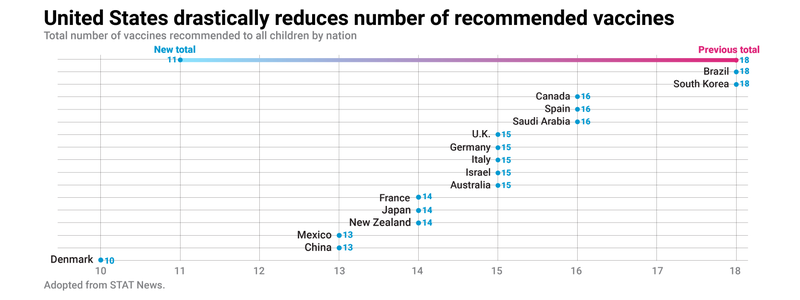
Efforts to align the U.S. schedule to those used in other countries have resulted in reduced or weakened recommendations for vaccines that protect children against serious illnesses, including rotavirus, influenza and respiratory syncytial virus (RSV), among others.
- Rotavirus was the leading cause of severe diarrhea in infants and children under five. Before routine vaccination began in 2006, the disease caused up to 70,000 hospitalizations and up to 60 deaths in children under five annually in the U.S. Pediatric hospitalizations have fallen by 80% since routine vaccination began.
- Pediatric influenza leads to thousands of hospitalizations and dozens to hundreds of child deaths in the U.S. each year. In the 2024-2025 season, the U.S. had 288 pediatric flu deaths, the highest number of deaths since 2009, and already this year, 9 children have died from the flu.
- RSV is the leading cause of hospitalization among infants in the U.S., causing up to 80,000 hospitalizations and 100-300 deaths in children under 5 each year.
Limiting or restricting recommendations for vaccines that protect against these serious diseases risks reversing decades of progress and increasing rates of preventable illness, hospitalizations and child mortality in the U.S.
The claim that the U.S recommends far more vaccines for children than peer countries is misleading.
Cross-country comparisons of vaccine schedules can often seem drastically different due to variations in factors such as dose timing and inclusion of boosters. In reality, while every country’s schedule should be scientifically driven and tailored to its populations’ health needs, industrialized countries generally agree on the diseases we should protect children against.
Across high-income countries, routine vaccination recommendations for the first five years of life typically cover 12-15 serious pathogens. The U.S. schedule was at the higher end of that range but remained within international norms – undercutting claims that U.S. children are vaccinated against an excessive or unnecessary number of diseases.
The U.S. childhood vaccine schedule was developed to reflect our own nation’s epidemiology and health care system – not blindly follow other countries.
Historically, America’s childhood vaccine schedule has reflected decades of research and evidence-based review by public health experts, accounting for disease burden, transmission patterns, health care infrastructure and access to preventive services.
The same goes for other high-income countries. For instance, Denmark, which sits at the low end of the range of recommended childhood vaccines, has a schedule that reflects the country’s small, homogenous population, centralized health care system that promotes broad access to preventive care and low baseline disease prevalence.
Using other countries vaccine schedules with different health care coverage realities, population profiles and outbreak histories to guide our own will not adequately protect American children who live in a large, heterogeneous country with a more complex financing and fragmented coverage system and where patients often face barriers to accessing care.
For decades, the U.S. built its childhood vaccine schedule on rigorous, evidence-based research to protect children and families from dangerous diseases. And it worked: routine childhood vaccination has prevented millions of illnesses, hospitalizations and deaths while saving $2.7 trillion over the last 30 years.
Making changes that depart from robust scientific data and review will stall progress and expose more Americans to illness and even death that could otherwise be prevented. Ensuring continued access to vaccines is essential to keeping all Americans – especially children – protected.
Learn more at PhRMA.org/Vaccines.
Larry Kerr
Vaccines and autism: Decades of scientific evidence find no link
Receiving a life-altering diagnosis for a child is overwhelming, prompting a deep search for understanding and the reasons behind it. This can be especially true when the condition is as significant and complex as autism spectrum disorder.
With autism, there is a lot we know, there are places we need to study more and there are answers we already have: vaccines and their ingredients are not the cause.
Decades of scientific research and peer-reviewed studies have found no connection exists between vaccines or their ingredients and autism. While researchers continue to study its underlying causes, increases in autism diagnoses are better explained by expanded diagnostic criteria, improved screening and greater public awareness – not vaccines.
Here are three key things to know:
- The evidence is clear. Decades of data show that vaccines and their ingredients do not cause autism.
- Vaccines save lives. The benefits of childhood vaccination far outweigh any potential risks. Vaccines protect children from dangerous diseases that can cause severe illness, long-term complications, cancer and even death.
- False claims have real costs. Revisiting questions that have been asked and answered many times over diverts resources from promising research and progress.
Go deeper: Vaccines are one of the most effective tools we have to keep children and families protected from serious diseases. More than 50 years of clinical studies and real-world use show that the benefits of routine childhood vaccines far outweigh any potential risks. Further, vaccines are closely monitored for safety after approval by government agencies, manufacturers, universities and health systems across the country.
It is critical that conversations are grounded in scientific evidence: vaccines protect against disease, and there is no credible scientific evidence connecting them to autism.
A closer look at the facts:
Thimerosal and aluminum ingredients
Thimerosal is a preservative that has been used in some vaccines to prevent bacterial or fungal contamination. Numerous large-scale studies and reviews spanning more than 20 years have repeatedly confirmed there is no link between vaccines containing thimerosal and autism or other long-term health issues. Since 2001, all vaccines routinely recommended for children six years of age and younger are available in thimerosal-free formulations.
Aluminum is used in vaccines in miniscule amounts – far less than what people encounter through their diet or the environment – to help boost the body’s immune response, making vaccines more effective at a smaller dose. Moreover, a publicly funded, peer-reviewed study in 2025 found no connection between cumulative aluminum exposure from vaccines in early childhood and 50 chronic conditions, including autoimmune diseases, allergies and neurodevelopmental disorders like autism and ADHD.
The MMR (Measles, mumps, rubella) vaccine
Measles was declared eliminated in the United States in 2000, thanks to widespread vaccination with the MMR vaccine. Rigorous testing and decades of real-world data and research – including a 2019 study of over 650,000 Danish children – found no evidence of a connection between autism and MMR vaccines.
Childhood vaccine schedule
Extensive evidence from multiple large-scale studies, including a meta-analysis of millions of children, found no link between the recommended childhood vaccine schedule and autism.
Hepatitis B vaccines
Hepatitis B is called a “silent epidemic” because most people do not have symptoms when they are newly infected or chronically infected. Thus, they can unknowingly spread the virus to others and continue the silent spread of hepatitis B. When infants become infected with hepatitis B, they have about a 90% chance of developing a lifelong, chronic infection. Complications from the infection are much more likely if they get infected in the early days of their lives.
The bottom line: Claims attempting to link vaccines to autism have been thoroughly and consistently debunked by a vast body of scientific research. Vaccines are critical tools that protect our country from dangerous disease and strengthen our nation’s public health – and we must ensure we have a robust vaccine infrastructure that reinforces their value to people and society as a whole.
Read PhRMA’s statement on autism from September 22, 2025.
Mike Ybarra
Why the vaccine injury program matters
Vaccines are powerful tools that protect individuals and families from serious illnesses and reduce the severity of disease. Because of widespread vaccination, diseases that were once deadly are now nearly eliminated.
The overwhelming benefits of vaccination outweigh the risks, as shown by thousands of peer-reviewed studies involving hundreds of thousands of people and continuous monitoring after approval. However, like any medical intervention, people can experience adverse effects from a vaccine.
The National Vaccine Injury Compensation Program (VICP) was established by the National Childhood Vaccine Injury Act of 1986 to provide fair and timely compensation to those who experience side effects from routinely recommended vaccines. Here’s what you need to know about VICP:
How does the VICP work?
The VICP allows people who claim they were injured by vaccines recommended for routine use by children or pregnant women to seek compensation. Compensation is paid without the need to prove that the manufacturer or health care practitioner did something wrong as would be required in a typical civil lawsuit. In many cases, the vaccine is actually presumed to cause certain injuries under the program, so that the only issue to resolve will be the amount of compensation to be paid.
How does the VICP make it easier for individuals filing vaccine injury claims?
The VICP reduces the lengthy and costly legal burdens often experienced in traditional civil litigation. In many cases, claims are resolved through negotiations and settlements, so that no court proceedings are required. If someone who files a claim hires a lawyer, they will not owe anything for legal fees, because those are paid by the program.
Does the VICP shield manufacturers from liability?
The VICP does not shield manufacturers.
The program exists to provide a streamlined process intended to resolve vaccine injury claims efficiently. People can still pursue civil lawsuits against a vaccine manufacturer if they are dissatisfied with the vaccine court’s decision.
Why was the VICP created?
The program was created after lawsuits against vaccine manufacturers threatened to disrupt vaccine production, diminishing the availability of vaccines.
In 1982, a misleading TV report claimed the whole-cell pertussis vaccine caused permanent brain damage, but later studies showed it was linked only to febrile seizures not brain damage - and took over a decade to dispel public fears. In 1984, only one manufacturer of diphtheria, tetanus and pertussis vaccines remained, leading to concerns about decreasing vaccine supply and future vaccination rates, risking the resurgence of vaccine-preventable diseases.
To address this, Congress took bipartisan action to establish a program that would provide compensation for those who experienced vaccine-related injury, while also stabilizing the vaccine market. The VICP relies upon an excise tax on each dose of vaccine administered that is deposited in a trust fund.
Can the VICP be improved?
The VICP has been a vital part of the vaccine ecosystem for decades, but like any long-standing system, it could potentially benefit from targeted improvements. For example, the VICP relies on a Vaccine Court that is staffed by highly experienced special masters who serve as judicial officers. Increasing the number of those experienced experts to reduce case backlogs might help make the program more efficient and accessible. It is critical that any proposed changes are carefully evaluated and consider the long-term impacts of changing a system that has served public health so well.
The bottom line: The VICP has compensated thousands of injury claims while helping to safeguard the stability of our nation’s vaccine supply. A strong vaccine infrastructure protects Americans from infectious disease outbreaks, upholds U.S. leadership in innovation and strengthens national security. Weakening the VICP would jeopardize patient access to FDA-approved vaccines and leave communities more vulnerable to preventable diseases.
Andrew Powaleny
Recognizing the importance of vaccination for American health and security
Vaccines play a vital role in protecting our health, especially as preventable disease outbreaks rise.
Here’s five things to know about vaccines:
- Vaccines are powerful tools that protect us from serious infectious diseases that can cause severe illness or in some cases even death. Before vaccines, diseases we can now prevent—like measles, polio and whooping cough—caused significant illness and claimed thousands of lives each year. In the early 20th century, nearly one in five children died before they turned five, many from infectious disease that are now preventable. Today, vaccines remain one of the most effective tools to keep children and families healthy. It’s critical we maintain high vaccination rates because infectious diseases that were previously eliminated or controlled through vaccines can resurge when vaccination rates decline below a certain threshold.
- There are several types of vaccines – and while different by design, every vaccine is developed with the same goal: to protect you and your loved ones from serious diseases. Some prevent individuals from contracting or transmitting a specific disease, while others reduce the severity of illness if you do get sick. But all vaccines work by training your immune system to recognize and respond to harmful pathogens—helping your body build protection before exposure to the illness itself.
- Vaccines are given to prevent rather than treat disease, which is why they undergo a rigorous development and review processes. Vaccines undergo clinical trials prior to approval and scientists, both from the federal government and at the biopharmaceutical company, continue to monitor vaccine safety after FDA review and approval. Most vaccines have been proven safe and effective through decades of clinical studies and real-world use. Their safety is monitored by government agencies, vaccine makers, universities and health systems around the world.
- Vaccines play a key role in our nation’s security and position as a global leader in innovation. Powered by American innovation, vaccines ensure our nation is protected from disease outbreaks while safeguarding national security, economic stability and American leadership.
- It is critical that vaccines are available, accessible and covered by insurance, so that every American can protect themselves and their families. Broad access to and coverage of vaccines ensures people can take informed, proactive steps to stay protected.
The bottom line: Vaccines play an important role in keeping American families healthy – and the need for a strong policy environment that supports access to vaccines and empowers innovation that protects our country’s health and global security.
Mike Ybarra