Medicines are responsible for more than a third of the improvement in life expectancy from 1990 to 2015, according to a recent study published in Health Affairs. This underscores the crucial role of biopharmaceutical innovation, as life expectancy increased 3.3 years during that time period.
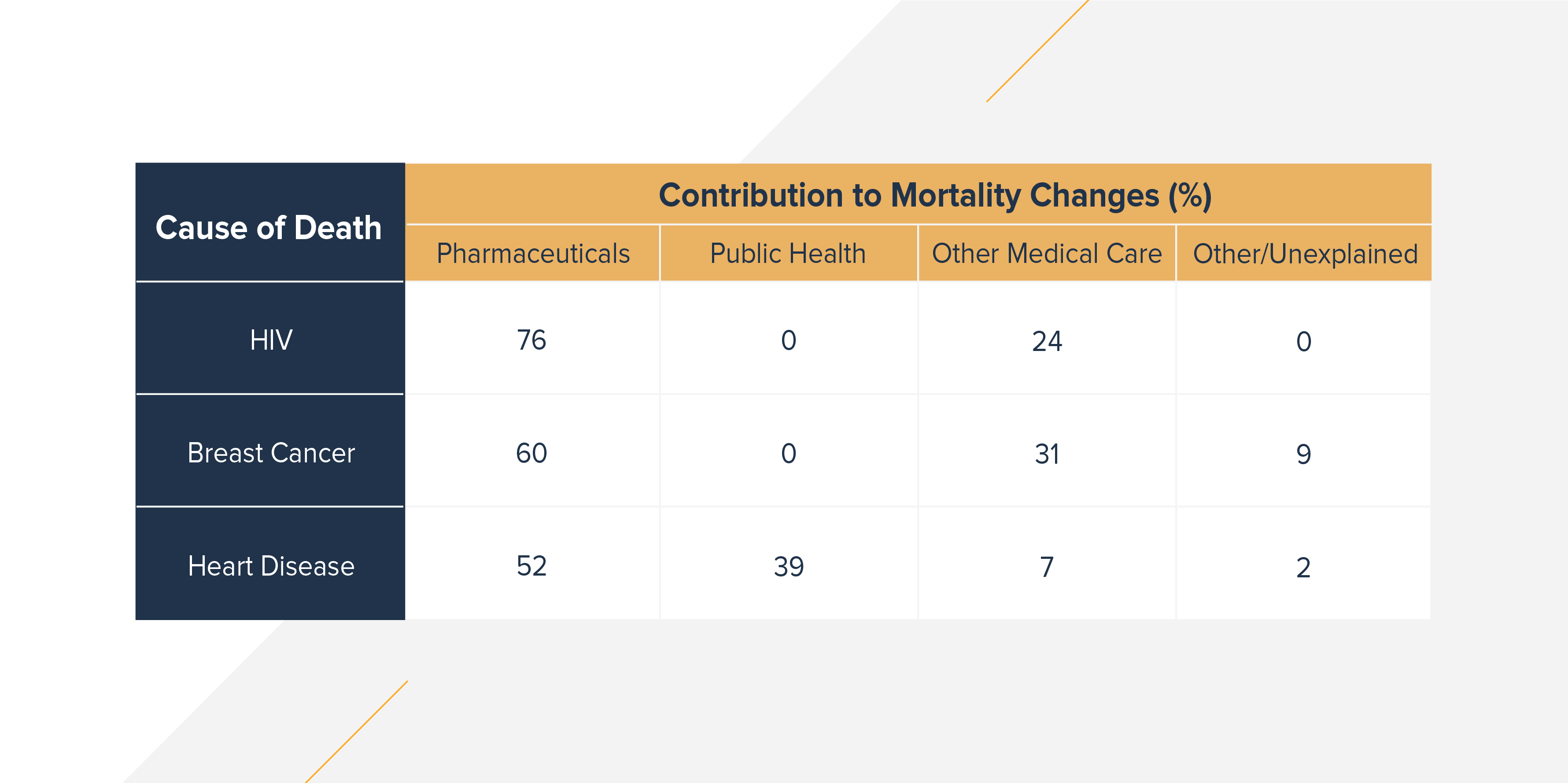
For all causes of death, public health interventions were accountable for 44% of improved life expectancy, while pharmaceuticals were the second-leading cause of gains in life years at 35%. Notably, improvements in treatment thanks to biopharmaceutical innovation accounted for the majority of mortality changes in several disease areas:
- 76% of improvements in mortality for patients with HIV
- 60% of improvements in mortality for patients with breast cancer
- 52% of improvements in mortality for patients with heart disease
Medicines are this country’s best chance at tackling the biggest health care cost driver: chronic disease. Chronic health conditions, such as cancer, diabetes and heart disease, are the leading causes of death and disability in the United States and account for about 90% of health care spending.
Thanks largely to constant biopharmaceutical innovation, many diseases that were once considered incurable are now treatable, lessening the economic burden on the health care system and restoring patients’ quality of life. As evidenced by this report, advances in biopharmaceutical research make an enormous impact to both individuals and the larger community. To improve our health care system, we need policies that support a robust research and development ecosystem so we continue to see improvements in life expectancy thanks to innovation.
Learn more at letstalkaboutcost.org.
Gabby Migliara
Gabby Migliara is a director of Public Affairs at PhRMA focusing on internal communications and PhRMA’s digital presence, including maintaining this website and executive social presence. She previously worked with the U.S. Census Bureau on marketing and communications for the 2020 Census campaign. Outside the office, Gabby enjoys trying new restaurants, hanging with her cat and exploring D.C. neighborhoods.
New study: HPV vaccination helps prevent cervical cancer deaths
America's cancer research progress is real and worth protecting
Ahead of ASCO: Cancer innovation is promising, but policy choices matter
Advancing patient care: A look at new medicines approved in 2025
CAREs 2025: Supporting community-based solutions that improve access to medicines
New analysis finds 340B hospitals push patients toward costly care to boost profits
Price setting policies put cancer gains in jeopardy
Improved treatments continue to lead to declining cancer mortality rates in the U.S.
Guest Perspective: Prioritize Innovative Care
Preventing and fighting disease: A look at the biopharmaceutical progress made for patients in 2024
Post-approval R&D is critical for fighting cancer. The IRA makes it more difficult.
The importance of partnership: A conversation with Takeda
Three things to know about the United Nations’ new HIV/AIDS report
The future of oncology R&D lies in policymakers’ hands
Showcasing the promise of biopharma at ASCO 2024
Championing cancer equity: Our drive for healthier AANHPI communities
The impact of innovative medicines: A caregiver's perspective
PhRMA awards $250,000 to community-based projects to improve equitable cancer outcomes
Three things to know about antibody drug conjugates
Watch: Putting patients front and center for World AIDS Day
The IRA’s pill penalty threatens the future of oncology R&D
New Report: 1,600 cancer treatments and vaccines in clinical development
R&D leaders to Biden Administration: Your policies are undermining the Cancer Moonshot
Watch: New video series spotlights advances in biopharmaceutical science
Between hope and despair: Improving cancer outcomes
New report shows high-impact R&D happens after cancer medicines are first approved
New report shows how the Inflation Reduction Act stifles innovation for small molecule medicines
ASCO 2023: Protecting our progress in the fight against cancer
Highlights from ASCO 2023
IRA Impacts: Cancer treatment research and development
State policymakers can protect American innovation and help Americans live longer, healthier lives
ICYMI: Cancer death rate continues to decline due to treatment advances
Novel medicines approved in 2022 offer increased treatment options for patients
Stories from the lab: Researchers discuss innovative treatments for cancers of the blood
ICYMI: PhRMA COO Lori Reilly Esq. speaks with Jacob Van Naarden about the future of cancer research
Protecting treatment advances for breast cancer
Making coupons count for patients with HIV
Key takeaways from ASCO's annual meeting
ICYMI: First pediatric patient to receive CAR-T cell therapy celebrates 10 years of being cancer-free
Report: More than 500 medicines in development to treat disorders of the blood
4 things to know about biopharmaceutical efforts to fight cancer
New data show continued decline in death rates for cancer patients related to treatment advances
World AIDS Day: Remembering those we’ve lost and exploring the continued fight against HIV/AIDS
Recognizing National Immunization Awareness Month
New data from insurers show detriments of copay accumulator adjustment programs
Nearly 40% of commercially insured patients face half their annual out-of-pocket expenses from just one health care encounter
Action needed to preserve the six protected classes
Insurers shift medicine costs to patients with severe chronic illnesses
The new Administration should reconsider a recent HHS rule that could negatively impact patient access and affordability
New insulin report highlights how incentives benefit middlemen, harm patients
ICYMI: Cancer death rate continues decline due to advances in treatment
New data show retail medicine prices fell in 2019
Report: More than 1,300 medicines and vaccines in development to help fight cancer
Fact Check: How hospitals continue to drive health care spending
Accumulator adjustment programs lead to surprise out-of-pocket costs and nonadherence, analysis finds
Survey found insurance premiums grew faster than inflation in 2020
Proposed change to Medicaid line extension definition ignores importance of critical improvements in treatments
Study finds middlemen excluded nearly 850 medicines from formularies this year
Manufacturer cost-sharing assistance programs can save chronically ill patients hundreds to thousands of dollars annually
Commercial health plans have increased patients’ out-of-pocket costs by over 50% in some therapeutic areas
Commercial health plans transition from copays to coinsurance and deductibles has increased patient out-of-pocket costs
Four things to know about the IQVIA “Medicine Spending and Affordability in the U.S.” report
New data show commercially insured patients face increasingly high cost sharing for brand medicines
Payers subject 80% of new RA and MS patients to utilization management restrictions
New report explores setbacks that bring future cancer success stories
Study finds the pharmaceutical industry retains a smaller share of revenue than research-intensive industries
Guest Post: Takeda seeks ‘new normal’ for cancer research during the COVID-19 pandemic
ICYMI: Pharmacy benefit managers increasingly exclude medicines from formularies, restricting patient access
New rule makes it harder for patients to lower their out-of-pocket costs
ICYMI: Patients saved nearly $800,000 out of pocket through innovative contracting arrangements
Retail medicine spending to remain stable share of overall health care spending through next decade
PhRMA comments on HHS proposed rule on manufacturer cost-sharing assistance and accumulator adjustment programs
Addressing barriers that inhibit value-based contracts
Fact Check: HCCI analysis overstates medicine spending and prices
Cancer medicines cost twice as much at hospitals, study finds
Nearly 50% of brand medicine spending goes to the supply chain and others
New NHE data: Medicine prices declined, and hospitals were biggest driver of health care spending in 2018
More evidence that medicine prices are growing at slowest rate in decades
The truth about the marketing and promotion of medicines
Survey shows out-of-pocket costs top health care concern for voters
Hospitals make 9 times more than physicians’ offices on provider-administered medicines
Three things to know about the Part D GAO report
Four states adopt first-in-the-nation laws to protect patients from surprise insurer practices
New Let’s Talk About Cost TV ad asks: Why aren’t patients sharing in savings at the pharmacy counter?
Study finds hospitals continue to mark up medicines up to 500% of their cost
Three reasons why the latest Rx Savings Solutions analysis is misleading
How the rebate rule would help reduce patients’ out-of-pocket costs
New study finds hospitals continue to push patients to costlier outpatient settings
4 Things to know about the IQVIA “Medicine Use and Spending” report
Six policy solutions to help patients afford their insulin
PhRMA comments on OIG proposed rule to reform the rebate system
340B continues to drive shift in site of care for physician-administered medicines to more expensive hospital settings
Five key facts about the market for insulins
OIG proposed rule could help strengthen the Part D market
Rebate rule would help ensure seniors with diabetes don’t pay more for their medicine than their insurer
The PBM story you haven’t heard: Hidden fees quadrupled in two years
OptumRX: Sharing rebates with patients is “worth it”
Changes to the six protected class policy are the wrong prescription for Medicare and HIV patients
New data show how sharing negotiated discounts could save certain patients hundreds of dollars at the pharmacy counter
What you need to know about the new NHE health spending projections
New study shows why insurers should share rebates with Medicare Part D beneficiaries on a mandatory basis
New IQVIA data show medicine prices grew just 1.5 percent in 2018
Health Affairs study misses the mark on medicine costs
New government data show medicine price growth continues to decline
10 things you should know about medicine spending and costs
Six key facts about the market for insulins
World AIDS Day 2018: Hope for the future
Americans want to know more than just the list price of a medicine—and we’re answering their call
What they are saying: PhRMA member executives on industry’s new approach to DTC television advertising
Coupons allow patients to remain on medicines in spite of high cost sharing and deductibles
Saving kids and dogs from shared cancers
New study finds some hospitals mark up medicine prices at least 700 percent
69 percent of patients abandon medicines when cost sharing is more than $250
New analysis in Health Affairs reinforces one-third of medicine list price rebated back to supply chain
PhRMA submission to HHS on blueprint to lower drug prices and reduce out-of-pocket costs
New data show patients’ out-of-pocket costs are rising faster than their insurers’ costs
Pass-through rebates do not violate non-interference clause but they do increase savings for seniors
Guest post: Excellent care for LGBTQ patients requires cultural humility and specific medical knowledge
Patients with a deductible have seen their out-of-pocket costs for brand medicines increase 50 percent since 2014
ICYMI: Analysis finds higher outpatient drug spending at 340B hospitals
Diversity of thought fuels next generation of breakthroughs
New analysis shows that more medicines worldwide are available to U.S. patients
New analysis shows that HTA organizations may frequently restrict access to cancer treatments
New report and resources put cancer in context, showing more than 1,100 medicines and vaccines in development
Sharing negotiated discounts at the pharmacy counter could save seniors with diabetes more than $350 annually
Video: PhRMA CEO discusses biopharmaceutical supply chain at POLITICO event
Event tomorrow: Making the biopharmaceutical supply chain work for patients
Spending on medicines grew less than one percent in 2017
Patients pay the price when hospitals mark up cancer medicines
New Let’s Talk About Cost ads highlight how copay accumulator programs could leave patients financially exposed
Video: How does the supply chain shape brand-name medicine prices?
4 Things to know about the IQVIA 2018 and Beyond: Outlook and Turning Points report
ICYMI: Two PBM reports show dramatic slowdown in medicine spending growth
Copay coupons can help ease patients’ out-of-pocket costs
PhRMA launches new consumer-facing Let’s Talk About Cost website
NHE Data: Medicine spending grew just 1.3 percent in 2016
World AIDS Day 2017: Scientific breakthroughs paving the way for an AIDS-free generation
A new era in cancer
PhRMA, member companies and NIH create public-private partnership for immuno-oncology
4 things to know about the QuintilesIMS drivers of medicine spending in the U.S. report
What they are saying: Study on cancer R&D costs is not an accurate representation of marketplace
Protect your health: Important disaster preparedness tips for Harvey and Irma
Video: PhRMA CEO discusses medicine costs with CNBC's Squawk Box
More than 50 medicines and vaccines in development for HIV infection, treatment and prevention
Medicare Monday: New report highlights progress in fighting cancer with new physician-administered medicines
More than 240 immuno-oncology treatments in development to fight cancer
Medicines have significantly increased chances of cancer survival around the globe
ICYMI: New study shows medicines advance life expectancy for HIV patients
ICYMI: Report highlights overall decrease in cancer death rates
New analysis: More than half of patients’ out-of-pocket spending for brand medicines is based on full list price
Biopharmaceutical industry’s success reducing disparities for African Americans
This is not a video game: New TV ad showcases the destruction of a cancer cell by immune system
The 20-year journey yielding a new weapon against cancer
Significant progress fighting cancer: Death rate has dropped 25 percent
Study finds biopharmaceutical innovation is responsible for 35% of the increase in life expectancy from 1990 to 2015
Cancer
HIVAIDS
Lets Talk About Cost
Study finds biopharmaceutical innovation is responsible for 35% of the increase in life expectancy from 1990 to 2015
Study finds biopharmaceutical innovation is responsible for 35% of the increase in life expectancy from 1990 to 2015