not used title
not used title
A new study from Xcenda finds that from 2014 to 2020, the number of medicines excluded by at least one of the three largest pharmacy benefit managers (PBMs) from their standard formularies increased by an average of 34% per year. As a result, each year hundreds of thousands of patients with commercial insurance may not be able to access the treatment prescribed by their doctor.
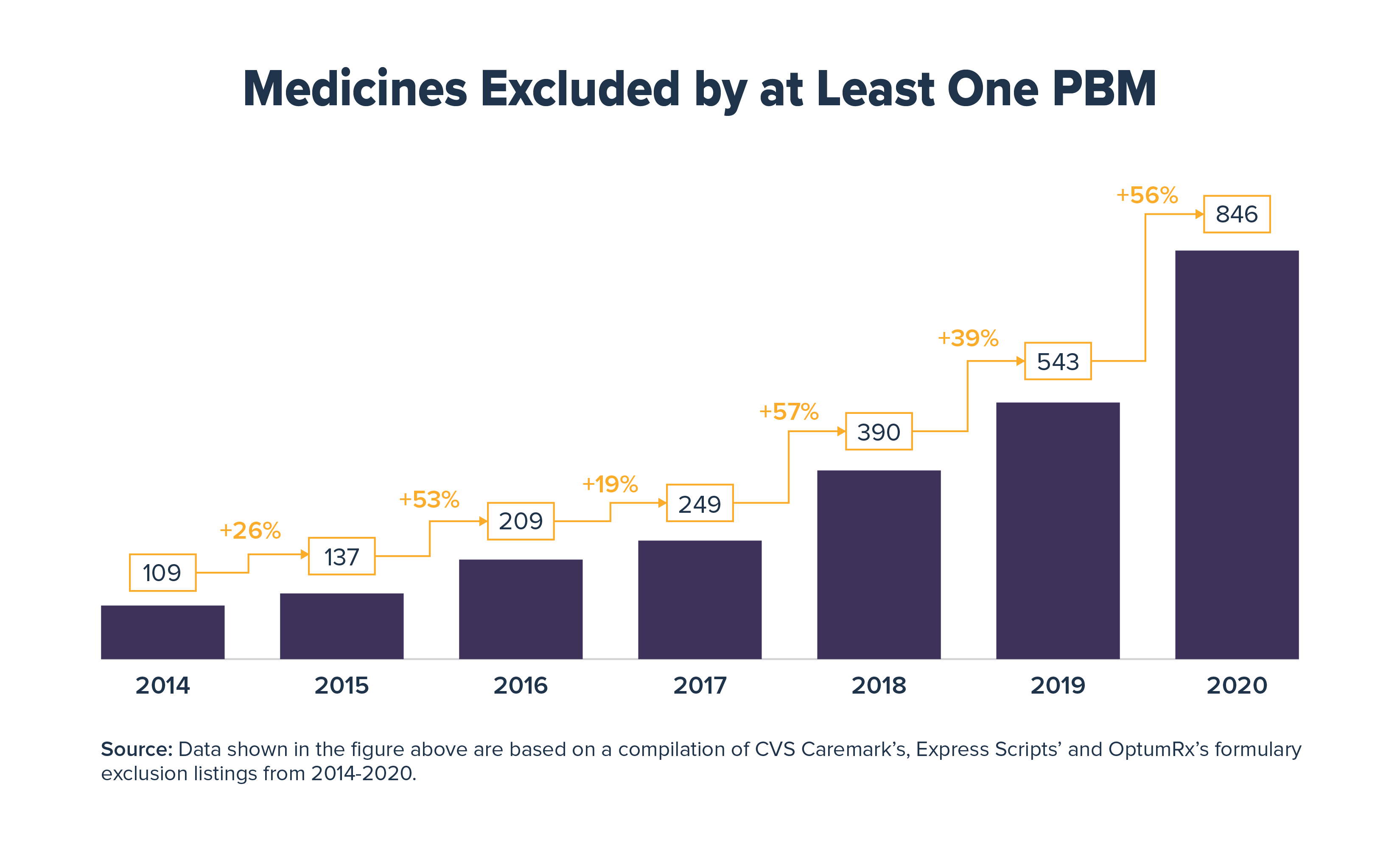
The study looked at the 2014 to 2020 formulary exclusion lists for Express Scripts, CVS Caremark and OptumRx, middlemen who collectively handle nearly three-quarters of all prescriptions in the United States. This year alone, 846 medicines were excluded from the standard commercial market formularies of at least one of these PBMs, up from 109 medicines in 2014. These formulary exclusions may affect patient adherence if they prevent or delay access to medicines, which can lead to adverse health outcomes.
The study also found:
- In 2020, 201 medicines were excluded from at least two PBM formularies and 74 were excluded from all three
- 20% of the medicines excluded from all three PBM formularies in 2020 were brand medicines without generic equivalents or biosimilar alternatives
- Between 2014 and 2020, 943 medicines faced exclusion by one or more PBM for at least one year
- 2 of the 3 PBMs excluded lower price “authorized generic” versions of certain insulin and hepatitis C medicines, even though these exclusions could significantly increase out-of-pocket costs for patients with deductibles and coinsurance
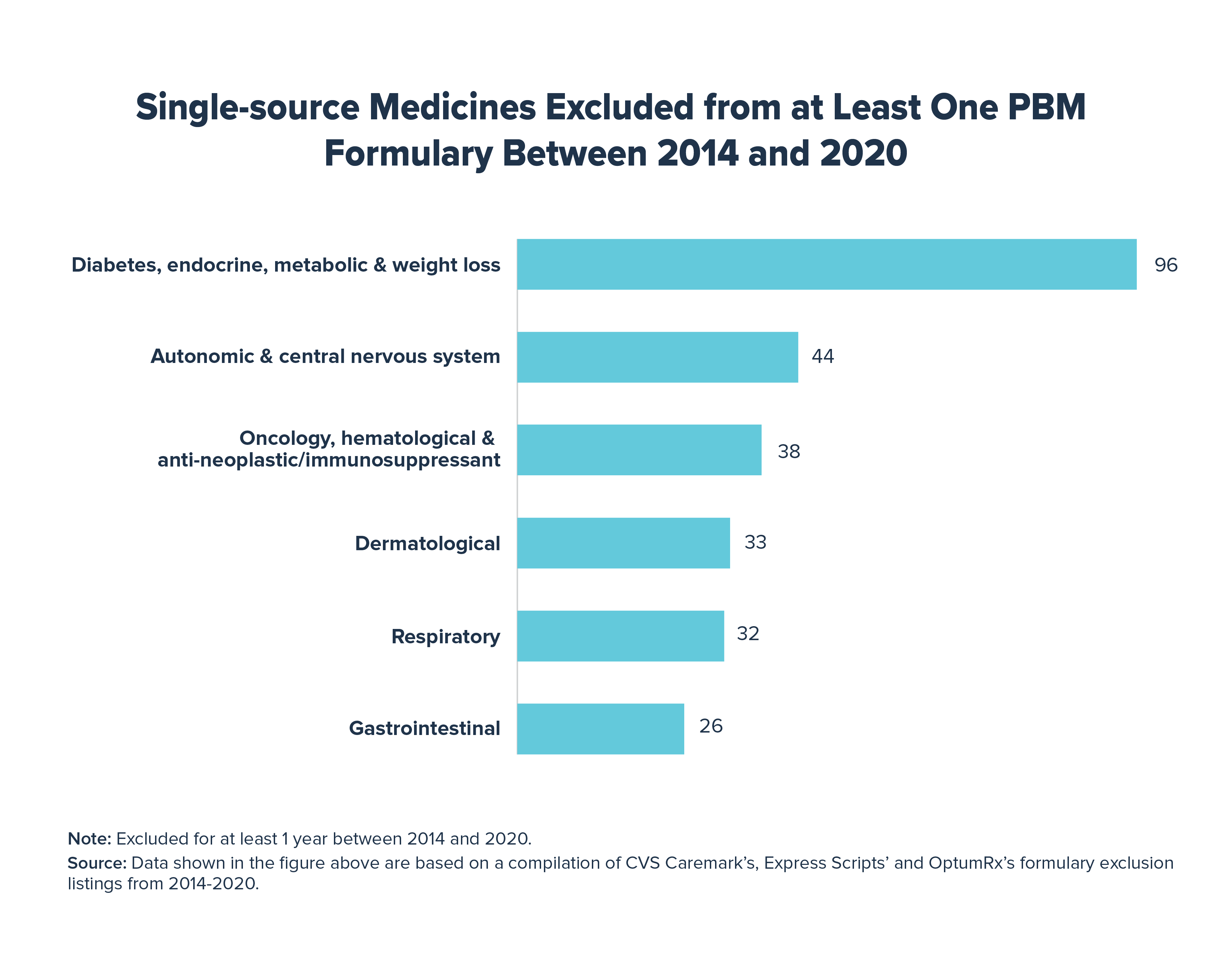
- Medicines to treat chronic diseases, including insulin, antidepressants, antipsychotics, and antiarrhythmics, were most frequently targeted by formulary exclusions
Formulary exclusions may have an outsized impact on patients with chronic conditions, as they may develop resistance or experience diminishing results from medicines over time and may need to cycle through several treatments. While some patients who face exclusions for treatments prescribed by their physicians are able to petition for coverage, this time-consuming and burdensome process – for both patients and providers – could lead to delayed access to treatments.
Physicians, not middlemen, should make clinical determinations regarding which treatment is best for a patient. Allowing middlemen to insert themselves into the patient-physician decision-making process is not in the best interests of patients or the health care system. We have long advocated for policies to reform the role of middlemen in the health care system, including increasing PBM transparency with employers, sharing rebates directly with patients at the pharmacy counter and ending the practice of PBMs and other entities in the supply chain receiving fees based on a percentage of the price of a medicine.
View the study here and learn more at www.letstalkaboutcost.org.
Katie Koziara
Katie Koziara is Senior Director of public affairs at PhRMA focusing on the organization’s executive visibility work and media relations strategy. She previously ran the social media strategy for a D.C.-based non-profit working on federal management and leadership issues. Katie earned her B.A. in Public Policy from the University of Michigan’s Ford School and is currently earning her M.A. in Fiction Writing from Johns Hopkins University.
Katie Koziara
New poll: 2 in 3 voters prefer a candidate committed to lowering health insurance premiums
September 18, 2026
What AARP isn’t telling seniors about MFN
August 24, 2026
Policymakers should improve patient access and reject price controls
August 18, 2026
Insurers blame GLP-1s for rising costs. The data tells a different story.
August 14, 2026
The FTC’s PBM enforcement actions gave us a glimpse behind the curtain; it’s time to let the light in.
August 7, 2026
Nearly 1 in 4 patients initially denied access to IRA medicines
August 6, 2026
Message to USAging: Providers are raising concerns about coverage barriers
July 22, 2026
New PBM principles don't change the fundamental challenge: Access to lower-cost medicines
July 10, 2026
340B’s reality: A booming business for hospitals, pharmacies and corporate giants
June 25, 2026
Insurers are blaming medicines for premium hikes in Massachusetts. The state's own data suggests otherwise.
June 24, 2026
Briefing: Capitol Hill panel on "Healthcare Denial Crisis in America"
April 24, 2026
Survey confirms too many insured Americans face barriers to reliable health care
April 22, 2026
70% DENIED: How insurance denials are delaying and preventing care for millions of Americans
April 14, 2026
Hospitals drive nearly 80% of the U.S. health spending gap
March 25, 2026
No hassle, hidden markups or fees: AmericasMedicines.com
February 19, 2026
The Federal Trade Commission (FTC) takes important action to highlight and curb PBM abuses
February 17, 2026
Separating fact from fiction in the medicine supply chain
February 11, 2026
50-state poll says Americans are concerned that hospital markups hurt patients
January 27, 2026
Three things you should know from the insurer CEO congressional hearings
January 26, 2026
Can’t get your medicine? Don’t count on your insurer.
January 15, 2026
Stop, collaborate and re-evaluate: ICER’s pricing report
November 14, 2025
California’s landmark PBM crackdown: A wake-up call for reform
November 13, 2025
Middlemen mark up drug prices and keep discounts meant for you
November 10, 2025
Putting patients first: Breaking down barriers to care
October 28, 2025
Direct purchase programs can lower costs for patients
October 20, 2025
PBMs say they want lower priced medicines, so why don’t they cover them?
October 7, 2025
Historic biopharmaceutical investments: A prescription for America’s future
September 29, 2025
Why states struggle to deliver savings: Middlemen and 340B siphon dollars from patients and states
September 15, 2025
PBMs are hiding hurdles to essential care
August 20, 2025
New study: PBMs and commercial insurers are quietly blocking prescription access
July 30, 2025
North Carolina puts patients first with rebate pass-through law
July 29, 2025
PBMs, not patents, are blocking access to lower-cost medicines
July 23, 2025
Medicare Part D plans initially denied medicines for more than 70% of patients in four chronic disease areas
June 16, 2025
New “Balance the Scales” campaign highlights why Americans pay more for prescription medicines
May 21, 2025
How the 340B hospital markup program and PBMs drive up costs for U.S. patients
May 16, 2025
Foreign first pricing schemes don’t address why Americans pay more
May 15, 2025
The AHIP premium dollar corrected (again)
May 8, 2025
PBMs launch new ad campaign to block reforms
May 5, 2025
When middlemen own it all, patients pay the price
April 10, 2025
3 myths critics get wrong about intellectual property
March 28, 2025
New report finds more abuse of 340B program by hospitals and drug middlemen
March 24, 2025
A closer look at how health care consolidation drives up patient costs, creates barriers to care
March 17, 2025
Health care practitioners sound the alarm on middlemen-imposed barriers to patient care, need for policy change
March 13, 2025
Congress Keeps PBMs in the Hot Seat
March 6, 2025
Wrapping up the J.P. Morgan Healthcare Conference
January 16, 2025
FTC finds PBMs make billions in profit from marking up cancer, other critical generic drugs
January 14, 2025
PhRMA CEOs Tee Up Next Week's Health Care Conference
January 11, 2025
New study: Entities that don’t make medicines get half of what is spent on those medicines
January 7, 2025
Three things to know about 340B contract pharmacies
November 12, 2024
The PBM industry's desperate attempt to stop reform
November 12, 2024
PhRMA launches new ad calling for Congress to make sure savings go to patients, not PBMs
November 11, 2024
Reimagining patient access through meaningful policy reform
November 5, 2024
ICYMI: Grounding policy reforms in real lived patient experiences is key to improving outcomes
October 31, 2024
New PES survey: Out-of-pocket costs lead key health care priorities ahead of the November election
October 30, 2024
Guest Post: My health care vote
October 29, 2024
Insurers continue shifting more costs on to patients
October 28, 2024
Americans speak out on health insurance barriers and need for policy change, according to the latest Patient Experience Survey
October 28, 2024
ICYMI: The powerful companies driving local drugstores out of business
October 25, 2024
Hispanic Heritage Month: Fighting for Hispanic patients
October 7, 2024
PBMs and insurers off the hook: Sen. Sanders’ selective hearing on drug costs
September 24, 2024
Key voter insights two months from Election Day
September 10, 2024
Patient priorities in the 2024 election
September 10, 2024
Don’t put the government between patients and their medicines
August 7, 2024
Voters across all 50 states want state policymakers to focus on health insurance and PBM practices
July 30, 2024
WTAS: Voters voice concerns about PBM abuses, call on policymakers to act
July 19, 2024
PhRMA launches new ad in campaign exposing ways middlemen drive up costs
July 17, 2024
FTC report confirms PBMs profit at the expense of patients
July 10, 2024
New 50-state poll Americans want to hold health insurers and PBMs accountable for high out-of-pocket costs and other practices
July 9, 2024
ICYMI: Hidden markups at mail-order pharmacies increase costs for employers
July 2, 2024
The IRA could lead to higher out-of-pocket costs for 3.5 million Medicare patients in 2026
June 25, 2024
ICYMI: What patients care about this election year
June 24, 2024
ICYMI: The Opaque Industry Secretly Inflating Prices for Prescription Drugs
June 21, 2024
ICYMI: Health care policy should be driven by patients, not politics
June 10, 2024
PhRMA Warns Federal Agencies: Consolidation and vertical integration among insurers, PBMs, and hospitals threaten patients
June 5, 2024
ICYMI: Innovation transforms lives but misguided federal policies threaten patient outcomes
May 30, 2024
Ongoing federal probes shed light on PBM and insurer practices
May 20, 2024
WTAS: The consequences of consolidation and vertical integration
May 6, 2024
Insurance data: PBM reform has no material impact on premiums
April 24, 2024
New study finds insurers and PBMs increasing access restrictions in Medicare Part D
April 16, 2024
3 Takeaways from POLITICO’s Health Care Summit
April 3, 2024
PBMs using 340B program to drive profits at patients’ expense
March 28, 2024
Four years later, Maryland board still hasn’t delivered for patients
February 12, 2024
Setting the Record Straight: Comparing U.S. drug prices to those in foreign countries hurts patients
February 7, 2024
How the 340B program became a PBM giveaway
December 11, 2023
ICYMI: When middlemen get in the way, it’s the patients who lose
December 5, 2023
Get the facts on PCMA’s newest attempt to avoid accountability
December 4, 2023
ICYMI: WSJ — Same Drug, Two Prices: Why the Higher Price Prevails
November 15, 2023
ICYMI: 3 takeaways on the IRA’s unintended consequences from America’s Physician Groups’ 2023 annual fall conference
November 6, 2023
One year to Election Day: Four voter priorities to watch
November 6, 2023
ICYMI: Scott LaGanga and Matt Salo deliver a State of the Industry Report
October 25, 2023
New poll shows strong bipartisan support for PBM reform
October 20, 2023
4 truths about state government price setting
October 10, 2023
ICYMI: Government watchdog report finds patients in Medicare Part D paid billions more for medicines than insurers and PBMs
September 28, 2023
Medicare Prescription Payment Plan will benefit patients if implemented correctly
September 21, 2023
New analysis shows PBMs use fees as a profit center
September 18, 2023
It’s PBMs, not patents, blocking competition
September 14, 2023
New PhRMA ad exposes yet another way PBMs get between patients and their medicines
September 5, 2023
Navigating the Patient Experience Survey: Protecting Lifelines to Access and Innovation
July 26, 2023
Three things to know from the latest Patient Experience Survey
July 20, 2023
ICYMI: PBM exec admits choosing profits over patients
June 2, 2023
Insulin: Key Facts on Access & Affordability
May 10, 2023
4 key facts on medicine prices and spending
May 9, 2023
4 Things to know about PhRMA’s new 50-state poll
May 4, 2023
Americans want state policymakers to lower out-of-pocket costs
May 1, 2023
New PhRMA ad campaign sheds light on PBM abuses
May 1, 2023
Three facts about health care spending
April 25, 2023
AHIP’s latest misinformation campaign & what it’s trying to hide
April 24, 2023
ICYMI: PhRMA President and CEO Stephen J. Ubl discusses patient affordability
April 7, 2023
States can support access to medicine as COVID-19 Public Health Emergency ends
April 5, 2023
Arkansas puts patients first with new share the savings law
April 4, 2023
Key Trends: Patient experience data reveal how insurers and middlemen impose barriers in health care
March 29, 2023
Insurer and PBM tactics are shifting higher costs to patients with chronic and complex conditions
March 2, 2023
Holding pharmacy benefit managers accountable
February 23, 2023
Stopping pharmacy benefit managers from “gaming the system”
February 22, 2023
Senate hearing to examine bipartisan reforms to rein in middlemen
February 16, 2023
Minnesota lawmakers are letting PBMs off the hook, and threatening patients’ access to medicines
January 31, 2023
ICYMI: PhRMA kicks off the year at the 2023 J.P. Morgan Health Care Conference
January 19, 2023
ICYMI: PhRMA COO Lori Reilly speaks about the health care agenda for the next Congress
December 9, 2022
In their own words: Financial barriers exacerbate access challenges for insured Americans
December 8, 2022
Putting Delaware patients first: Protecting Patient Assistance Programs
November 22, 2022
New data show how insurers and middlemen shift Rx costs onto patients
November 16, 2022
In their own words: Insured Americans struggle to navigate complex coverage
October 26, 2022
Many seniors are paying more for Part D medicines than their insurer
October 18, 2022
New comments outline ways to protect patients from health plans and PBMs who profit from patient assistance
October 7, 2022
Busting 3 Myths About Copay Coupons
October 5, 2022
Mental Illness Awareness Week – A time for reflection
October 3, 2022
A key fact the White House is reluctant to admit
September 27, 2022
A key fact the White House is reluctant to admit
September 27, 2022
Navigating the patient experience: Burdens and barriers standing between patients and their care
September 12, 2022
Making coupons count for patients at the pharmacy counter
August 25, 2022
Insulin and reconciliation
August 15, 2022
Making coupons count for patients with HIV
August 8, 2022
The Senate’s latest price setting proposal will undermine: Our health care system
July 28, 2022
The Senate’s latest price setting proposal will undermine: Patient access to medicines
July 26, 2022
Survey Says: Prescription drug prices are not fueling inflation concerns for Americans
July 22, 2022
Putting patients first at the state level — A conversation with Mark Reisenauer, President of Astellas Pharma US
July 14, 2022
Patients win as West Virginia implements first-in-nation share the savings policy
July 8, 2022
3 things voters are concerned about when it comes to their health care coverage
July 7, 2022
Copay assistance is a lifeline for patients. So why are insurers blocking it?
June 29, 2022
Patients support state action requiring PBMs and insurers to share savings and cap costs for medicines
June 16, 2022
New poll shows voters sounding the alarm on health insurance companies and PBMs
June 6, 2022
PhRMA warns of the growing influence of middlemen over patient access and out-of-pocket costs for patients
May 31, 2022
ICYMI: PhRMA COO Lori Reilly spotlights efforts to improve health care in 2022 and beyond
May 9, 2022
Study finds insurance barriers disproportionately burden patients with chronic illness
May 4, 2022
What’s really happening when it comes to prescription drug costs
April 27, 2022
5 public opinion polling trends to watch
April 22, 2022
Analysis: States can help patients save nearly $1,000 annually on their medicines
April 21, 2022
New analysis confirms hospitals markup prices for oncology therapies
April 21, 2022
How standardized plans can improve patients’ access to medicines
April 18, 2022
The patient experience: Uncovering the barriers to care for insured Americans
March 28, 2022
Correcting the record: Putting medicine costs and spending in context
March 24, 2022
Sharing rebates can save Americans with diabetes 500 each year and improve adherence
March 16, 2022
If drug prices are growing below the rate of inflation, why are patients still feeling the sting at the pharmacy?
March 8, 2022
The patient experience: Insurance barriers continue to impede access to health care, especially among the country’s underserved
February 28, 2022
Medicaid 101: Three charts on access and spending
February 3, 2022
Government price setting won’t stop insurers from shifting costs to patients
February 2, 2022
New comments outline ways to counteract cost-shifting insurance trends
January 28, 2022
Patients need to pay less for their medicines. States can help.
January 26, 2022
It’s a new year, but sadly Congress is still pursuing flawed price setting policies
January 25, 2022
New poll of all 50 states and 435 Congressional Districts shows perils of so-called Medicare “negotiation”
January 25, 2022
New study finds more than half of brand medicine spending goes to the supply chain and others
January 7, 2022
Making medicines more affordable: Making insurance work like insurance
December 8, 2021
Insurance design barriers can impact patient adherence and can lead to poor health outcomes
November 23, 2021
What is missing in the current drug pricing plan
November 23, 2021
ICYMI: PhRMA CEO speaks at STAT Summit about government price setting
November 19, 2021
Making medicines more affordable: Sharing savings at the pharmacy counter
November 19, 2021
Three things to know about so-called Medicare negotiation polling
November 18, 2021
Making Medicines More Affordable: Making coupons count
November 5, 2021
What they are saying: Government price setting for medicines is not the answer
November 4, 2021
Four things to know from IQVIAs latest report
October 29, 2021
The patient experience: Insurance design hurdles lead to access issues for too many Americans
October 28, 2021
The patient experience: Out-of-pocket costs are driving patients affordability and access challenges
October 19, 2021
New report shows 3 in 10 Americans that have insurance still face a financial barrier to care
October 7, 2021
Industry leaders discuss the impact of the drug pricing debate
September 23, 2021
Five reasons tying VA prices to Medicare Part D misses the mark
September 22, 2021
America’s biopharmaceutical companies to Congress: Government “negotiation” is the wrong approach
September 15, 2021
ICYMI: Event spotlights how we can make Medicare work better for patients
August 4, 2021
The future of the rebate rule: Will policymakers stand with patients?
August 2, 2021
Celebrating Medicare’s 56th anniversary
July 30, 2021
3 factors impacting medication adherence for patients with diabetes
July 20, 2021
New reports shed light on key facts about medicines and affordability
June 8, 2021
Out-of-pocket trends in Medicare Part D show rising costs for seniors
May 24, 2021
Study finds nearly half of payers believe innovative contracts can lead to lower patient out-of-pocket costs
May 17, 2021
New data from insurers show detriments of copay accumulator adjustment programs
April 28, 2021
West Virginia becomes the first state to lower patient costs by sharing the savings
April 20, 2021
Nearly 40% of commercially insured patients face half their annual out-of-pocket expenses from just one health care encounter
March 2, 2021
Top five issues voters want addressed in the administration’s first 100 days
February 18, 2021
Insurers shift medicine costs to patients with severe chronic illnesses
February 1, 2021
The latest misleading “poll” on drug pricing
January 28, 2021
The new Administration should reconsider a recent HHS rule that could negatively impact patient access and affordability
January 27, 2021
Election insights: Common ground areas to address Americans’ health care concerns
January 26, 2021
New insulin report highlights how incentives benefit middlemen, harm patients
January 22, 2021
Key facts: The final rebate rule will be a positive change for patients
January 19, 2021
New data show retail medicine prices fell in 2019
January 13, 2021
Election insights: Voter priorities in the states
December 17, 2020
Insights from the election: Meeting voters where they are on health care
December 15, 2020
Fact Check: How hospitals continue to drive health care spending
December 3, 2020