October marks both Intellectual Property Month and Manufacturing Month, presenting a unique opportunity to recognize the critical value of intellectual property protections and the domestic manufacturing ecosystem that they empower.
Dive deeper: Intellectual property (IP) protections are what make it possible for biopharmaceutical companies to research and develop the next generation of treatments and cures. IP is also critical to companies’ ability to build manufacturing facilities, hire skilled workforces and invest significant financial resources.
The certainty that IP protections offer America’s inventors is also what enables the manufacturing investments we are seeing nationwide. Biopharmaceutical companies are at the tip of the spear, pledging hundreds of billions of dollars in new facility investments all across the United States.
As a new TEConomy report shows, the scale of that build-out is significant:
- 350,000+ manufacturing jobs are directly supported by biopharmaceutical companies
- 1,500+ domestic manufacturing facilities across the U.S. and Puerto Rico are producing the medicines patients rely on
- $500 billion in new investments are committed to future U.S.-based biopharmaceutical manufacturing and infrastructure
That investment is already visible on the ground. New and expanded facilities are coming online to support cutting-edge cell and gene therapies, biologics and advanced small-molecule manufacturing. These sites strengthen the domestic supply chain for the medicines patients depend on. Many represent multi-billion-dollar commitments to communities across the country, creating jobs, supporting infrastructure upgrades and generating local economic growth.
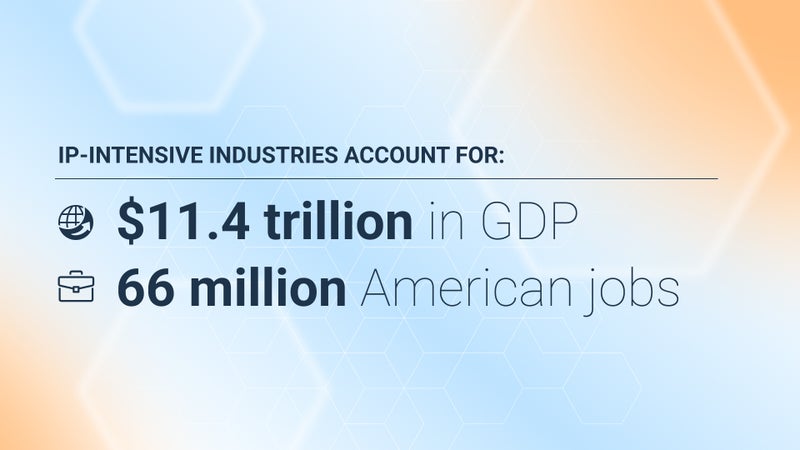
There’s more: The stakes reach beyond just a single industry. According to the U.S. Patent and Trademark Office’s latest report, IP-intensive industries (which include biopharmaceuticals) accounted for $11.4 trillion in GDP in 2024 and supported nearly 66 million American jobs – proof that these protections are what keep investment, job creation and innovation moving forward across the entire economy.
The bottom line: Congress should reject policies that undermine IP protections and put future medical innovation and U.S. manufacturing investment at risk. Maintaining a strong, predictable IP system is essential to keeping America the global leader in developing—and manufacturing—the next generation of medicines.
Learn more at PhRMA.org/IP.
David Korn
David Korn is Vice President, Intellectual Property (IP) and Law, for the Pharmaceutical Research and Manufacturers of America (PhRMA). He focuses on IP issues in Congress, the Patent and Trademark Office and other agencies, as well as in amicus briefs in cases of interest to PhRMA. He has degrees in biomedical engineering from Duke and Northwestern and a J.D. from Harvard Law School. Prior to joining PhRMA, he worked in private practice and clerked in the U.S. District Court for the District of Delaware.