Both payers and providers are interested in additional information from biopharmaceutical companies about prescription medicines – including information about pipeline medicines and unapproved uses of approved medicines. This finding is from a recent survey of payer executives and specialty physicians conducted by Health Strategies Group. The survey underscores that increased access to more complete information about medicines would help payers make better-informed coverage decisions and allow providers to make better prescribing decisions for patients.
Key findings of the survey:
- 80 percent or more of payers and providers are interested in receiving more data from biopharmaceutical companies regarding products undergoing clinical trials, as well as information on approved medicines, for both U.S. Food and Drug Administration-approved (FDA) uses and unapproved uses of approved medicines.
- The majority of payers and providers are already actively seeking this information, highlighting a demonstrated desire for this data.
- Payers and providers recognize and agree that there is a need for guardrails to ensure communications are scientifically sound and support appropriate, evidence-based decision-making.
- Payers continue to place strong emphasis on FDA approval in their decision-making.
- Providers report access to additional data about unapproved uses would increase patient referrals to clinical trials that may support labeling changes.
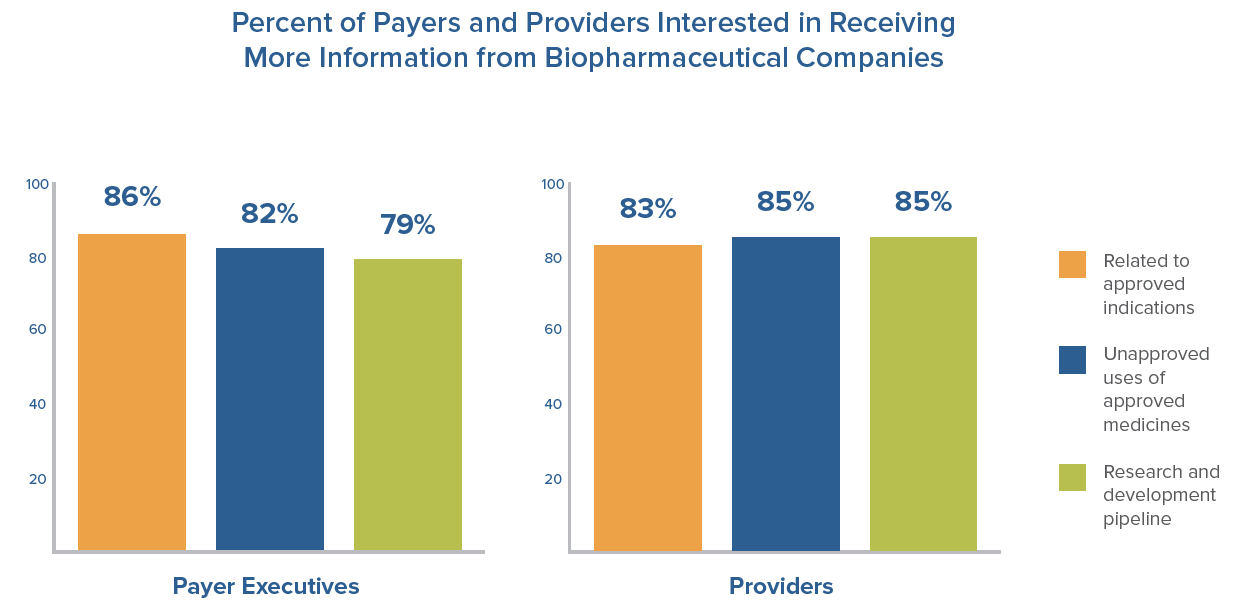
Despite the desire from payers and providers for increased data, FDA regulations can prevent biopharmaceutical companies from sharing important data about their medicines. FDA has begun to acknowledge this and has started taking steps to facilitate communications between biopharmaceutical companies and other key health care stakeholders. However, additional legislative or administrative changes are needed to ensure manufacturers are able to provide payers and providers with the most current and best available scientific information to inform their decision-making. With the right safeguards in place, allowing more flexibility for biopharmaceutical company communications with payers and providers can support better informed prescribing and more effective use of medicines, improving results for patients and protecting public health.
View the survey findings here.
Joe Vandigo
Joe Vandigo is a former director in the Policy and Research department at PhRMA.
Joe Vandigo
Mass compounding puts patients at risk
Advancing patient care: A look at new medicines approved in 2025
Knockoffs of FDA-approved drugs put patients at risk
PDUFA: Essential to America’s edge in drug development and patient access
Major drug compounder is spending millions on misleading Super Bowl ad
More oversight needed of unapproved medicines that threaten patients’ health
The use of real-world data in drug development
New analysis: Accelerated approval pathway is changing lives in underserved communities
Novel treatments and vaccines approved for U.S. patients in 2023 reach five-year high
Florida’s importation plan puts patients in danger
The Biopharmaceutical Industry Still Needs Clarity from the FDA on Orange Book Listings
Decentralized clinical trials and the future of drug development
How FDA’s modernization strategy could improve drug development
Setting the record straight on accelerated approval
FDA should remain the authority on the safety and effectiveness of medicines
What you should know about real-world evidence and drug development
Three things to know about the accelerated approval pathway
PDUFA and BsUFA reauthorizations are wins for patients
Word of the Month: Biomarkers and surrogate endpoints
Ensuring timely reauthorization of PDUFA and BsUFA
The accelerated approval pathway: Helping patients with serious or life-threatening diseases
The importance of timely PDUFA and BsUFA reauthorization
ICYMI: New approvals by the FDA in 2021 offer greater treatment options for patients
Biosimilar User Fee Act (III) Performance Goals Letter will help increase options for patients and promote competition
Meeting Tomorrow: Looking ahead to PDUFA VII
The impact of monoclonal antibodies and COVID-19 recovery
PDUFA VII is critical for future biopharmaceutical innovation and for patients
How strengthening the biosimilar marketplace benefits patients
The FDA Office of Minority Health and Health Equity: Working to advance health equity through diversity in research
2020 FDA approvals show innovation despite COVID-19 pandemic challenges
Nearly 400 cell and gene therapies in development to target a broad range of diseases
ICYMI: 2019 brings innovative medicines to patients
PhRMA comments to Congress on Cures 2.0 call to action
Guest Post: Using the patient voice to go boldly
IP Explained: How Hatch-Waxman successfully balances affordability and innovation
Guest post: Hearing from patients on Rare Disease Day
Rare Disease Day: Unmet medical need inspires biopharmaceutical innovation
Why state drug importation pilot programs don’t work
Putting 2018 medicine approvals in context
FDA needs best and brightest to advance a new era of medicine with America’s biopharmaceutical companies
Balancing innovation and competition in the biologics marketplace
New analysis shows that more medicines worldwide are available to U.S. patients
Spending on medicines grew less than one percent in 2017
Rare Disease Day: Unmet need inspires innovation
Innovation comes in many forms, including new and expanded uses of existing medicines
ICYMI: Why 2017 medicine approvals matter
Supporting opportunities for enhanced competition in the marketplace
VIDEO: PhRMA CEO discusses industry response to opioid crisis on Mornings with Maria
Opportunities to build upon enhanced competition for medicines in the marketplace
Why reauthorization of PDUFA matters
A critical opportunity to prevent prescription drug abuse
Guest Post: The importance of a modern FDA in drug discovery
New surveys find payers and providers want more data from biopharmaceutical companies
FDA
New surveys find payers and providers want more data from biopharmaceutical companies
New surveys find payers and providers want more data from biopharmaceutical companies