phrma logo

PhRMA

PhRMA Sites

Login

Explore Member-Only Resources

Access exclusive advocacy, policy, and research materials through the member site.

Login now

About

About

Our Agenda

Our Agenda

Policy Issues

We believe that patients should have access to innovative medicines.

Learn More

Innovation Ecosystem

Intellectual Property

Research & Development

Future of Medicine

Government Price Setting

International

Innovation Ecosystem

Patient Access & Affordability

PBMs & Middlemen

Hospitals and 340B

Insurance Coverage

Cost of Medicines

Medicare & Medicaid

Patient Access & Affordability

Resources

Our mission is to conduct effective advocacy for public policies that encourage the discovery of important, new medicines for patients by biopharmaceutical research companies.

Learn More

Resources

Resources

Newsroom

Newsroom

Blog

Blog

America's Medicines

PhRMA Foundation

PhRMA Foundation Logo

Voters for Cures

VotersForCures.org Logo

Working for Cures

workersforcures.org logo

This is Innovation

Innovation.org logo

View More

Search in PhRMA

Find resources, news, and articles related to policy issues and scientific innovation.

What are you looking for?

Most Recent

Policy Paper

Press

Blog

Report

Fact Sheet

Event

Resource

Pages

Leader

Author

Comment

not used title

not used title

Half of every dollar spent on brand medicines goes to entities that play no role in the research, development, or manufacturing of those medicines, according to a new analysis by Berkeley Research Group (BRG).

The report’s findings highlight a growing problem: spending on medicines is padding the profits of middlemen and subsidizing many parts of the health care system, often at the expense of patients.

So, where exactly is the money going? It’s going to middlemen like PBMs and insurers who are aggressively consolidating their control over health care; mandatory government fees and rebates; hospitals, clinics and for-profit pharmacies in the 340B markup program; and patient assistance programs designed to help patients in a commercial insurance market that increasingly covers less while charging patients more.

WHERE'S THE DRUG DOLLAR GOING?
 

selected teaser image

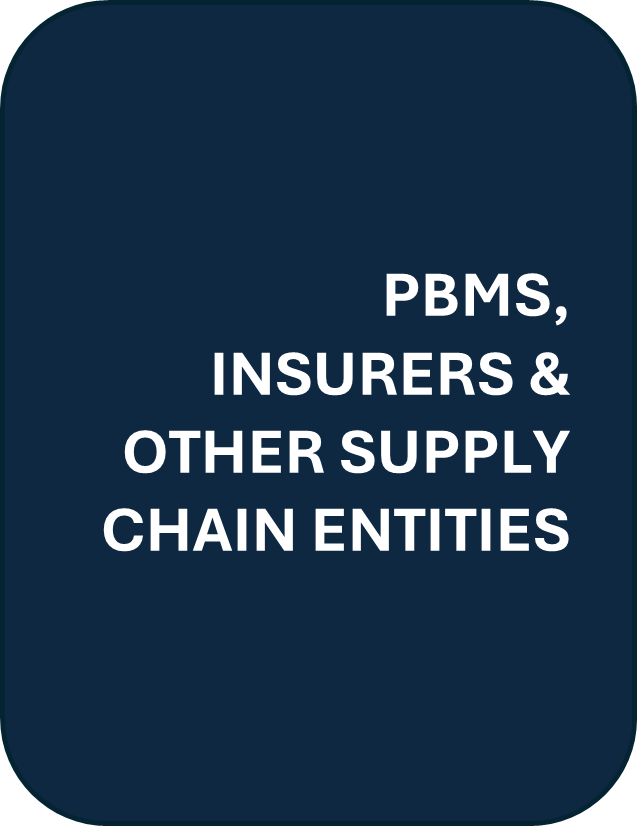
PBMs, insurers, Group Purchasing Organizations (GPOs) and others in the supply chain retained the largest share of spending among non-manufacturers. In 2023, $170 billion in rebates, discounts, fees and other payments from biopharmaceutical companies went to these middlemen. While this represents 25% of all brand spending, middlemen can take up to 80% or more on some medicines. These payments lower the cost of medicines for insurers and PBMs, yet patients are often forced to pay their out-of-pocket costs based on the full undiscounted price, leading patients to pay more than they should for their medicines.

 

selected teaser image

340B providers and for-profit companies now get 18 times more of the drug dollar than they did a decade ago while patients, taxpayers and employers are saddled with a hidden tax that inflates their costs. The largest share of 340B costs is driven by hospital markups—where big tax-exempt hospitals markup drugs up to 7x or more.
 

selected teaser image

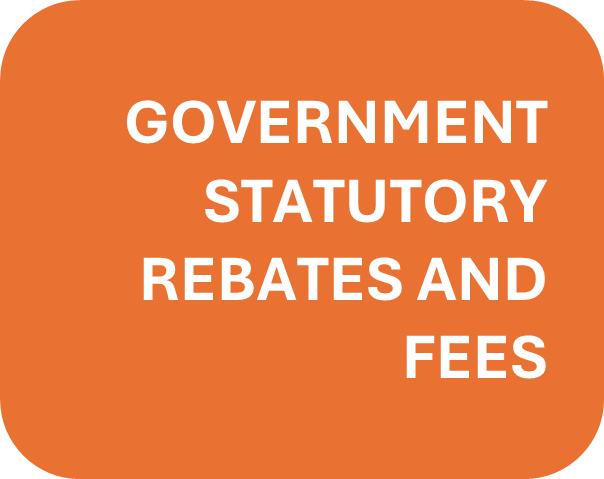
Biopharmaceutical companies paid $79 billion in rebates, discounts, and fees to government programs, including Medicaid and Medicare Part D. The Inflation Reduction Act (IRA) will further increase the amount of spending going to the government, eroding the investment in future research and development.
 

selected teaser image

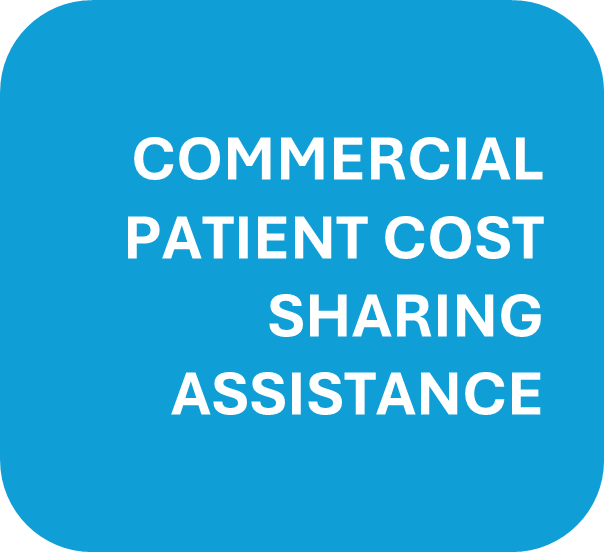
As insurers force commercially covered patients to pay higher out-of-pocket costs, biopharmaceutical manufacturers provide billions in assistance to help them afford their medicines. This assistance represented nearly $23 billion in spending. Unfortunately, it’s not all getting to patients. In fact, insurers and PBMs kept nearly $5 billion of cost-sharing assistance for themselves through abusive copay accumulator and maximizer programs.


WHAT’S DRIVING DRUG SPENDING GROWTH?


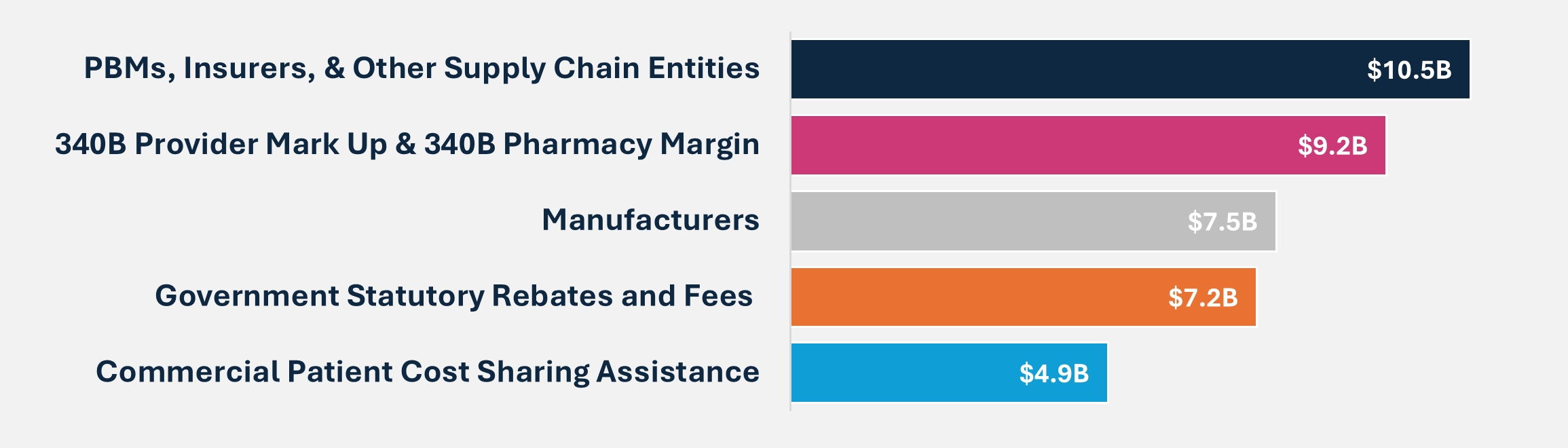
Growth in Spending on Brand Medicines (2022-2023)
selected teaser image


From 2022 to 2023, spending on medicines increased $39 billion. The rebates, fees and other payments middlemen siphon out of the system was the single largest driver of this growth in spending. The second largest contributor was the growth 340B hospital markups and 340B provider and pharmacy profit on prescription drugs. These costs continue to increase because there’s no oversight or transparency. Worse, the money isn’t going to help low-income and uninsured patients.

As policymakers continue to look for ways to address rising health care costs and spending on medicines, the report’s findings are essential to help diagnose the right problems and pinpoint meaningful solutions. That starts with common sense reforms that put an end to insurer and PBM abuses, fix the IRA, reform the 340B markup program and ensure patient assistance goes to patients, not middlemen.

Elizabeth Carpenter

Elizabeth Carpenter serves as executive vice president of policy and research for the Pharmaceutical Research and Manufacturers of America (PhRMA).

Carpenter leads policy and research at PhRMA, focusing on policy analysis, original research and policy development. Previously, she spent 10 years at the health policy and business strategy firm, Avalere, most recently serving as president. Prior to joining Avalere, Carpenter was a senior advisor in the health policy practice at McKenna Long & Aldridge LLP, where she provided government affairs and public policy support to payers, providers, private exchanges, and states on a wide range of health policy and political issues.

Previously, she served as the associate policy director for the Health Policy Program at the New America Foundation where she led Congressional and media relations during the debate over the ACA and provided educational and technical support to stakeholders, members of Congress and the media. Carpenter started her career on Capitol Hill on the legislative and campaign staffs of Senator Lincoln Chafee (RI).

Elizabeth Carpenter headshot

https://x.com/ea_carpenter

https://www.linkedin.com/in/elizabethavalere/

Executive Vice President, Policy and Research

ICYMI: Hospital consolidation is driving up health care costs

August 27, 2026

What AARP isn’t telling seniors about MFN

August 24, 2026

It's time to modernize 340B: The case for a rebate model

August 19, 2026

Policymakers should improve patient access and reject price controls

August 18, 2026

New study: Entities that don’t make medicines get half of what is spent on those medicines

340B

PBMs/Insurance

New study: Entities that don’t make medicines get half of what is spent on those medicines

January 7, 2025

New study: Entities that don’t make medicines get half of what is spent on those medicines

Stay current on policy making

Sign up for email updates and follow us on social. 

About

Our Agenda

Policy Issues

Resources

Blog

Contact Us

Privacy Policy

Terms of Service

Facebook

Facebook

X

Twitter X

LinkedIn

LinkedIn

Instagram

instagram logo

America's Medicines

PhRMA Foundation

Voters for Cures

Working for Cures

Innovation.org

Please type your email

Success!

You've been added to the list