Fifty years ago, the idea of altering a gene to treat or even cure a disease was considered science fiction. Today, cell and gene therapy are transforming treatment options for some patients and are part of an exciting new era of medicine.
A new report released today finds there are 289 novel cell and gene therapies in development for a variety of diseases and conditions. The therapies represent the translation of basic scientific insights into innovative new treatment options for patients. These medicines in development are either in clinical trials or awaiting review by the U.S. Food and Drug Administration.
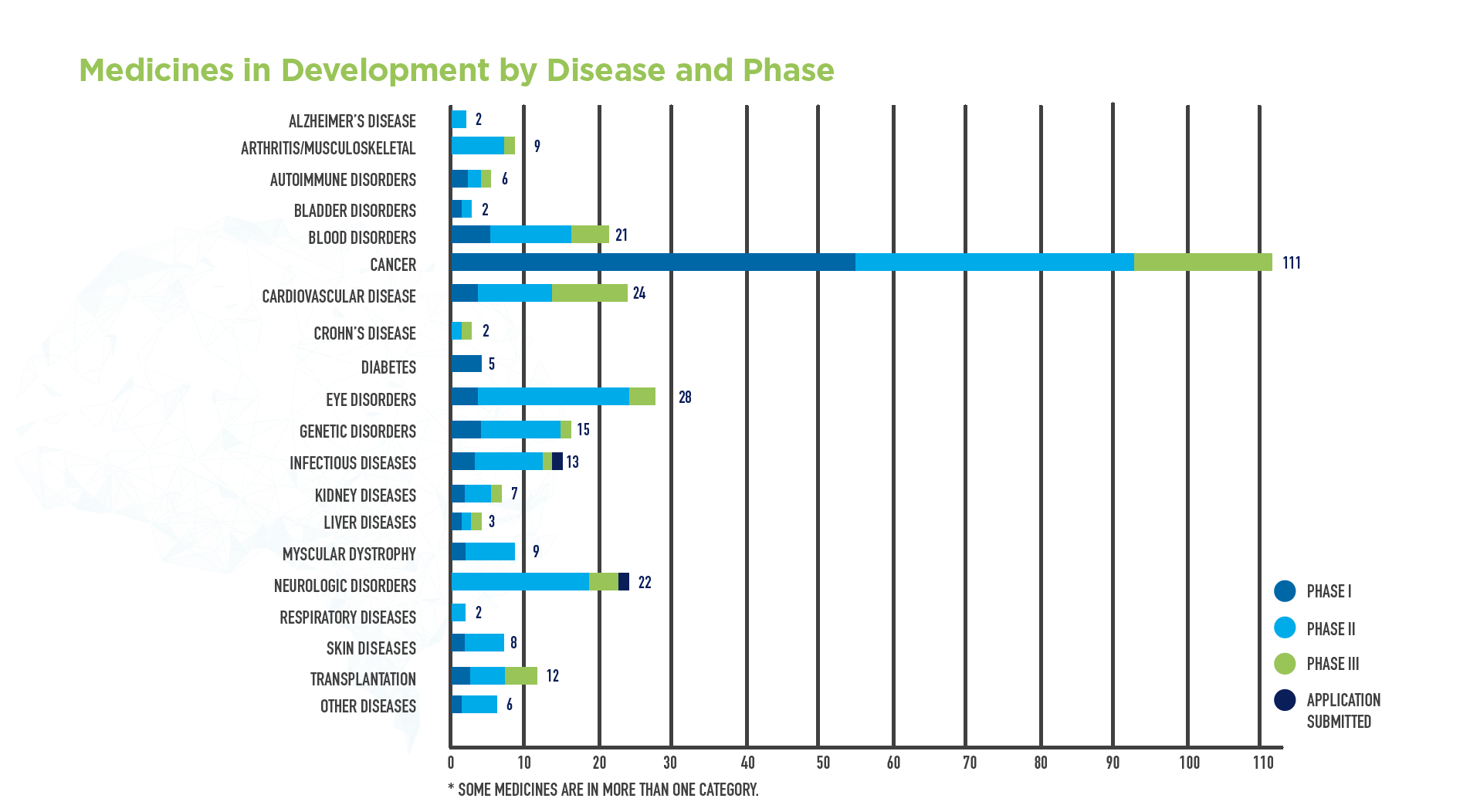
The novel cell and gene therapies in the development pipeline are the result of years of pioneering research. The range of diseases these therapies can address is broad and covers blood and eye disorders, cancer and infectious disease to name a few.
This new field of cell and gene therapy, a major part of the broader field of regenerative medicine, is already making an impact. American Society for Blood and Marrow Transplantation president John F. DiPersio, M.D., Ph.D. noted, “The field of regenerative medicine is enhancing science, education and clinical care that will provide patients with expanded and genetically modified stem and immune effector cells for the treatment of inherited diseases, solid tumors and hematologic malignancies to live longer lives.”
Justin and Boris, a patient and a biopharmaceutical researcher respectively, know firsthand the impact these treatments can have on individual lives. At the age of seven, Justin was diagnosed with acute lymphoblastic leukemia, a type of blood cancer. He spent more than half his life battling this disease, but a new CAR-T cell therapy finally put him in remission and gave him hope.
Boris is particularly interested in advancing the potential of personalized medicine and CAR-T therapy – the same therapy that saved Justin’s life. “It’s being manufactured or generated for every single patient. We teach [white blood cells] how to fight cancer, and give them back to the patient,” he said. While implementation may be complex, researchers like Boris demonstrate the future for cancer patients has never been more promising.
To learn more about the new advancements in cell and gene therapy, read the full report here.
Andrew Powaleny
Andrew Powaleny is the Deputy Vice President of Public Affairs at PhRMA, where he leads communications on scientific, regulatory and intellectual property issues, highlighting the biopharmaceutical industry’s efforts in developing innovative medicines and vaccines while promoting an environment that encourages necessary risk-taking. For five years starting in 2019, he launched and led PhRMA’s grassroots initiative, Voters for Cures, bringing patients and caregivers together to advocate for access to medicine and biopharmaceutical innovation. He also co-founded and co-chaired PRIDE Umbrella, a resource group for LGBTQ+ individuals. Prior to joining PhRMA in 2015, Andrew worked as a communications consultant in Washington, D.C., and as Deputy Press Secretary for the U.S. House Committee on Energy and Commerce under Chairman Fred Upton. He holds a degree in public policy and government from Eastern Connecticut State University, with a minor in music. Outside of work, Andrew enjoys exercise, musical theater and mentoring college students through The Fund for American Studies alumni association.
Andrew Powaleny
World Sickle Cell Day: Recognizing the promise of gene therapy
New report shows promising pipeline for cell and gene therapies, but access challenges persist
The Patient Perspective: Vaccines
New Report: Tackling chronic conditions with preventive treatment
New Report: Vaccines continue to drive improved health outcomes
Mental Health Awareness Month: Supporting loved ones and improving mental health in America
New Report: 1,600 cancer treatments and vaccines in clinical development
Incomplete evaluations undermine patient access to transformational medicine
Watch: New video series spotlights advances in biopharmaceutical science
Mental Health Awareness Month: Fighting the growing mental health crisis and supporting innovation
Support for continued progress is critical for pediatric drug development
New Report: More than 400 medicines in development for leading chronic conditions affecting older Americans
State policymakers can protect American innovation and help Americans live longer, healthier lives
Recognizing National Glaucoma Awareness Month
New Report More than 160 medicines in development for mental illness
ICYMI: Cancer death rate continues to decline due to treatment advances
Stories from the lab: Researchers discuss innovative treatments for cancers of the blood
New Report: Nearly 800 medicines in development to treat chronic conditions
Recognizing National Sickle Cell Awareness Month
Potential gene therapies bring hope to patients with sickle cell disease
ICYMI: First pediatric patient to receive CAR-T cell therapy celebrates 10 years of being cancer-free
Gene therapies can reduce treatment burden and costs for patients with blood disorders
Report: More than 500 medicines in development to treat disorders of the blood
Report: More than 600 medicines in development for diseases affecting women
New Report: Nearly 800 new medicines in development to treat rare diseases
Guest post: Continued research and development is critical for ALS patients and families
New report shows more than 260 medicines in development to fight neurodegenerative diseases
More than 800 medicines are in development for diseases that disproportionately affect racial and ethnic communities
New PhRMA report shows nearly 90 medicines in development to fight drug-resistant infections
Report: More than 1,300 medicines and vaccines in development to help fight cancer
New report shows nearly 260 vaccines in development, including dozens for COVID-19
Nearly 400 cell and gene therapies in development to target a broad range of diseases
Nearly 140 medicines in development to treat mental illness
ICYMI: Fighting for a cure to ALS
"If Washington isn’t careful, we might leave innovation behind"
Giving patients a voice: PhRMA launches Voters for Cures to support the next generation of treatments and cures
New report shows more than 160 medicines in development for diabetes and related conditions
New report shows nearly 20 innovative medicines in development for sickle cell disease
130 medicines in development for asthma, allergies and other respiratory diseases
130 medicines in development for asthma, allergies and other respiratory diseases
World AIDS Day 2018: Hope for the future
New report shows more than 300 skin disease medicines in development
New report details the setbacks and challenges to Alzheimer’s research
Event next week: Supporting the next generation of lifesaving medicines
Aspen Spotlight Health: Discussing the forefront of innovation
New report and resources put cancer in context, showing more than 1,100 medicines and vaccines in development
Event tomorrow: Improving patient access to lifesaving medicines
A new era in Alzheimer’s innovation
New report shows over 500 medicines in development for neurological disorders
Guest post: Advancing healthy hearts for patients
New report shows 200 medicines in development for heart disease and stroke
ICYMI: Report highlights increasing prevalence for Alzheimer’s disease
World AIDS Day 2017: Scientific breakthroughs paving the way for an AIDS-free generation
New report and event examine the new era of vaccines
A new era in cancer
2017 Research & Hope Awards honor innovators in mental health
Working to harness the power of the body’s own immune system
Medicare Monday: Strengthening access to vaccines for seniors
Finding cures for incurable diseases
New report portrays flourishing pipeline
Going boldly together: New advancements and new anniversaries
More than 50 medicines and vaccines in development for HIV infection, treatment and prevention
Examining the brain in The New Era of Medicine
Medicare Monday: New report highlights progress in fighting cancer with new physician-administered medicines
Modernizing FDA regulations to advance a value-driven health care system
More than 240 immuno-oncology treatments in development to fight cancer
Fighting multiple sclerosis: New Together ad illuminates the journey of patient & scientist
ICYMI: Avalere and FasterCures develop new value framework from patient perspective
A New World of Medicine: New GOBOLDLY ads showcase groundbreaking scientific advancements
ICYMI: The New Era of Medicine initiative spotlights genomics in NYC
A new era in genomics
Mental health in the New Era of Medicine
This is not a special effect: New video shows the destruction of a rogue cell
Exploring the new era of medicine
PhRMA CEO talks White House meeting, innovation & jobs with POLITICO’s Pulse Check
This is not a video game: New TV ad showcases the destruction of a cancer cell by immune system
VIDEO: PhRMA CEO discusses #GOBOLDLY campaign and White House meeting with CNNMoney’s Maggie Lake
The Value Collaborative: Advancing private market solutions to achieve better health, lower costs
VIDEO: PhRMA CEO joins CNBC’s Squawk on the Street to discuss industry campaign #GOBOLDLY
Significant progress fighting cancer: Death rate has dropped 25 percent
3 things to know about 2016 drug approvals
New report shows nearly 300 cell and gene therapies in development
Medicines in Development
GoBoldly
Cell and Gene Therapy
New report shows nearly 300 cell and gene therapies in development
New report shows nearly 300 cell and gene therapies in development