not used title
not used title
U.S. policymakers have long rejected using rigid formulas to decide who gets medicines in this country. But proposals like Most Favored Nation (MFN) pricing wouldn’t just import foreign prices, but also the flawed values of countries they reference. Many foreign governments rely on Quality Adjusted Life Year (QALY) metrics that assign numerical values to patients’ lives based on health status to determine who gets treatment and who doesn’t.
QALYs systematically disadvantage seniors, people with disabilities and those with chronic illnesses by assigning their lives a lower value than a healthy individual, making them less likely to receive the latest medicines and best care. These blunt tools would embed discrimination into government price setting based on one-size-fits-all assumptions that distort treatment value and access. Congress banned the use of QALYs and similar cost-effectiveness metrics to determine issues like coverage or reimbursement in Medicare.
What this looks like in practice:
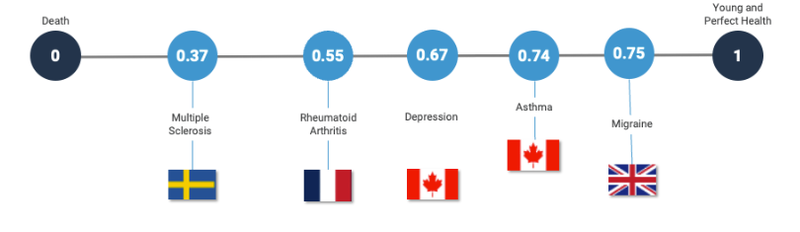
Under a QALY‑based system like Sweden’s, a patient with multiple sclerosis (MS) is assigned a health value of about 0.37, meaning each year of life counts as just over one‑third of a healthy year in cost-effectiveness calculations. As a result, MS treatments that slow disease progression can be labeled “too expensive” on paper, allowing the government to deny access even if the treatment would meaningfully improve the patient’s quality of life.
Examples of QALY measurements by country:
The bottom line:
MFN would tether U.S. drug prices to foreign systems that rely on QALYs, importing not just prices, but value judgments the United States has deliberately rejected. Any American affordability policy must protect—not restrict—access to the medicines patients need.
Brianna Allen
Brianna is a Senior Director on PhRMA’s Public Affairs team focusing on communications strategies and activities around Medicare, Medicaid and access to medicines. Prior to joining PhRMA, she served as a strategic communications advisor at the FDA’s Center for Devices and Radiological Health and worked as a director of strategic communications on FGS Global’s health care team. She started her career in journalism and spent nearly a decade covering domestic policy issues, including federal health policy for POLITICO. She enjoys spending time outdoors exploring Northern Virginia with her husband, two toddlers and corgi puppy.
Brianna Allen headshot
New poll: 2 in 3 voters prefer a candidate committed to lowering health insurance premiums
September 18, 2026
What AARP isn’t telling seniors about MFN
August 24, 2026
Policymakers should improve patient access and reject price controls
August 18, 2026
CMS proposal could discourage patient-centered innovation
August 18, 2026
Nearly 1 in 4 patients initially denied access to IRA medicines
August 6, 2026
Voters continue to voice their concerns on government price controls
July 24, 2026
Medicare Part D at 20: Building on a strong foundation
July 23, 2026
Guest Blog: Price controls won’t lower costs when insurers control access
June 25, 2026
MFN could disrupt the affordable medicines patients depend on
June 18, 2026
New “America Cures” ad: U.S. patients get new medicines first
June 15, 2026
Patients speak out: MFN won't address my affordability concerns
June 4, 2026
MFN price controls threaten American jobs and the U.S. economy
May 28, 2026
Ahead of ASCO: Cancer innovation is promising, but policy choices matter
May 26, 2026
State price-setting boards create more questions than answers
May 20, 2026
New analysis highlights access to new medicines in the United States and abroad
May 13, 2026
MFN won’t lower costs when insurers call the shots
May 8, 2026
Guest Blog: How MFN price controls could decide my health care
April 30, 2026
MFN price controls would drain pensions and put retirements at risk
April 23, 2026
States should avoid repeating the IRA’s price‑setting mistakes
April 21, 2026
CMS undermines medical progress with MFN price controls
April 16, 2026
Trump Administration’s efforts to have other countries pay their fair share are underway
April 15, 2026
CMS’ MFN proposals won’t help seniors despite lofty promises
April 9, 2026
Voters voice concerns on government price controls
April 7, 2026
Virginia should be cautious about importing federal price-setting mechanisms
April 1, 2026
Policymakers shouldn’t double down on the IRA’s flaws with MFN
March 30, 2026
Leadership in biopharmaceutical R&D provides U.S. patients the greatest access to innovative medicines
March 11, 2026
Harmful U.S. policies will help drive China’s global leadership in biopharmaceutical innovation
March 4, 2026
MFN undermines U.S. biopharmaceutical innovation
February 25, 2026
CMS puts patients and innovation at risk with MFN
February 24, 2026
New list of selected drugs highlights growing consequences of government price setting
January 28, 2026
Price setting policies put cancer gains in jeopardy
January 16, 2026
Myth vs. Fact: How government price setting impacts innovation
November 24, 2025
The IRA’s price setting doesn’t guarantee lower costs or better access
November 17, 2025
PhRMA calls on USTR to ensure foreign nations pay their fair share
November 4, 2025
What seniors can expect this open enrollment
October 14, 2025
Part D premiums are going up, while choices are going down
October 8, 2025
Why states struggle to deliver savings: Middlemen and 340B siphon dollars from patients and states
September 15, 2025
Celebrating 60 Years of Medicare
July 30, 2025
Medicare patients face higher drug costs, despite IRA promises
July 22, 2025
CMS continues to make a bad law worse
June 27, 2025
ICYMI: Forget Foreign Price Controls: There’s a better solution to lowering drug prices
June 26, 2025
Americans are paying a 26% freerider tax on medicines because other countries don’t pay their fair share
June 17, 2025
New “Balance the Scales” campaign highlights why Americans pay more for prescription medicines
May 21, 2025
Foreign first pricing schemes don’t address why Americans pay more
May 15, 2025
New analysis: Fewer treatments and cures under the IRA’s pill penalty
May 1, 2025
How the IRA is impacting the generic drug market
April 8, 2025
Three reasons Congress should fix the IRA’s pill penalty
March 24, 2025
Improved treatments continue to lead to declining cancer mortality rates in the U.S.
February 25, 2025
Virginia, Don't Let Politicians Take Away Your Medicine
January 23, 2025
Patients are losing as government price setting continues
January 17, 2025
PhRMA CEOs Tee Up Next Week's Health Care Conference
January 11, 2025
Post-approval R&D is critical for fighting cancer. The IRA makes it more difficult.
November 13, 2024
CMS needs to do better
November 4, 2024
Is CMS paying attention to the growing access barriers for Medicare patients under the IRA?
October 18, 2024
7 reasons why states shouldn’t copy the IRA’s price setting mistake
October 15, 2024
Did the administration consider the importance of blood cancer medicines to patients in price setting process?
October 8, 2024
Did the administration consider the importance of blood clot medicines to patients in the price setting process?
September 25, 2024
Three ways state drug price setting boards fail patients
September 18, 2024
The Inflation Reduction Act could increase costs and reduce access for millions of seniors
September 17, 2024
Are the IRA’s Part B inflation rebates lowering costs for Medicare patients? No.
September 16, 2024
Did the administration consider the importance of autoimmune disease medicines to patients in price setting process?
September 11, 2024
Did the administration consider the value of innovative diabetes medicines in price setting process?
August 28, 2024
New survey: Insurers confirm IRA will reduce patient treatment options
August 20, 2024
The unintended consequences of government price setting in Medicare Part D
August 16, 2024
Don’t put the government between patients and their medicines
August 7, 2024
Biosimilars continue to drive market competition and increase savings for seniors
August 6, 2024
What is the low-income subsidy program and how is it changing?
July 31, 2024
Case study: How seniors could face access disruptions because of the IRA’s price setting provisions
July 22, 2024
PhRMA reiterates concerns with IRA price setting program, urges CMS to mitigate harm
July 3, 2024
More than 60 researchers advocate on Capitol Hill
July 1, 2024
The IRA could lead to higher out-of-pocket costs for 3.5 million Medicare patients in 2026
June 25, 2024
ICYMI: Health care policy should be driven by patients, not politics
June 10, 2024
ICYMI: Misaligned policies undermine patient access
June 6, 2024
ICYMI: Innovation transforms lives but misguided federal policies threaten patient outcomes
May 30, 2024
How the IRA is more coercive than any European government price setting scheme
May 29, 2024
Mental Health Awareness Month: Supporting loved ones and improving mental health in America
May 28, 2024
How government price setting fails to address systemic health care inequities
May 24, 2024
Government price-setting boards: Why Minnesota needs to take a better approach
May 9, 2024
IRA is already negatively impacting access to medicines in Part D
April 25, 2024
Government price setting won’t help patients in Illinois
April 22, 2024
New analysis: Flawed assessments of a medicine’s value jeopardize patient access
April 11, 2024
3 Takeaways from POLITICO’s Health Care Summit
April 3, 2024
ICYMI: More evidence of the IRA’s harmful consequences on post-approval research and development
March 25, 2024
Colorado is proof: Too many unanswered questions remain about state government price setting's impact on patients and providers
March 14, 2024
Watch: A conversation with Dr. Mike Ybarra on Rare Disease Day
February 29, 2024
American Heart Month: A nurse’s perspective
February 27, 2024
The truth about Nebraska's price setting push
February 13, 2024
As the administration continues to falsely claim Medicare “negotiation,” keep these points in mind
February 1, 2024
Powering the next generation of therapies: A conversation with Astellas US President Mark Reisenauer
January 30, 2024
Biosimilars drive savings, but the IRA undermines their development
December 14, 2023
New analysis of patient access restrictions in the United Kingdom
November 21, 2023
The IRA’s pill penalty threatens the future of oncology R&D
November 16, 2023
Don't close the door on rare disease research
November 13, 2023
ICYMI: 3 takeaways on the IRA’s unintended consequences from America’s Physician Groups’ 2023 annual fall conference
November 6, 2023
R&D leaders to Biden Administration: Your policies are undermining the Cancer Moonshot
October 18, 2023
Three things economists are saying about the Inflation Reduction Act
October 11, 2023
4 truths about state government price setting
October 10, 2023
IRA threatens seniors’ access to robust treatment options
September 26, 2023
Correcting the record: IRA’s government price setting provisions are unconstitutional
September 8, 2023
IRA changes to Part D risk access to medicines
August 24, 2023
Three concerns about Colorado's approach to government price setting
August 23, 2023
With the first list of medicines out, let’s not forget why government price setting is bad policy
August 22, 2023
Michigan proposal jeopardizes access to medicines
August 21, 2023
One year later IRAs unintended consequences are becoming reality
August 16, 2023
AARP’s latest misleading report
August 11, 2023
New report shows high-impact R&D happens after cancer medicines are first approved
July 10, 2023
More than 60 researchers ask Congress to support innovation
June 26, 2023
New report shows how the Inflation Reduction Act stifles innovation for small molecule medicines
June 22, 2023
ASCO 2023: Protecting our progress in the fight against cancer
June 15, 2023
Highlights from ASCO 2023
June 8, 2023
Four things for CMS to keep in mind as they implement changes to Part D
June 7, 2023
Addressing Mental Health: A conversation with Barry Greene, CEO of Sage Therapeutics
May 30, 2023
Mental Health Awareness Month: Fighting the growing mental health crisis and supporting innovation
May 11, 2023
Support for continued progress is critical for pediatric drug development
May 8, 2023
New resource underscores the importance of small molecule medicines
May 4, 2023
CMS guidance on IRA price setting process doubles down on bad policy
April 14, 2023
New global analysis shows patient access challenges around the world
April 12, 2023
ICYMI: PhRMA President and CEO Stephen J. Ubl discusses patient affordability
April 7, 2023
New Report: More than 400 medicines in development for leading chronic conditions affecting older Americans
March 28, 2023
Celebrating the success of the COVID-19 vaccines, and looking to the future
March 27, 2023
IRA Impacts: Cancer treatment research and development
March 23, 2023
Celebrating 40 years of the Orphan Drug Act on Rare Disease Day
February 28, 2023
WTAS: Inflation Reduction Act already impacting R&D decisions
January 17, 2023
ICYMI: PhRMA COO Lori Reilly speaks about the health care agenda for the next Congress
December 9, 2022
New government price setting policy threatens post-approval research
November 10, 2022
Rejecting ICER’s bad advice
September 9, 2022
New survey: Voters seriously concerned about fine print in reconciliation bill
August 12, 2022
This week’s reading list: All the reasons the Senate-passed drug pricing bill is bad policy
August 10, 2022
Myth vs. Fact: The Senate’s latest price setting proposal
August 5, 2022
An open letter to Congress: Stand with patients and future cures
August 4, 2022
ICYMI: Patients across the country are sharing concerns about government price setting
August 3, 2022
The Senate’s latest price setting proposal will undermine U.S. economic growth
August 3, 2022
Celebrating Medicare’s 57th anniversary
August 2, 2022
New analysis finds deeper impact of drug pricing bill on biopharmaceutical researchers
August 1, 2022
ICYMI: A patient, physician, biotech investor and industry leaders warn about the dangers of government price setting bill
July 29, 2022
The Senate’s latest price setting proposal will undermine: Our health care system
July 28, 2022
The Senate’s latest price setting proposal will undermine: American medical innovation
July 27, 2022
The Senate’s latest price setting proposal will undermine: Patient access to medicines
July 26, 2022
The Patient Perspective: Government price-setting harms patients
July 22, 2022
Polling continues to show voters reject so-called Medicare “negotiation” once they learn about consequences for patients
July 12, 2022
By the Numbers: Patients lose when the government sets prices
July 8, 2022
Guest Post: If we truly want to cure complex diseases, politicians should reject price setting
March 14, 2022
Veterans Affairs 101: Three charts show how the VA system differs from Medicare
March 11, 2022
Government price setting leaves behind families counting on new medicines
February 23, 2022
Government price setting won’t stop insurers from shifting costs to patients
February 2, 2022
It’s a new year, but sadly Congress is still pursuing flawed price setting policies
January 25, 2022
A price control by any other name would still put patients at risk and threaten innovation
December 9, 2021
Guest post: Congress should not put future innovation at risk
November 29, 2021
What is missing in the current drug pricing plan
November 23, 2021
In the current health care debate, Congress has lost sight of what matters to U.S. voters
November 15, 2021
What they are saying: Government price setting for medicines is not the answer
November 4, 2021
ICYMI: New study confirms policies like H.R. 3 could significantly reduce drug development
October 18, 2021
Five reasons tying VA prices to Medicare Part D misses the mark
September 22, 2021
H.R. 3 threatens access to medicines, future innovation and American jobs
May 4, 2021
Government Price Setting
MFN drug pricing risks reviving a harmful metric the U.S. rejected
March 16, 2026