Innovative contracts can help bring more value to patients and the health care system. These types of payment arrangements can include:
- Value-based contracts: Determine payment for health care services based on patient, clinical, cost or other outcomes and include results-based contracts.
- Alternative financing arrangements: Allow for a more flexible approach to payment, including pay-over-time or subscription models.
A recent report from Humana looked at value-based contracts between payers and physicians and found that while patients with physicians who were paid based on outcomes filled 38% more prescriptions per month, they also paid less out-of-pocket per month than those treated by a physician paid based on volume.
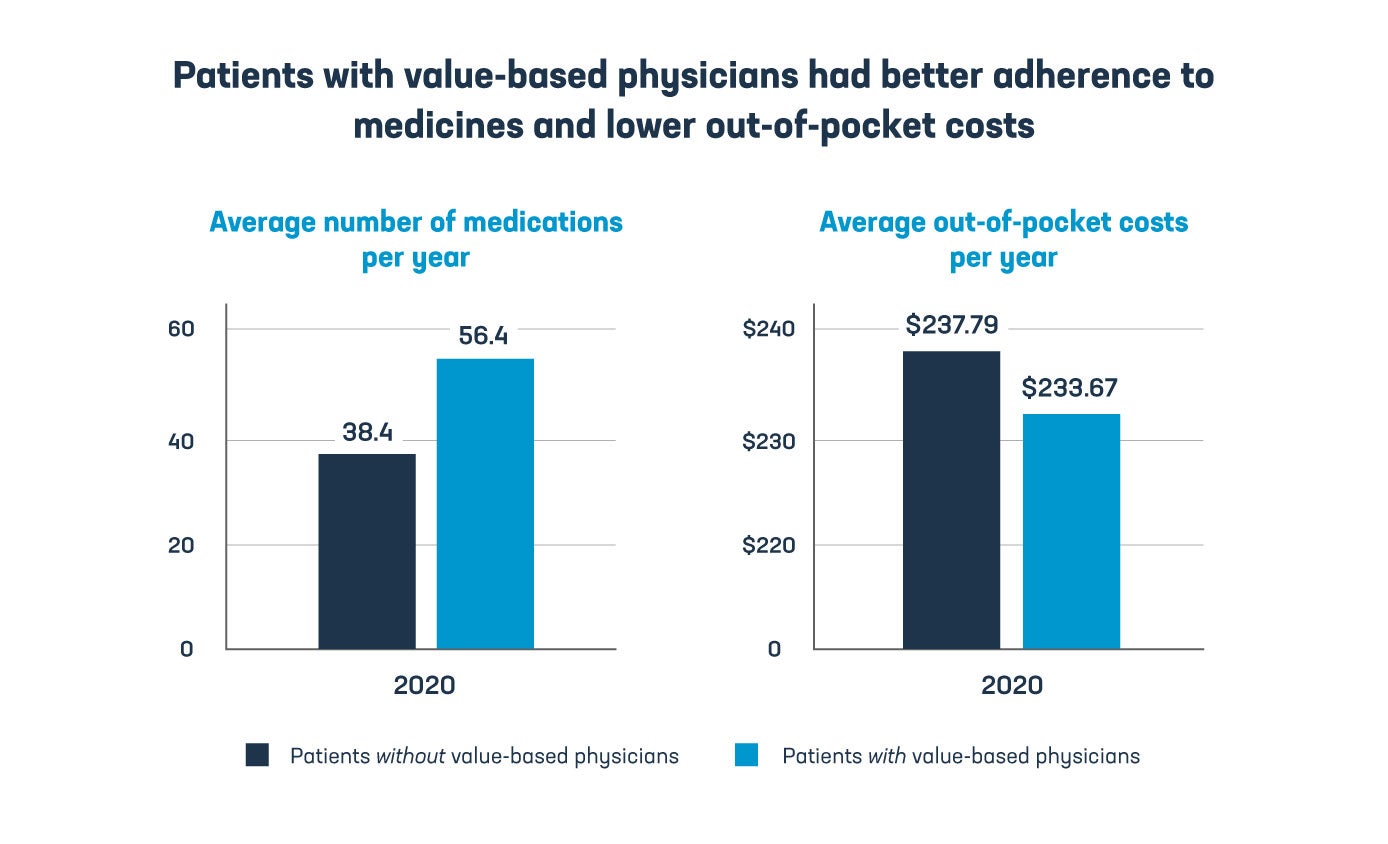
These findings may be due to better adherence to medicines. Physicians who received payment based on patient outcomes saw their patients more frequently and were able to help them successfully manage chronic conditions using maintenance medicines, which tend to be less expensive. These patients were able to better manage diseases like diabetes, chronic obstructive pulmonary disease and rheumatoid arthritis because they were better able to adhere to their routine treatments.
This is further evidence that value-driven health care can increase care coordination among health care providers, help lower out-of-pocket costs, improve patient outcomes and reduce overall health care costs. Innovative contracts may also be a tool to help states address prevalent health disparities, especially in the Medicaid program.
Currently, innovative contracts are happening across the health care system, including nearly 100 announced between biopharmaceutical companies and payers.

These types of payment models are essential for building a more resilient, affordable and equitable health care system. The publicly announced contracts include treatments for diabetes, cancer and rheumatoid arthritis.

We need to evolve our payment systems to keep up with the science by advancing policy solutions that will expand the ability to use innovative approaches to payment and reimbursement. That way, we can bring this new era of medicine to patients and their families.
Learn more about innovative contracts here.
Katie Koziara
Katie Koziara is Senior Director of public affairs at PhRMA focusing on the organization’s executive visibility work and media relations strategy. She previously ran the social media strategy for a D.C.-based non-profit working on federal management and leadership issues. Katie earned her B.A. in Public Policy from the University of Michigan’s Ford School and is currently earning her M.A. in Fiction Writing from Johns Hopkins University.
Katie Koziara
Incomplete evaluations undermine patient access to transformational medicine
Study finds nearly half of payers believe innovative contracts can lead to lower patient out-of-pocket costs
Growth in innovative, value-based contracts holds promise for the health system and for patients
PhRMA submits comments to CMS on Medicaid proposed rule
Guest post: Value-based agreements can improve outcomes and even save patients money at the pharmacy counter
New data show how ICER’s value framework could prevent or delay access to treatments for Medicaid patients across the country
5 Ways to improve ICER’s value assessment framework
Assessing value top of mind at ISPOR 2019
Event tomorrow: Leaders convene to discuss solutions to advance value-driven health care
New whitepaper identifies reasons why ICER’s cost-effectiveness analyses are not useful for payers
Guest post: Developing new payment models to ensure patients have access to high-investment therapies
Number of value-based contracts continues to rise
ICER’s budget impact threshold: Sounding a false alarm on affordability and access
PhRMA submission to HHS on blueprint to lower drug prices and reduce out-of-pocket costs
How ICER’s assessment of a new class of migraine treatments fails patients
Aspen Spotlight Health: Discussing the forefront of innovation
New analysis shows that HTA organizations may frequently restrict access to cancer treatments
New analysis shows negative impact of ICER’s value framework on patient access in Medicare Part B
ICYMI: Recent survey adds to growing body of research on barriers to innovative payment approaches
Event tomorrow: Improving patient access to lifesaving medicines
Reality check: Value-based contracts are good for patients
Video: Barriers to results-based contracts
Improving care quality by engaging patients in shared decision making
ICYMI: Research shows promise of innovative payment arrangements in reducing costs, improving access
Clarity around anti-kickback statute needed to promote innovative payment arrangements
Video: What is a results-based contract?
PhRMA Foundation recognizes inaugural Challenge Award recipients
The journey to better health care requires a holistic view
Medicare Monday: How Part B has evolved over the years
Modernizing FDA regulations to advance a value-driven health care system
ICYMI: Avalere and FasterCures develop new value framework from patient perspective
RA medicines often demonstrate far greater benefits to patients than initially understood
New analysis: More than half of patients’ out-of-pocket spending for brand medicines is based on full list price
Stakeholders Agree: Modernize the legal framework to support move to value-driven health care
How do multiple sclerosis patients define value?
PhRMA CEO talks White House meeting, innovation & jobs with POLITICO’s Pulse Check
VIDEO: PhRMA CEO discusses #GOBOLDLY campaign and White House meeting with CNNMoney’s Maggie Lake
The Value Collaborative: Advancing private market solutions to achieve better health, lower costs
Innovative contracts continue to gain traction and improve quality of care
Value-Driven Health Care
Value-Based Contracting
Innovative contracts continue to gain traction and improve quality of care
Innovative contracts continue to gain traction and improve quality of care