Respiratory season is a reminder of how quickly illness can disrupt a child’s health, time in school, and family life. It is also a critical reminder that access to vaccines matters.
For more than 30 years, the Vaccines for Children Program has helped eligible children receive Advisory Committee on Immunization Practices (ACIP)-recommended vaccines at no cost – protecting families and communities from serious, preventable diseases.
One key fact: Approximately half of children in the U.S. are eligible for the program.
What it is: Vaccines for Children is a federally funded program that provides ACIP-recommended vaccines against 18 serious vaccine-preventable diseases at no cost to eligible children ages 18 and younger. Children may qualify if they are:
- Eligible for or enrolled in Medicaid
- Uninsured
- American Indian or Alaska Native
- Underinsured and receiving vaccines through an eligible safety-net provider
The program reaches families through approximately 37,000 vaccine providers, including doctors’ offices, hospitals, public health clinics, community health centers, schools and pharmacies.
The Vaccines for Children program was created to address a persistent access challenge. From 1989 to 1991, a nationwide measles epidemic caused approximately 55,000 cases, 11,000 hospitalizations and 123 deaths.
More than half of those cases occurred among unvaccinated children, with the cost of measles vaccination identified as a primary barrier. In response, Congress created Vaccines for Children in 1994 to address this issue and support broader vaccine access. The Centers for Disease Control and Prevention (CDC) notes that the “program plays a vital role in increasing and sustaining vaccination coverage.”
Today, the program operates similarly to other government programs, like Social Security or Medicare. Funding is allocated through the Centers for Medicare & Medicaid Services and administered by the CDC.
By the numbers: Vaccines for Children has become a cornerstone of childhood vaccine access:
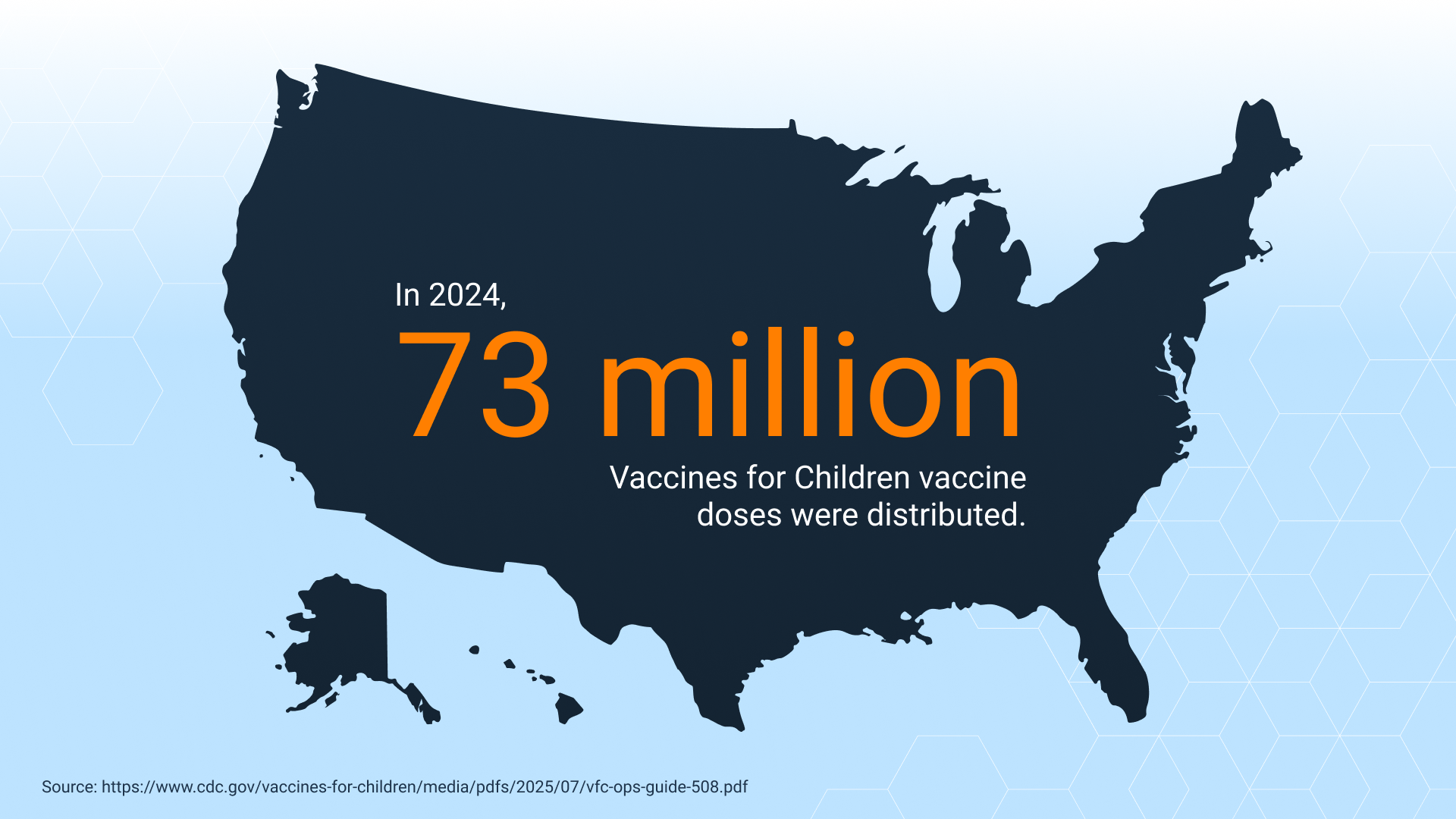
- In 2024, the program distributed approximately 73 million pediatric vaccine doses.
- Since created, it is estimated that childhood vaccination prevented 508 million illnesses, 32 million hospitalizations and more than 1.1 million deaths among children born between 1994—when the program was established—and 2023.
- During the same period, the program delivered $540 billion in direct savings and $2.7 trillion in societal savings.
Progress worth protecting: The Vaccines for Children program’s success is attributable to its strong foundation in providing consistent and reliable cost-free access to vaccines for eligible children. Protecting Vaccines for Children’s strong foundation – along with supporting evidence-based vaccine policies and recommendations – will help the children who need it most receive timely protection from dangerous disease.
The bottom line: Vaccines cannot protect children if families cannot access them. As respiratory season begins, the Vaccines for Children program remains essential infrastructure – bringing lifesaving protection to children who might otherwise be vulnerable to serious illness.
Learn more at PhRMA.org/Vaccines.
Carolyn Ha
Carolyn Ha, Pharm.D., is a Deputy Vice President in the Policy and Research Department at PhRMA, where she provides clinical expertise to shape policy development and advocacy related to population health and chronic disease management, improvement of medication use and clinical and quality management strategies. As a clinician, she is passionate about patient care and translating research into actionable policies that will ensure patients get the most out of their medications and creating a sustainable health care delivery system that incentivizes innovation. Carolyn received her Doctor of Pharmacy from Rutgers University and is a registered pharmacist in Virginia. Prior to joining PhRMA, she spent time as a practitioner in a community pharmacy and advocated on behalf of independent pharmacy owners. When she’s not working to improve the lives of patients through better use of medicines, Carolyn can be found spoiling her nephew & niece, exploring new restaurants, traveling and cheering on the New York Giants.
Carolyn Ha