In recent weeks, we’ve explored some of the dangers of importation for patients and how medicines purchased online can be fake. But what would importation schemes mean for U.S. law enforcement?
Illegal drug trafficking by global criminal organizations is already a challenge for U.S. law enforcement, and the threat of fake, adulterated and addictive drugs, like counterfeit fentanyl, being imported would only increase if drug importation proposals move forward. Law enforcement agencies, including the U.S. Customs and Border Patrol, are already overburdened.
Of note, the U.S. Drug Enforcement Administration (DEA) has already warned about the threat of counterfeit prescription products making their way into the United States illegally via Canada and other countries. This threat continues to grow, particularly with counterfeit opioids, and proposed importation schemes are expected to lead to an even greater quantity of these products entering the United States.
Given the substantial amount of time and resources required of federal, state and local law enforcement to disrupt drug trafficking, opening our borders to drug importation schemes would only heighten the burden and undermine the ability of law enforcement to keep Americans safe. Criminals are waiting to take advantage of an open border system. Here are a few examples of how drug trafficking and importation proposals can impact law enforcement:
- Disrupting just one designer drug distribution ring that produced synthetic opioids involved law enforcement from 45 states and joint operations in 4 other countries, including Australia, New Zealand, Canada and Barbados.
- To stop the unlawful importation of at least 100 kilograms of illegal synthetic compounds (enough to produce about 260,000 retail packets of dried product) from China, five processing facilities were searched in addition to warehouses across all five boroughs of New York City. Over 2 million packets of eight synthetic drugs were seized.
- Criminals actively look to skirt law enforcement by mislabeling products and the like. The DEA’s July 2016 Case Study warns that “fentanyls are traditionally mixed into or sold as heroin, oftentimes without the customer’s knowledge.” They report, “the current fentanyl crisis is multi-faceted and involves a global supply of fentanyl and related materials. Counterfeit pills containing fentanyls are smuggled into the United States from Mexico and Canada.”
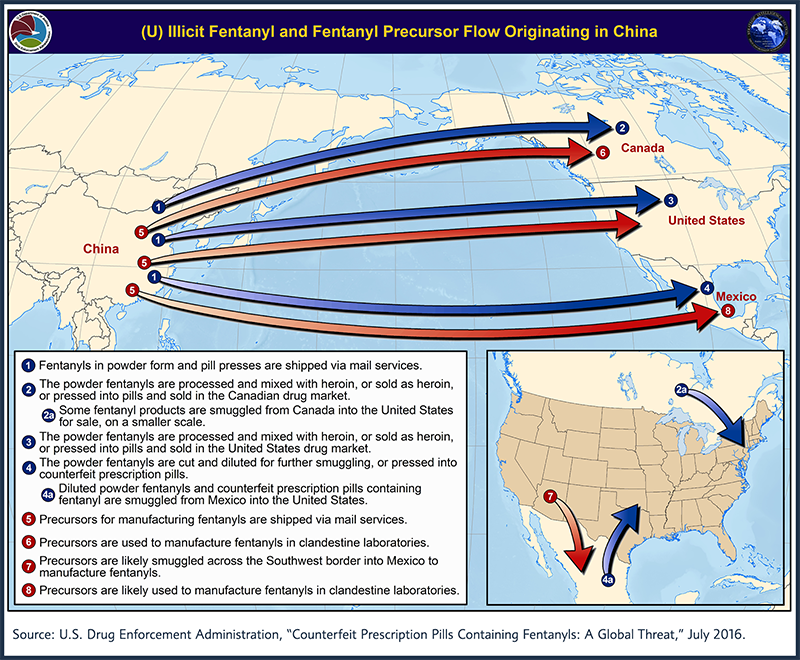
With large-scale importation proposals, we can’t ignore the danger of overwhelming already overburdened law enforcement agencies with increased counterfeit products, including opioids.
Learn more about the dangers of drug importation here: PhRMA.org/Importation
Allyson Funk
Ally is a former senior director of public affairs at PhRMA.
Allyson Funk
More oversight needed of unapproved medicines that threaten patients’ health
What they are saying: Florida Drug Importation Program is Unfeasible and Dangerous
Florida’s importation plan puts patients in danger
Three things to know about the accelerated approval pathway
ICYMI: Antimicrobial resistance spotlighted as growing public health threat
Why drug importation is bad for Americans
PhRMA submits comments on FDA’s proposed rule on drug importation
Drug importation: An old idea that is still a bad idea
What they’re saying: Safety is top concern for recent drug importation proposal
ICYMI: Canadian government, stakeholders voice concerns with drug importation proposals
PhRMA responds to Florida’s request for information on drug importation
PhRMA CEO raises concerns with Florida importation proposal, highlights reforms needed to lower costs for patients
Look at the facts. Drug importation is dangerous.
Why state drug importation pilot programs don’t work
ICYMI: Wall Street Journal highlights dangers of counterfeit medicines entering the United States through drug importation
Securely dispose of your unwanted medicines on National Take Back Day
The Washington Post retracts PhRMA claim in opioid story
PhRMA response to Washington Post and 60 Minutes stories
VIDEO: PhRMA CEO discusses industry response to opioid crisis on Mornings with Maria
Protect your health: Important disaster preparedness tips for Harvey and Irma
PhRMA Supports President’s Commission’s Holistic Approach on Opioid Crisis
Opportunities to build upon enhanced competition for medicines in the marketplace
A critical opportunity to prevent prescription drug abuse
Former law enforcement officials raise concerns with drug importation proposals
The risks of counterfeit imported medicines
Resources for understanding the dangers of drug importation
ICYMI: What the experts are saying about importation
Case Study: How one online pharmacy knowingly endangered U.S. consumers
Why drug importation threatens patient safety
Fact Check Friday: The truth about drug importation and patient safety
What you don’t know about importation from Canada
Discovery of counterfeit hepatitis C drug is another example of why importation is bad for patients
How drug importation schemes could increase U.S. law enforcement burdens
Prescription Drug Safety
Importation
How drug importation schemes could increase U.S. law enforcement burdens
How drug importation schemes could increase U.S. law enforcement burdens