 Our industry has committed itself to making our workplaces trusting places to have complex, and sometimes difficult, conversations about diversity and inclusion.
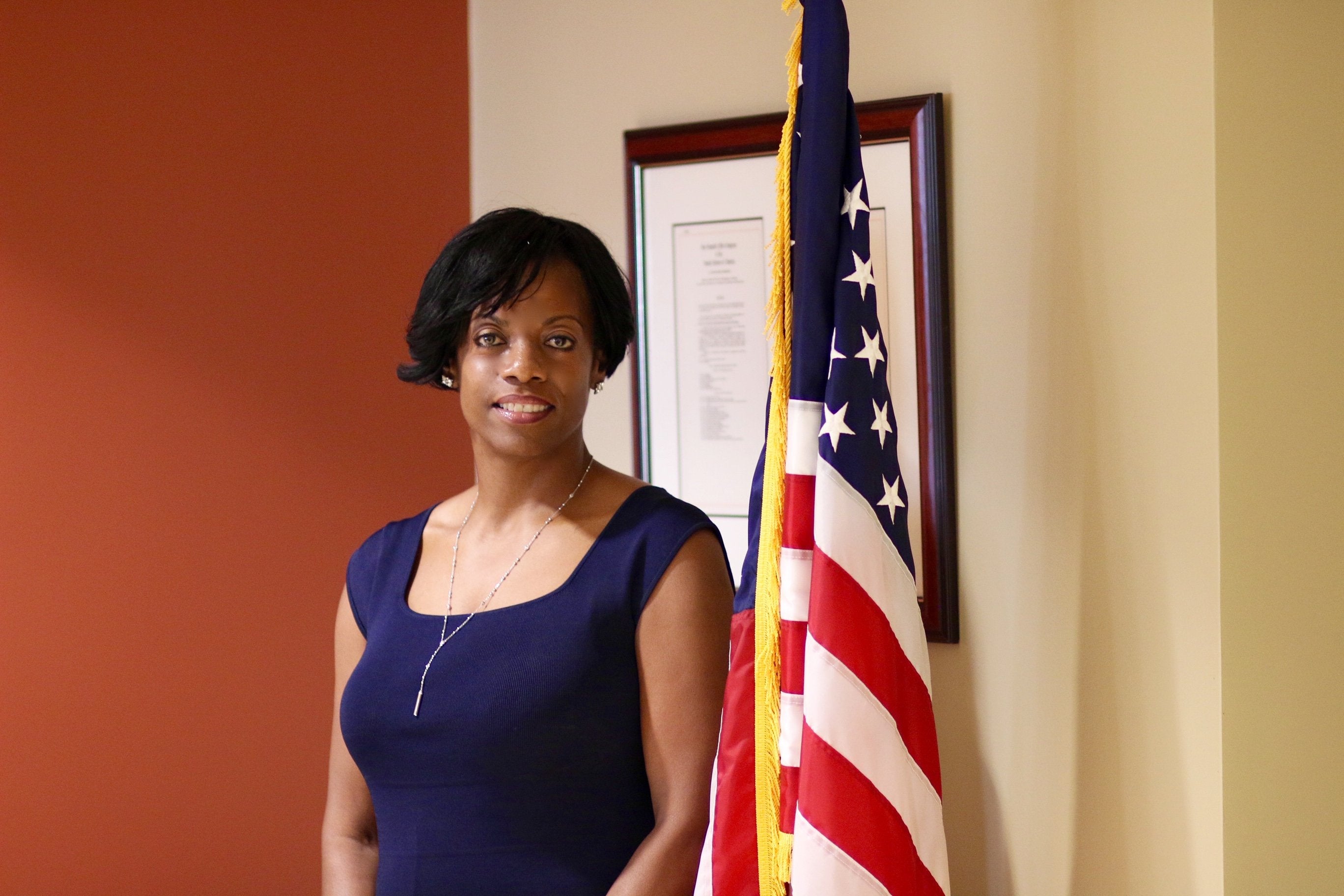
PhRMA’s Courtney Christian, Senior Director of Policy and Research, had the opportunity to connect with Stephanie Dyson, Head of Office, Vice President Public Policy & Government Affairs at Biogen, about Stephanie’s career, being a Black woman in corporate America and the advice she’d give to young professionals today.
Courtney Christian (CC): Tell us about the work that you do, and why you wanted to have this conversation?
Stephanie Dyson (SD): I am uniquely positioned as a Black female executive working in government affairs, an area that is grossly underrepresented by Black people at all levels. Corporate America is finally engaging in real conversations about race, justice, diversity, equality, inclusion, unconscious biases and microaggressions. These will undoubtedly be uncomfortable conversations, but they must occur. Your workplace experience doesn’t define you, but it certainly plays an important role in shaping and impacting who you are. Black Americans deserve to be valued and respected. We deserve to work for organizations that not only believe our work has value, but also that understand that our lives have value as well.
CC: Why is it so important for industries like ours to reflect our country’s diversity?
SD: I am mature in my career. Until very recently, I had not been comfortable having conversations about racism and being Black in America — especially at work. To navigate work successfully, I was taught to wear two faces, especially in a predominately white corporate environment. In some ways you must hang up your authentic self and put on your protective armor for work. Many will never know how it feels to be the only one that looks like you in a conference room, in a meeting or at a networking event or happy hour. Or what it feels like to constantly assimilate yourself in to another group's culture and way of doing things. Or to constantly be challenged and not be able to stand up for yourself or correct someone's assumptions and untruths about you, your culture or your community for fear of losing your job.
Why “two faces”? “Two faces” allow us to be accepted, received and heard. Two faces allow us to actualize higher aspirations and to make others comfortable — and it’s draining. I, and many other Black Americans, routinely endure (with a brave face) racial slights and overt intentional racist acts because we know our success is not just about us but about our commitment to open doors for other Black Americans that will follow. We are taught to endure. We are taught to have faith and to lift others up. We are taught to sacrifice for the greater good. How many other groups feel the pressure of having to represent your race well at all times?
We MUST ensure our industry is diverse to bring a broader, richer perspective to business decisions and strategy and to ensure our industry is representative of the patients we serve. And in order to do that, our industry has to be committed to having diverse voices and viewpoints in decision making roles, top to bottom and side to side within our organizations, so that the procedures, policies and strategies employed by our industry speak to and reflect the priorities of the many communities who depend on the medicines and treatment we innovate and provide to improve health outcomes for them and their families.
CC: Your response reminds me of the famous poem by Paul Lawrence Dunbar, “We Wear the Mask” and of the double consciousness that W.E.B. DuBois discussed. Do you think that the pharmaceutical industry’s commitment to racial justice, made after the murder of George Floyd, changes whether we – me and you as part of the industry – continue to wear that mask as our companies have been actively working towards cementing the racial justice principles our Board committed to?
SD: Watching the video of George Floyd’s murder made me face the reality of fear, lack of power and marginalization of Blacks in America. A white police officer, who knew he was being filmed, his glasses never moving from his forehead, was casual and unfazed as he slowly killed a Black man for eight minutes and forty-six seconds. His knee on a Black man’s neck is symbolic of so much.
Corporate America, and America in general, has not yet determined how to best acknowledge and accept the fact that racism still exists. This topic has been, and to a large extent still is, uncomfortable to address in the workplace, but I’m truly inspired by the recent protests and today’s discussions. They are different from those in the past because they are more ethnically, economically, socially, institutionally and politically diverse. It’s this type of support, conviction, compassion and caring that empowers personal strength and gives me hope that things can change.
CC: I remember as a former Black Hill staffer, feeling frustration that there were so few government affairs professionals who looked like me, someone who could possibly serve as a mentor and someone to perhaps provide a pattern of what I wanted my career to follow. We still consistently hear this from former and current Black Hill staffers. What can we do to address this?
SD: We need to create networking opportunities, interview more Black candidates and address the unconscious bias and perceptions that Black government affairs professionals only lobby Black and minority members of Congress and work to hold individuals, organizations and companies accountable. For example, my company (Biogen) has created a four-pronged Diversity, Equity & Inclusion (DE&I) initiative and has already began taking steps to not just discuss solutions but actually implement measures to address social and racial inequities, including building inclusive talent systems, having individual accountability for DE&I, driving health equity, focusing on hiring and retaining black talent, banking with minority institutions, enforcing mandatory workforce training, and increasing transparency in employment data.
CC: There are likely a lot of young, Black and Brown professionals just starting out, who will read this article and look to you for guidance. What do you want them to know?
SD: When I was a young nurse, I was admitted to a very prestigious course at the critical care unit at an area hospital. I remember walking into the room and seeing only two seats available in the front. As I walked to take a seat the instructor stopped me to ask if I was in the right room. When I said yes, the instructor pressed again asking, “Are you a registered nurse?” It wasn’t until I looked around the room that I realized I was the only Black person there. During my training I came to find out that I had the highest GPA in the class. In fact, many of the other students didn’t meet the minimum GPA criteria. People asked me, “Aren’t you proud? You have the highest GPA out of everyone!” To me, it didn’t feel that way because it felt like to be effective in my role, I had to be exceptionally better than everyone else. Fast forward to 18 months ago when I joined Biogen. I remember going to an industry meeting, one of my first in my current role, and the first thing I heard when I walked into the room was, “Oh great, we just doubled our minority representation.” For me it was no different than walking into that room years ago as a young nurse and the first thing anyone noticed was my race.
I have often wondered: what more do we need to do as Black people to prove our humanity? My realization over the years is that I control my destiny. I’ve learned to speak up for myself and not allow the actions and ignorance of others take away my value or ultimate happiness.
Courtney Christian
Courtney Christian is a Deputy Vice President of Policy and Research at PhRMA focusing on state-based reforms impacting health insurance, prescription drug coverage in public health programs and on health equity. Prior to joining PhRMA, she worked at the Black Women’s Health Imperative as Director of Policy and Advocacy, and on Capitol Hill for a number of years in a series of roles, including as Legislative Director. Courtney is a Florida State football fan (and alum), aspiring chef, and mom to an energetic preschooler.
Courtney Christian
Staffing up: Building the future biopharma workforce to keep America in the lead
Nearly 80 researchers advocate on Capitol Hill
Congratulations to our 2026 Working for Cures Employee Champions
Manufacturing U.S. jobs and breakthroughs
Historic biopharmaceutical investments: A prescription for America’s future
Bringing to life the full story of biopharmaceutical innovation and investments
From sound to science: How IP powers innovation in music and hearing
Recognizing the value of disease prevention with Dr. Len Friedland from GSK
Congratulations to our 2024 Working for Cures Employee Champions
Recent events highlight progress on health equity
ICYMI: PhRMA’s 4th Annual Pathways to Success: Virtual STEM Career Expo
The importance of partnership: A conversation with Takeda
Hispanic Heritage Month: Fighting for Hispanic patients
PhRMA awards grants to 2024 Annual Pathways to Success: Virtual STEM Career Expo Partners
New research: American biopharmaceutical investment in R&D drives transformational innovation
The future of oncology R&D lies in policymakers’ hands
More than 60 researchers advocate on Capitol Hill
Alzheimer's & Brain Awareness Month: A conversation with Biogen
Alzheimer's & Brain Awareness Month: A conversation with Eisai
Alzheimer's & Brain Awareness Month: A conversation with Eli Lilly and Company
How government price setting fails to address systemic health care inequities
Women’s Health Month: A conversation with Sage
Championing cancer equity: Our drive for healthier AANHPI communities
New analysis: Accelerated approval pathway is changing lives in underserved communities
Powering the next generation of therapies: A conversation with Astellas US President Mark Reisenauer
PhRMA provides grant funding to support the Morehouse School of Medicine Satcher Health Leadership Institute’s Health Equity Tra
Congratulations to our 2023 Working for Cures Employee Champions
Watch: Putting patients front and center for World AIDS Day
New Report: 1,600 cancer treatments and vaccines in clinical development
New social determinants of health simulation explores structural barriers patients face accessing and affording medicines
PhRMA awards grants to 2023 Annual Pathways to Success Graduate Summit Partners
Watch: New video series spotlights advances in biopharmaceutical science
Between hope and despair: Improving cancer outcomes
New report shows high-impact R&D happens after cancer medicines are first approved
More than 60 researchers ask Congress to support innovation
Biopharmaceutical science powered by PRIDE
Addressing Mental Health: A conversation with Barry Greene, CEO of Sage Therapeutics
World IP Day 2023: Celebrating women leaders in innovation
PhRMA awards grant to Emerson Diversity Health Foundation
PhRMA Otorga Beca a la “Emerson Diversity Health Foundation”
What we’ve learned from three years of fighting COVID-19
WTAS: Inflation Reduction Act already impacting R&D decisions
Using traditional HTAs to determine coverage threatens patient access to medicine
Sparking conversations — and careers — at the 2nd annual Pathways to Success Summit
Traditional HTAs keep diverse patients out of the conversation
Stories from the lab: Researchers discuss innovative treatments for cancers of the blood
Congratulations to our 2022 Working for Cures Employee Champions
Traditional HTA methods treat everyone like the “average” patient
Protecting against influenza: A conversation with David Ross, Vice President, Commercial Operations, North America, CSL Seqirus
An open letter to Congress: Stand with patients and future cures
PhRMA member companies’ R&D investments reach record high of $102.3 billion in 2021
You won’t fix what you don’t value: Two reasons why traditional cost-effective analyses can perpetuate health inequities
Biopharmaceutical researchers to discuss the value of R&D with Congress
Potential gene therapies bring hope to patients with sickle cell disease
A conversation with Barry Greene, CEO of Sage Therapeutics
Stephanie Dyson of BMS on reducing health disparities
Sharing rebates can save Americans with diabetes 500 each year and improve adherence
Biopharmaceutical industry drives economic growth in all 50 states
Guest post: Joining forces to combat the COVID-19 mental health crisis
Announcing CAREs Grant Round 4
Announcing CAREs Grant Round 4
Upcoming graduate student summit will showcase pathways to success within the biopharmaceutical industry
Guest Series: PhRMA talks racial and health equity with Lauren Powell, VP US Health Equity and Community Wellness, Takeda
Industry leaders discuss the impact of the drug pricing debate
PhRMA member companies’ R&D investments reach record high of $91.1 billion in 2020
PhRMA awards $75,000 to fund initiatives to reduce health inequities
Watch: Building trust and enhancing clinical trial diversity
Building a better health care system: A conversation with Mark Reisenauer, President of Astellas US
More than 800 medicines are in development for diseases that disproportionately affect racial and ethnic communities
Researchers to shine light on biopharmaceutical R&D with policymakers
PhRMA hosts first stakeholder workshop on clinical trial diversity
PhRMA CAREs Grant request for proposals: Addressing inequities in access to COVID-19 testing, therapeutics and vaccines
PhRMA member companies share how they are improving clinical trial diversity
Key takeaways: PhRMA comments to USPTO on how to make the innovation ecosystem more diverse and inclusive
Coming together to fight COVID-19: A conversation with Paul Perreault, CEO and Managing Director of CSL
Paper finds gaps in health data are a barrier to health equity
New research shows hotspots of inequity relate to increased COVID-19 hospitalizations
Increasing diversity at investigator sites could increase minority participation in clinical trials
Report highlights biopharmaceutical industry’s commitment to D&I
Strengthening a culture dedicated to patients and equity: A conversation with Percival Barretto-Ko, President of Astellas US
Guest Post: Bringing our best to the fight against COVID-19
PhRMA CAREs Grant request for proposals: Addressing racial disparities in medication utilization and adherence
Committing to diversity, equity and inclusion: A call to action for clinical trials
An unprecedented year and the road ahead: A conversation with Giovanni Caforio, PhRMA Chairman and CEO of Bristol Myers Squibb
Just released: PhRMA members’ new clinical trial diversity principles
ICYMI: Addressing health inequities: Biopharmaceutical companies are rising to the occasion
Coming together to fight COVID-19: A conversation with Peter Anastasiou, Executive Vice President of Lundbeck
Guest Post: Honoring Hispanic Heritage Month by taking action on health equity
New Report: The biopharmaceutical industry’s sustained commitment to inspiring and advancing tomorrow’s STEM workforce
Coming together to fight COVID-19: A conversation with Alexander Hardy, CEO of Genentech
Leading researchers to spotlight the critical role of biopharmaceutical R&D
Sharing rebates can improve access to medicines and increase health equity
Coming together to fight COVID-19: A conversation with Ramona Sequeira, President of Takeda Pharmaceuticals U.S.A
Coming together to fight COVID-19: A conversation with Albert Bourla, Chairman & CEO of Pfizer, Inc.
Guest Post: How proactivity and planning helped Novartis ensure a stable supply of medicines during COVID-19
PhRMA member companies invested $83 billion in research and development last year
PhRMA will continue to advocate for equity within our industry
Coming together to fight COVID-19: A conversation with Paul Hudson, CEO of Sanofi
Three ways the pharmaceutical industry can positively impact health equity
Guest Post: Amgen Foundation stands for equal opportunities in STEM learning
Systemic racism is as real as any disease, and our industry is not immune
ICYMI: The latest as America’s biopharmaceutical companies work to beat COVID-19
New report explores setbacks that bring future cancer success stories
Guest Post: Pride started with protest: Combatting the dual pandemics of COVID-19 and racism this Pride Month
In combating COVID-19, science is how we get back to normal
Guest Post: Takeda seeks ‘new normal’ for cancer research during the COVID-19 pandemic
PhRMA awards $100,000 to fund projects that address health inequalities
Guest Post: What will we learn from COVID-19?
Observing National Minority Health Month in the age of COVID-19
Lilly, Merck and Pfizer empower team members to volunteer on COVID-19 frontlines
To the millions affected by COVID-19
Merck’s Dr. Julie Gerberding on the threat of antimicrobial resistance and COVID-19
The biopharmaceutical industry’s unique role in responding to COVID-19
ICYMI: America’s biopharmaceutical companies are working 'around the clock' to beat coronavirus
COVID-19 Response: Supporting the frontline
Guest post: Looking out for the invisibly vulnerable in the time of COVID-19
America’s biopharmaceutical companies are working around the clock to beat coronavirus
Guest post: Takeda’s efforts to address COVID-19
ICYMI: America’s biopharmaceutical companies are taking on COVID-19
ICYMI: Continued biopharmaceutical action on COVID-19
Working together to combat coronavirus
The journey to better health care requires a holistic view
Helping those affected by the 2017 hurricane season
Celebrating PRIDE in biopharmaceutical science
Guest Post: The importance of a modern FDA in drug discovery
Exploring the new era of medicine
Guest Post: Johnson and Johnson is celebrating outstanding scientists: Who will be next?
Watch: Biomarkers in drug development with Dr. Bernie Zeiher
"Guest post: PhRMA talks racial and health equity with Stephanie Dyson, Head of Office at Biogen"
PhRMA Member Company
Health Equity
Guest post: PhRMA talks racial and health equity with Stephanie Dyson, Head of Office at Biogen
"Guest post: PhRMA talks racial and health equity with Stephanie Dyson, Head of Office at Biogen"