 Ask About Adherence is a blog series featuring Q&A’s with experts and new medication adherence resources. In this post, we feature a recent study on the savings associated with new hepatitis C treatments.
A new study in the American Journal of Managed Care found that, by 2022, a total of 331,967 Medicaid enrollees are estimated to have been cured of the hepatitis C virus (HCV), leading to an estimated total savings to Medicaid of $12 billion, net of treatment costs, from avoided health care costs.
The Medicaid population has a high prevalence of HCV, a disease associated with expensive complications such as cirrhosis and liver cancer. But highly effective interferon-free Direct-Acting Antivirals (DAAs), first approved in 2013, can cure this disease, and avoid the substantial health care costs associated with HCV and its complications. For example, on an individual basis, a patient cured of HCV can expect to fully offset costs of DAA treatment after only 16 months.
By 2017, annual cost savings associated with curing the disease are estimated to have exceeded treatment costs to Medicaid. Year after year, as more patients in Medicaid are cured and savings continue to grow, the total cost of DAAs since the introduction of these treatments are fully offset by the total savings achieved through reduction in health care costs. By 2022, the cumulative amount of these savings is estimated to reach $12 billion dollars.
Projecting these findings out further, another analysis estimated the cumulative amount of these savings to Medicaid, net of DAA costs, will reach $52.7 billion by 2028.
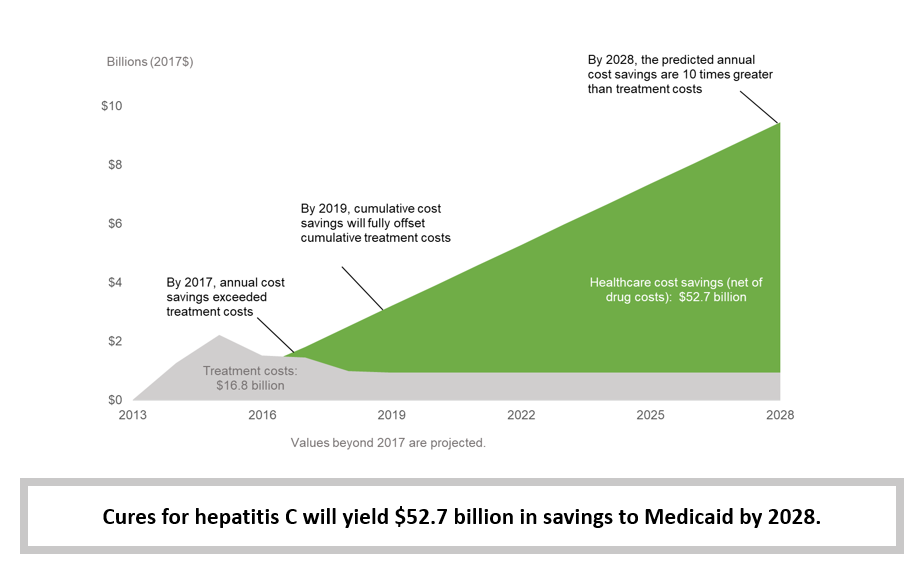
Partnership for Health Analytic Research, LLC. Analysis based on results reported in Roebuck M, Liberman J. Burden of Illness of Chronic Hepatitis C in Medicaid. Am J Manag Care. 2019; 25:-S0
To learn more about how medicines are often the most cost-effective means of preventing and treating disease, visit www.letstalkaboutcost.org.
Katie Koziara
Katie Koziara is Senior Director of public affairs at PhRMA focusing on the organization’s executive visibility work and media relations strategy. She previously ran the social media strategy for a D.C.-based non-profit working on federal management and leadership issues. Katie earned her B.A. in Public Policy from the University of Michigan’s Ford School and is currently earning her M.A. in Fiction Writing from Johns Hopkins University.
Katie Koziara
New calculator demonstrates how improved adherence to anti-diabetic medicines can benefit people in Medicaid
New data show how insurers and middlemen shift Rx costs onto patients
Sharing rebates can save Americans with diabetes 500 each year and improve adherence
CMS finds medication adherence saved Medicare up to 46.6B in avoided health care costs between 2013 and 2018
Accumulator adjustment programs lead to surprise out-of-pocket costs and nonadherence, analysis finds
Sharing rebates can improve access to medicines and increase health equity
Commercial health plans have increased patients’ out-of-pocket costs by over 50% in some therapeutic areas
PhRMA comments to Congress on Cures 2.0 call to action
Ask About Adherence: Improving adherence among osteoporosis patients could save up to $6.52 billion
Ask About Adherence: OIG proposed rule to reform the rebate system could improve adherence
OptumRX: Sharing rebates with patients is “worth it”
Ask About Adherence: Poor medication adherence leads to negative health outcomes and increased health care costs
Ask About Adherence: New study finds one-third of newly diagnosed diabetic patients aren’t starting treatment
Ask About Adherence: Taking adherence research to a global level
Ask About Adherence: Private-sector collaboration can lead to savings and care improvement
New report shows better diabetes management saves money and improves patient outcomes
Disease modifying therapies for the management of multiple sclerosis save money and improve patient outcomes
Protect your health: Important disaster preparedness tips for Harvey and Irma
Ask About Adherence: Discussion on medication adherence as national priority
Medicare Monday: Positive impact of Part D on America’s seniors
A critical opportunity to prevent prescription drug abuse
Medicare Monday: A discussion on affordability and access to medicines
Ask About Adherence: Q&A on appointment-based medication synchronization
Ask About Adherence: Hepatitis C cures will save Medicaid $12 billion by 2022
Adherence
Ask About Adherence
Ask About Adherence: Hepatitis C cures will save Medicaid $12 billion by 2022
Ask About Adherence: Hepatitis C cures will save Medicaid $12 billion by 2022