Cost & Value of Medicines
Entities that don’t make medicines get half of what is spent on those medicines.
Half of every dollar spent on brand medicines goes to entities that play no role in the research, development, or manufacturing of those medicines. This highlights a growing problem: spending on medicines is padding the profits of middlemen and subsidizing many parts of the health care system, often at the expense of patients.
Where is the Drug Dollar Going?
It’s going to middlemen like PBMs and insurers who are aggressively consolidating their control over health care; mandatory government fees and rebates; hospitals, clinics and for-profit pharmacies in the 340B markup program; and patient assistance programs designed to help patients in a commercial insurance market that increasingly covers less while charging patients more.
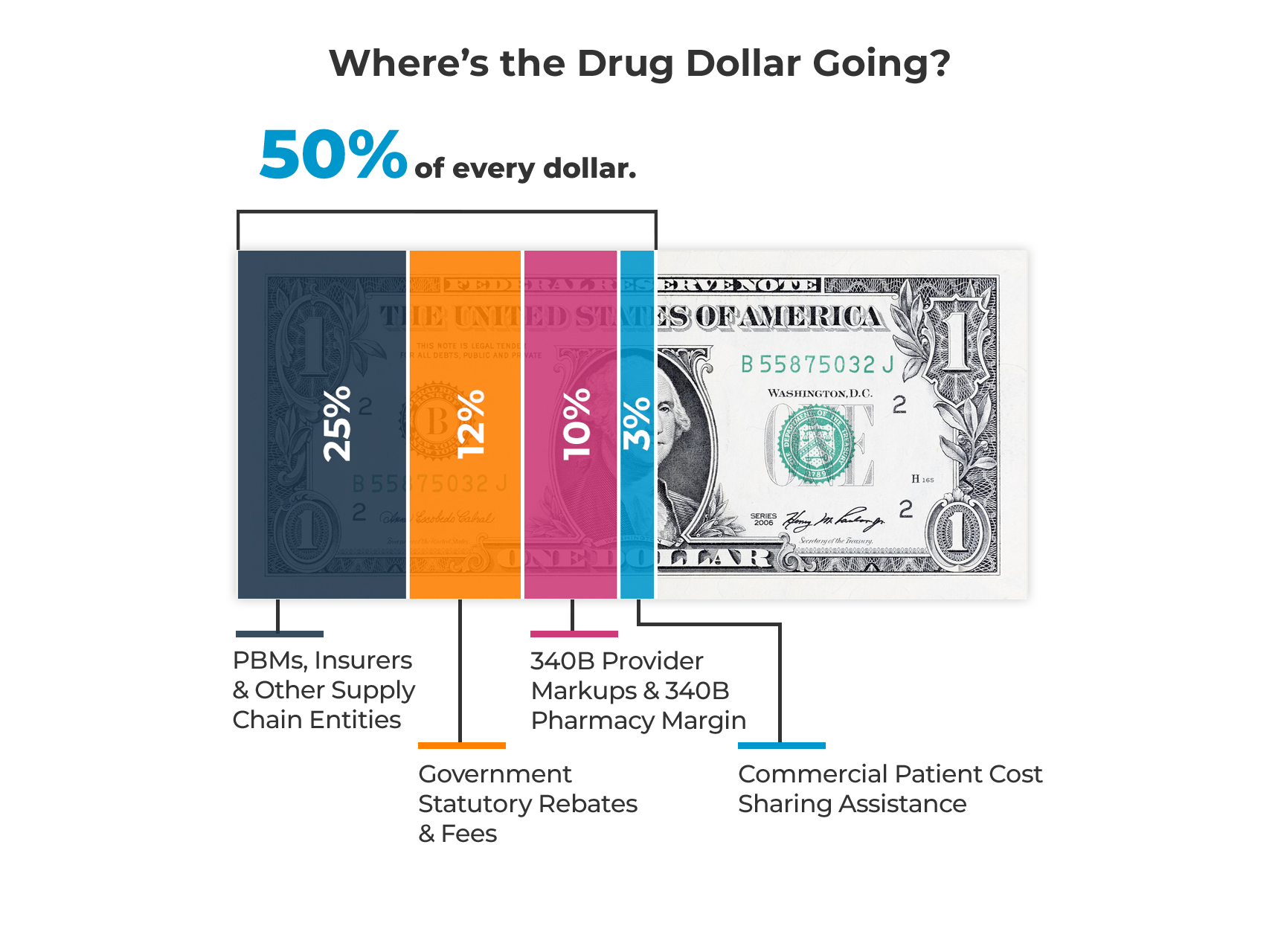
As policymakers continue to look for ways to address rising health care costs and spending on medicines, they must address where half the dollar is going.
12 things to know about the cost and value of medicine.
1. Medical science has never been more promising and despite all the groundbreaking innovation in medicine, spending on medicines remains a small and stable 14% of total health spending.
2. Innovative new medicines not only reduce patients’ need for costly health care services – such as hospital stays and frequent physician visits – but also can generate billions of dollars in savings for the health care system annually. For instance, new brand medicines launched between 2013 and 2017 generated $10 billion in savings across 12 therapeutic areas and lowered net prices. Additionally, breakthroughs like hepatitis C cures are projected to save $43 billion by 2026, and advancements in anti-obesity treatments are transforming care while preventing billions in spending on chronic diseases, the largest driver of U.S. health care costs.
3. Americans have more access to medicine choices than people living anywhere in the world due to our world-leading innovation system. This has resulted in Americans having access to 85% of new medicines compared to less than 40% for Europeans, on average.
4. Medicine costs are the one part of the health care system that decrease over time. For instance, the price of medicines used to prevent cardiovascular disease decreased by 95% over 10 years while the cost of the surgical procedure to treat it increased by 94% over the same period.
5. Competition in the system has led to more treatments available for patients and lower medicine costs, with the net price of brand medicine declining by 3% in 2023 and growing below the rate of inflation over the last five years.
6. More than 90% of all medicines dispensed in the United States are generics, which cost a fraction of the price of the initial brand medicine. The competition from the generic and biosimilar market also leads to savings for the health care system, saving $75 billion from 2013 to 2017 alone and $93.6 billion in projected savings over the next four years.
7. Too many Americans are paying too much for their medicines because actors in the system, like PBMs, insurers, and hospitals are using medicines to subsidize their business. In fact, half of every dollar spent on medicines goes to these actors and others who play no role in the research, development, and manufacturing of them.
8. PBMs and insurers receive billions of dollars in rebates and discounts from pharmaceutical manufacturers annually, which can lower the average price that PBMs and insurers pay by 50% or more, but patients rarely benefit directly from these savings.
9. Accounting for rebates, the net prices PBMs and insurers pay for medicines have grown more slowly than patient out-of-pocket costs since 2016, with the prices patients face growing at a faster rate than the prices insurers face. Insurers are also profiting at patients’ expense by shifting more costs through deductibles and coinsurance, often based on the medicine’s list price—causing some patients to pay more than what insurers or PBMs pay.
10. PBMs make money on medicine’s list price, which experts say leads them to restrict coverage for generics and biosimilars. For instance, between 2014 and 2022, there was a 961% increase in the number of medicines excluded by at least one of the three largest PBMs.
11. Brand manufacturers provided more than $23 billion in patient cost-sharing assistance to commercially insured patients in 2023 alone. Copay accumulator and maximizer programs implemented by PBMs, plans, or other third-party vendors absorbed nearly 45% of patient cost sharing assistance in 2023, more than double the amount attributed to these programs.
12. Hospitals and providers are also driving up costs for patients by using the 340B hospital markup program to subsidize their business. In fact, $65 billion of what is spent on medicines goes to hospitals, clinics, and pharmacies participating in the 340B program. Hospitals markup medicine prices, on average, up to 7x or more.
Related Resources
Report: The Pharmaceutical Supply Chain, 2013-2023
The flow of dollars in the pharmaceutical marketplace within the U.S. health care system involves a variety of stakeholders and myriad rebates, discounts, fees and other payments. In recent years, a renewed focus on prescription medicine spending has triggered calls for greater visibility into distribution and payment processes. Against this backdrop, the market has experienced enhanced competition, resulting in higher rebates from pharmaceutical manufacturers to pharmacy benefit managers (PBMs) and payers.
2013-2023 Supply Chain report preview
Supply Chain
Report
Prescription Medicines: Costs in Context
Discussions about the cost and affordability of medicines – and health care more broadly – are important. At the same time, it is important to look at costs across the health care system and not just the share going toward life changing medicines.
New medicines are transforming care for patients fighting debilitating diseases like cancer, hepatitis C, high cholesterol and more. In the midst of all this progress, the share of spending on retail medicines remains the same as it was 50 years ago. In fact, government actuaries project that spending on prescription medicines will grow in line with overall health care spending through the next decade.
Prescription Medicines: Costs and Context tells the biopharmaceutical industry’s value, cost and evolving marketplace story. Costs in Context also dives into recent advances in treating devastating diseases, challenges and opportunities for biopharmaceutical companies in the rapidly changing marketplace and policy solutions we need to focus on to continue delivering innovative treatments to patients.
The attached presentation outlines the benefits of medicines to patients, the health care system and the economy.
Prescription Medicines: Costs in Context image
Cost and Value
Report
Americans speak out on health insurance barriers and need for policy change, according to the latest Patient Experience Survey
Americans’ experience with the health care system continues to be defined by access and affordability challenges, and specifically, insurer- and pharmacy benefit manager (PBM)-imposed hurdles. As the fifth Patient Experience Survey (PES) from PhRMA/Ipsos reports, patients demand greater urgency in making meaningful strides toward affordable health care.
Here are three key takeaways from the survey, which have robust findings across patient populations, demographics, geographic areas and disease states:
1. Americans face abusive insurer and PBM practices that limit patient access to medicines.
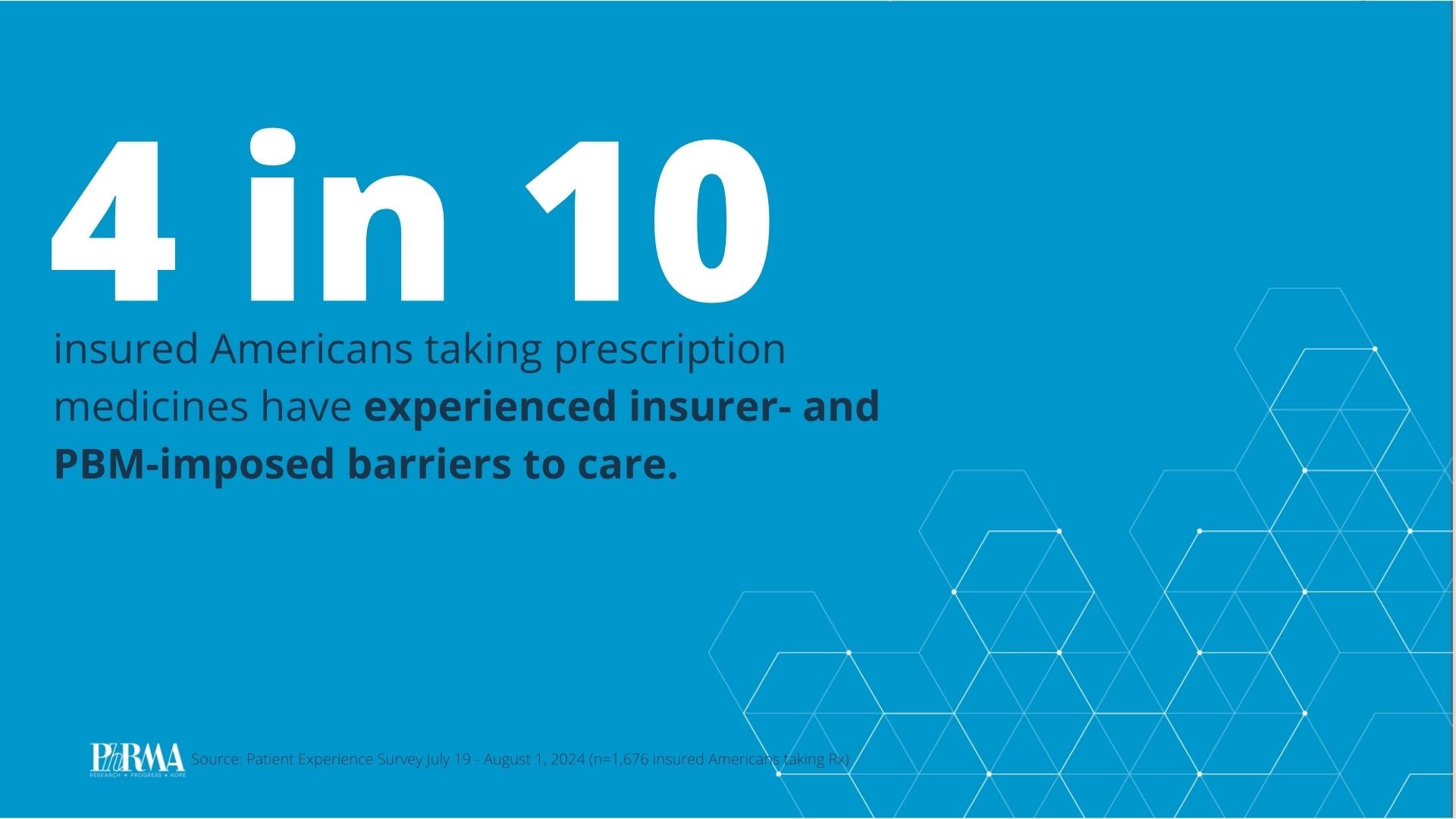
Four in 10 (41%) insured Americans taking a prescription medicine report insurer- and PBM-imposed barriers to care in the past year, such as prior authorization or step therapy. The challenge is even more common for patients in need of reliable access to care, including insured Americans managing a chronic condition (51%). This number is even higher for patients with diabetes (54%), mental health conditions (59%) and respiratory conditions (62%).
2. Health care out-of-pocket costs are driving financial insecurity even for those with insurance.
Out-of-pocket costs are the top healthcare issue for insured Americans. A third of insured Americans (33%) say their out-of-pocket costs for health care services have increased over the past year; the number is higher for prescription out-of-pocket costs (38% among insured Rx patients). And of those who report difficulty affording their out-of-pocket costs, deductibles (43%) continue to be the main driver. It’s no surprise that 18% of insured Americans report having outstanding medical debt; a number has continued to rise steadily in our tracking since 2022 (13%).
3. Americans want to see increased accountability and transparency across health care and lower patient out-of-pocket costs.
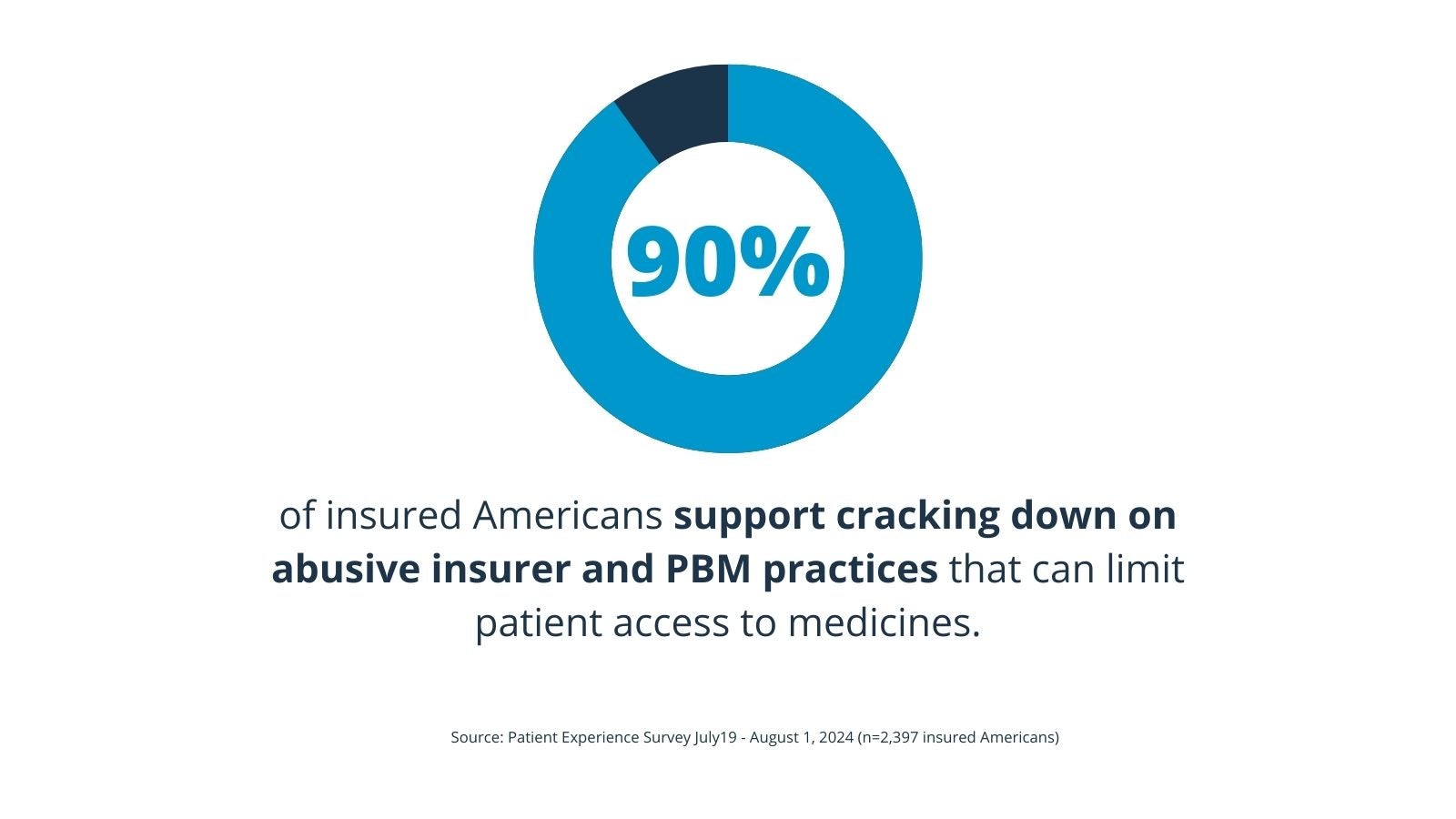
Most insured Americans (90%) support cracking down on abusive insurer and PBM practices that can limit patients’ access to medicines. Many also want to address health care affordability by setting limits on health care out-of-pocket costs and requiring insurance plans to cover more products and services without a deductible (both 34%) — the top two desired changes to improve health care (out of 11 options). And nearly all insured Americans (94%) say it is important for policymakers to understand the barriers and challenges patients face when accessing care.
With only about one in four (28%) of insured Americans believing insurance currently provides everyone with affordable access to health care when it’s needed, most Americans have consensus that policymakers need to help improve the patient experience in health care.
Learn more by reading the full Patient Experience Survey here and find more patient-centered solutions at PhRMA.org/Middlemen.
PhRMA’s Patient Experience Survey is a research initiative to explore the challenges Americans face as they navigate the health care system. The poll was conducted among 2,592 American adults (age 18 or older), including 2,397 with insurance, from July 19 – August 1, 2024, using Ipsos’ probability-based KnowledgePanel®, and it is representative of the American adult population. The margin of sampling error is plus or minus 1.5 percentage points at the 95% confidence level, for results based on the entire sample of adults.
Cynthia Hicks
"Americans speak out on health insurance barriers and need for policy change, according to the latest Patient Experience Survey"