According to new data from the National Health Expenditures (NHE), retail medicine prices declined by 1% and retail medicine spending grew just 2.5% in 2018. To put that in context, hospital spending, which continued to account for one-third of all health care spending, grew by 4.5%, and physicians and clinical services grew by 4.1%. This data, published in Health Affairs, underscores how policies that single out prescription medicine won’t fix soaring health care costs or lower out-of-pocket costs for Americans.
Other key data points include:
- Total patient out-of-pocket spending grew 2.8% in 2018 — faster than 2.2% in 2017.
- Overall health care spending growth (4.6%) was driven by a 13.2% increase in the net cost of health insurance.
- Total spending for physician and clinical services grew 4.1%, to $725.6 billion.
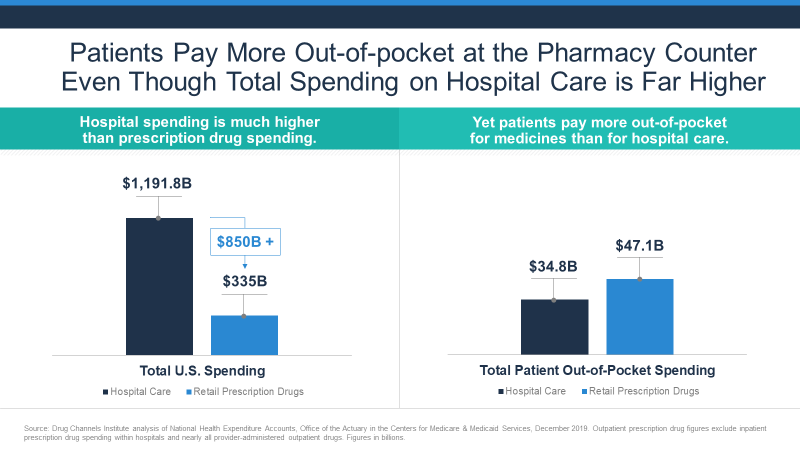
- Total spending for hospitals grew 4.5%, to $1.19 trillion in 2018.
- Hospital spending was over three and a half times more than retail medicine spending in 2018, but patients paid over $12 billion more in out-of-pocket costs for their retail medicines.
Learn more at www.LetsTalkAboutCost.org.
Holly Campbell
Holly Campbell is former deputy vice president of public affairs at PhRMA focusing on the cost and value of medicines.
Holly Campbell
ICYMI: Hospital consolidation is driving up health care costs
340B’s reality: A booming business for hospitals, pharmacies and corporate giants
A program off track: How 340B drives both hospital consolidation and system gaming
Washington Post Editorial Board says 340B has become “corporate welfare”
"New NHE data: Medicine prices declined, and hospitals were biggest driver of health care spending in 2018"
Out-of-Pocket Costs
Hospitals
Lets Talk About Cost
New NHE data: Medicine prices declined, and hospitals were biggest driver of health care spending in 2018
"New NHE data: Medicine prices declined, and hospitals were biggest driver of health care spending in 2018"